Paraspinal Muscles: Your Spine’s Most Important Movers and Stabilizers
This post contains affiliate links. As an Amazon Associate, I earn from qualifying purchases at no extra cost to you.
Free resources — no credit card required for trial
🎧 Listen to health & wellness audiobooks free for 30 days
Start 30-Day Free Trial →
🛒 Recommended Products
As an Amazon Associate we earn from qualifying purchases at no extra cost to you.
Back Gel Ice Pack Wrap — Microwaveable Pain Relief Heat Pad for Upper and Lower Back Thera
$22.99
BODYPROX Pain Relief Ice Pack with Strap for Hot and Cold Therapy — Microwave Heat Pad for
$14.99
iReliev Hot and Cold Therapy Gel Pack — Reusable Freezable Microwaveable Compression Pack
$16.99
Magic Gel Ice Pack for Back Pain Relief — 2 Pack Reusable Lower Back Wrap for Hot or Cold
$19.99
Relief Expert Reusable Ice Pack for Back — Lower Back Ice Pack Wrap with Cold Compress
$17.99
📚 Read unlimited health books free for 30 days
Try Kindle Unlimited Free →
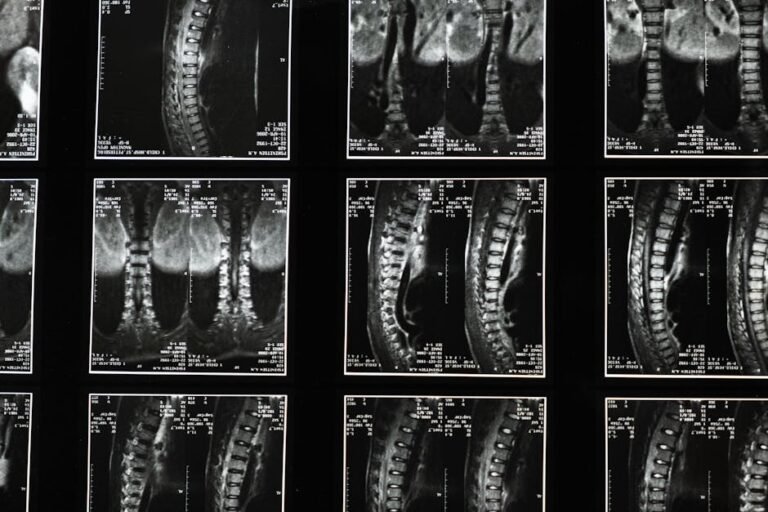
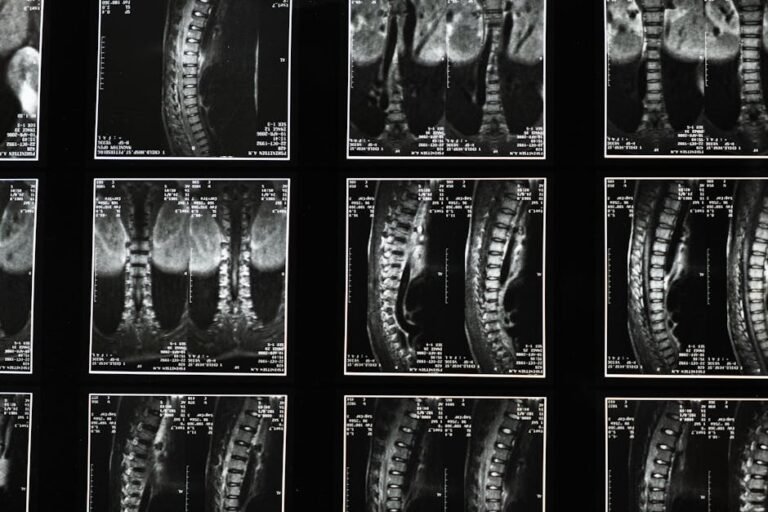
Think about everything your body does before you’ve even finished your morning coffee. You bend over to tie your shoes, reach up to grab a mug from the shelf, twist around to check the time — and your spine handles every single one of those movements without a second thought. But here’s what most people don’t realise: the real heroes behind all that effortless motion aren’t just your bones or your discs. They’re your paraspinal muscles — a powerful group of muscles that wrap around your spine, driving movement, protecting your vertebrae, and keeping you upright and functional every moment of the day. If you’ve ever wondered why your back aches, feels stiff, or just doesn’t perform the way it used to, understanding your paraspinal muscles might be the missing piece of the puzzle.
Why Your Spine Is More Amazing Than You Probably Realise
Your spine isn’t simply a rigid stack of bones holding you upright. It’s one of the most brilliantly designed structures in the human body — a dynamic, living system that somehow manages to be strong enough to bear the weight of your entire upper body, flexible enough to let you twist and bend in multiple directions, and tough enough to protect the delicate network of nerves running through it. That’s a lot to ask of any structure, and your spine delivers on all three demands simultaneously.
What makes this possible is the incredibly sophisticated team of muscles surrounding the spine. These muscles don’t just react to movement — they anticipate it, control it, and protect against it at the same time. From the gentle rise and fall of your chest as you breathe to the explosive power needed to sprint or lift something heavy, your spinal muscles are always engaged, always working. When we talk about spine health, we’re really talking about the health of this entire muscle system — and the paraspinal muscles sit right at the centre of it.
Understanding the spine as an integrated system, rather than just a column of bones, is genuinely life-changing. It shifts your perspective from “my back hurts” to “my body is telling me something about how I’m moving and supporting myself.” That’s a much more empowering place to start.
Meet the Three Muscle Groups That Support Your Spine
To really appreciate what your paraspinal muscles do, it helps to see them in context. Your spine is supported by three interconnected groups of muscles, each with a distinct role — but all deeply reliant on one another. Think of them as a well-rehearsed team, where every player has a specific position but nobody succeeds without the others.
The first group, known as the intraspinal muscles, are the quiet precision workers. They sit very close to your individual vertebrae and are responsible for the subtle, moment-to-moment adjustments that keep each spinal segment in correct alignment. One of their most important jobs is something called proprioception — essentially your body’s internal GPS system. These muscles constantly send signals to your brain telling it exactly where your spine is in space, allowing for automatic, unconscious corrections to your posture and movement. They’re the fine-tuners, the detail crew, and without them, even simple tasks would feel wobbly and unstable.
The second group — and the main focus here — are the paraspinal muscles themselves. These are the powerhouses: the prime movers and regional stabilizers that generate force for your biggest spinal movements while simultaneously protecting your vertebrae from excessive strain. We’ll go much deeper on these shortly. And then there’s the third group, the extraspinal muscles — your abdominals, glutes, hip flexors, and shoulder muscles. These sit further from the spine but play a crucial connecting role, linking your spinal movements to the rest of your body’s movement patterns. Your glutes, for example, directly influence how much load your lower back has to manage. Together, all three groups create a three-dimensional control system that keeps your spine both mobile and protected.
What Paraspinal Muscles Actually Do (And Why It Matters)
So what exactly makes the paraspinal muscles so special? Their defining characteristic is that they do two very different jobs at the same time — and they do both brilliantly. On one hand, they are your prime movers, the muscles that initiate and drive the large, visible movements of your torso. When you arch your back, extend your spine, bend sideways, or rotate your trunk, your paraspinals are the primary muscles making that happen. They’re the engine.
But at the same time, they act as regional stabilizers. While they’re generating movement, they’re also contracting to create a kind of protective brace around your spine, maintaining proper vertebral alignment and preventing any single segment from moving too far, too fast. Imagine lifting a heavy box off the floor. Your paraspinal muscles aren’t just helping you lift — they’re simultaneously locking your vertebrae into a safe, supported position so your discs and ligaments don’t take a dangerous amount of strain. That dual role — powerful movement combined with intelligent protection — is what makes them so fundamental to everyday life.
When paraspinal muscles are strong, well-conditioned, and working in good coordination with the rest of the spinal muscle team, your back feels capable, comfortable, and resilient. But when they’re weak, tight, fatigued, or out of balance with surrounding muscles, you start to feel it — often as nagging lower back pain, stiffness after sitting, or that uncomfortable “seizing up” sensation when you try to move after staying still for too long. The good news is that these muscles respond beautifully to consistent, thoughtful care.
The Whole-Body Connection: Why Isolated Back Exercises Aren’t Enough
One of the most common mistakes people make when trying to improve their back health is focusing exclusively on their back muscles in isolation. They’ll do rows of back extensions or lower back stretches and wonder why they’re still uncomfortable. The reason is that your paraspinal muscles are part of a much bigger, more connected system — and the whole system needs attention.
Your extraspinal muscles, particularly your core and glutes, have a profound influence on how much your paraspinal muscles have to work. Weak abdominals, for instance, can force your paraspinals to compensate, leading to chronic overuse and fatigue. Tight hip flexors can tilt your pelvis forward, altering the natural curve of your lower spine and putting your paraspinals in a mechanically disadvantaged position. Even the muscles in your shoulders and upper back affect how load is distributed through your entire spine.
This is why the most effective approach to spine health is always a whole-body one. It’s not about doing one specific “back exercise” — it’s about building balanced strength and flexibility throughout your entire kinetic chain. When all your muscle groups are pulling their weight, your paraspinal muscles can do their job of moving and stabilizing your spine without being overloaded. Think of it like a relay team: if one runner is exhausted, the whole team suffers.
Practical Tips to Support Your Paraspinal Muscles Every Day
Here’s the really encouraging part: you don’t need a gym membership or a complicated programme to start supporting your paraspinal muscles and improving your spinal health. Small, consistent habits made throughout your day can make a significant difference over time. Here are some of the most practical, evidence-based things you can do:
- Keep moving throughout the day. Your body is designed for varied movement, not prolonged static positions. If you sit at a desk, set a reminder to stand up, walk around, or do a gentle stretch every 30 to 60 minutes. Regular movement keeps your paraspinal muscles nourished and prevents the stiffness that comes from staying in one position too long.
- Practice mindful posture. You don’t need perfect posture every second — that’s not realistic or even desirable. But developing awareness of how you hold yourself is valuable. Try imagining a gentle string pulling you upward from the top of your head, lengthening your spine without forcing an exaggerated arch. This simple mental cue encourages your stabilizing muscles to engage naturally.
- Learn to lift properly — every time. When picking something up, engage your core before you move, bend at your hips and knees rather than rounding your back, and keep the object close to your body. This technique distributes the load more evenly and allows your paraspinals to stabilize rather than strain.
- Build balanced strength across your whole core. Include exercises that strengthen not just your back, but your abdominals, glutes, and hips too. Exercises like bridges, bird-dogs, and gentle core strengthening routines can help create the balanced muscle support your spine needs.
- Prioritise flexibility alongside strength. Tight muscles are less efficient and more prone to injury. Incorporate regular stretching — particularly for your hip flexors, hamstrings, and thoracic spine — to ensure your paraspinals aren’t having to compensate for restricted mobility elsewhere.
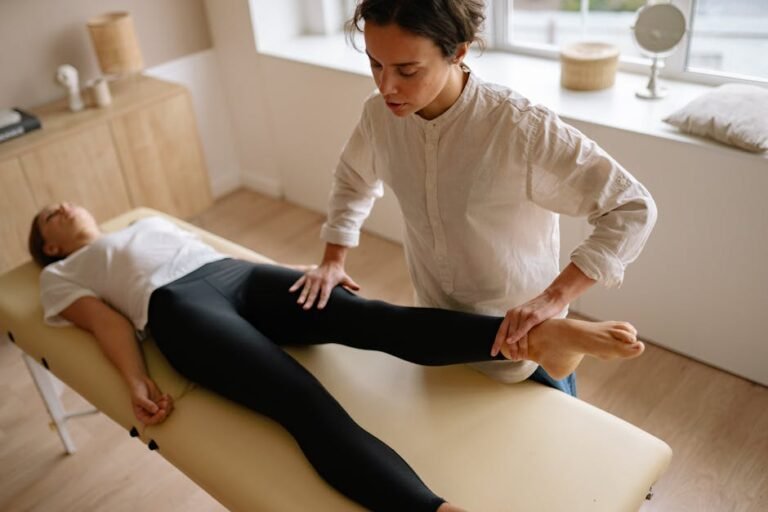
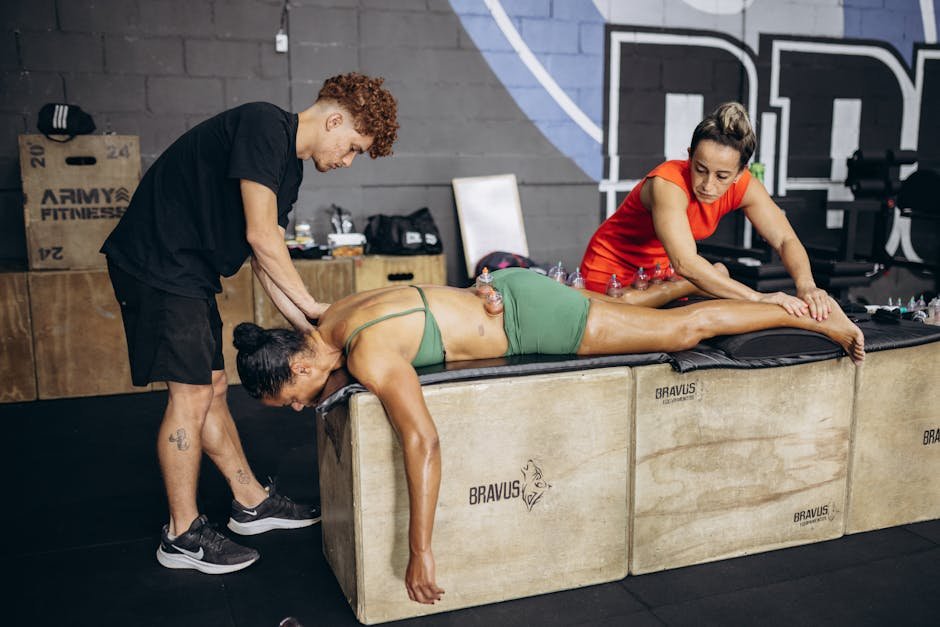
- Listen to what your body is telling you. Occasional muscle soreness is normal, especially if you’ve been more active than usual. But persistent pain, sharp sensations, or discomfort that doesn’t ease with rest is your body asking for help. Don’t push through it — take it seriously and seek professional guidance if it continues.
These habits don’t require a dramatic lifestyle overhaul. They’re gentle, sustainable shifts in how you relate to your body — and over time, they add up to a spine that feels genuinely supported and capable.
What Happens When Paraspinal Muscles Are Neglected
Most people only start thinking about their paraspinal muscles when something goes wrong — when the back pain arrives, when getting out of bed becomes a slow, stiff process, or when a simple movement like bending over causes an unexpected twinge. This reactive approach is understandable, but it means you’re already playing catch-up by the time you start paying attention.
When paraspinal muscles are consistently underused, overloaded, or working in isolation from the rest of the spinal muscle team, imbalances develop. One side may become stronger or tighter than the other. Certain segments of the spine may be asked to absorb more force than they’re designed to handle. The intraspinal muscles, responsible for fine-tuned segmental control, may not be receiving the right signals. Over time, these imbalances can contribute to discomfort, reduced mobility, and a greater vulnerability to strain — even from seemingly minor movements.
The encouraging flip side is that the body is remarkably adaptable. With consistent attention, the right movement habits, and a balanced approach to strength and flexibility, paraspinal muscles can regain their function and resilience at almost any age. It’s never too late to start caring for your spine’s most important supporters — and the improvements can often be felt relatively quickly, especially in terms of everyday comfort and ease of movement.
The Bottom Line: Your paraspinal muscles are extraordinary — quietly working as both the engine and the protective framework of your spine, every single day. They drive your biggest movements and simultaneously guard your most delicate spinal structures, all while coordinating seamlessly with the other muscle groups that keep your whole body connected and balanced. By understanding what these muscles do and making simple, consistent choices to support them — staying mobile, lifting wisely, building balanced strength, and listening to your body — you give yourself the best possible foundation for a healthy, comfortable, and active life. Your spine has been working hard for you all along. Now it’s time to return the favour.
This is not medical advice. Consult your healthcare provider before starting any new health routine or using any product mentioned here.