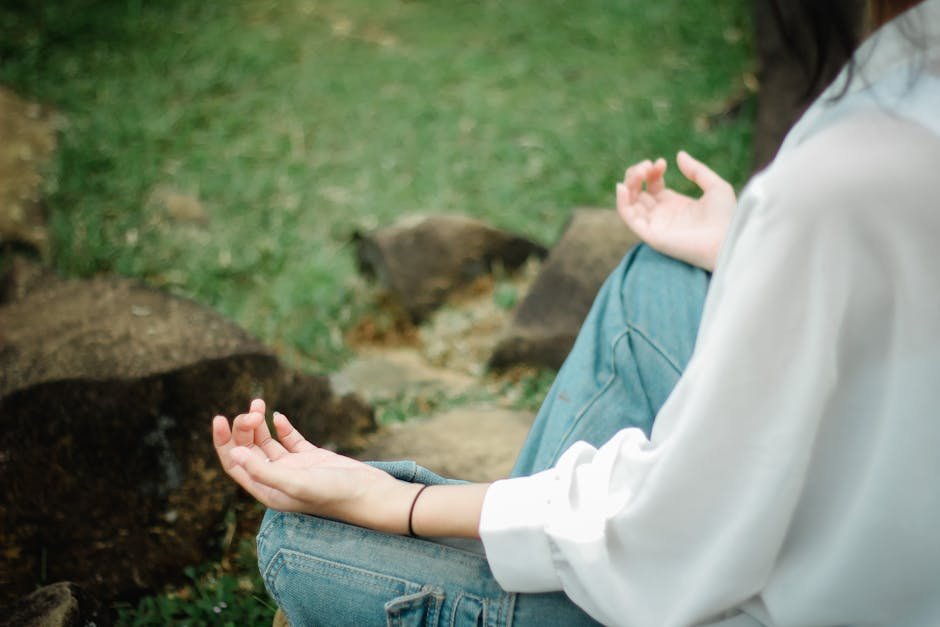
Meditation for Letting Go of Stress: A Gentle Guide for Older Adults
This post contains affiliate links. As an Amazon Associate, I earn from qualifying purchases at no extra cost to you.
Free resources — no credit card required for trial
🎧 Listen to health & wellness audiobooks free for 30 days
Start 30-Day Free Trial →
🛒 Recommended Products
As an Amazon Associate we earn from qualifying purchases at no extra cost to you.
TheraBand First Step to Active Health Kit — Senior Exercise Program for Balance and Fall P
$19.99
EZ Off Jar Opener for Seniors — Under Cabinet Jar Opener for Weak Hands and Arthritis
$9.99
Omron 5 Series Upper Arm Blood Pressure Monitor — 2-User 100-Reading Memory Wide-Range Cuf
$44.99
OMRON 7 Series Wireless Wrist Blood Pressure Monitor — Clinically Validated with Connect A
$69.99
Vitality 4 Life Senior Resistance Band with Instruction Guide — Specifically for Elderly F
$16.99
📚 Read unlimited health books free for 30 days
Try Kindle Unlimited Free →
Stress has a way of quietly creeping into daily life — a worry here, a sleepless night there, a persistent tightness in your shoulders that just won’t budge. If you’re an older adult who’s been carrying more than your fair share of tension lately, you’re far from alone. The good news? Meditation for letting go of stress is one of the simplest, most accessible tools available to you — no special equipment, no prior experience, and no need to sit cross-legged on the floor. This warm, practical guide is designed specifically with seniors in mind, offering gentle techniques you can start using today, right from the comfort of your favourite chair.
Why Letting Go of Stress Matters More as We Age
As we move through later life, stress doesn’t necessarily get smaller — it just changes shape. Health concerns, shifts in routine, family responsibilities, or simply the weight of daily life can all pile on. And while a little stress is a normal part of being human, chronic or lingering stress can quietly chip away at your wellbeing in ways you might not even notice at first.
The good news is that gentle stress management can make a meaningful difference in several areas of your health. Better sleep is one of the most celebrated benefits — when your mind has a chance to settle, those bedtime worries lose some of their grip, and restful nights become more achievable. Regular practice can also support a steadier, more hopeful mood, helping you bounce back more easily when life feels overwhelming.
Beyond mood, there’s evidence that moderate stress reduction can support heart health and help keep blood pressure more stable. Less muscle tension can mean fewer aches and less stiffness in your joints — something many seniors find enormously welcome. And a calmer mind generally means sharper focus, making everyday conversations and tasks feel less overwhelming. Meditation isn’t a cure-all, but it’s a reliable, non-drug approach that fits beautifully into most seniors’ routines.
Gentle Meditation Techniques Designed for Seniors
The beauty of meditation for letting go of stress is how adaptable it is. You don’t need to be flexible, fit, or even fully mobile. If sitting on the floor isn’t comfortable, a supportive chair with your feet flat on the floor works perfectly. If you have chronic health conditions, it’s always wise to have a quick chat with your doctor before starting something new — but for most people, these practices are wonderfully safe and gentle.
Breath-focused meditation (5–7 minutes) is often the best place to start. Sit comfortably, place one hand on your chest and one on your belly, and simply breathe in slowly through your nose for a count of four, then out for a count of six to eight. Let your breath find its own rhythm after a few cycles. When thoughts wander — and they will — just gently bring your attention back to the breath without any self-criticism. This simple act of noticing the breath reduces physical tension and gives your nervous system a genuine chance to settle.
A body scan (5–10 minutes) is another wonderfully grounding technique. Starting at your toes and slowly moving your awareness upward through your body, you’re simply noticing where tension lives — then imagining a gentle warmth or soft breath flowing into those areas as you exhale. You don’t need to scan your whole body every time; even focusing on just your feet and shoulders can bring real relief. This practice is particularly lovely before bed, helping to prepare both body and mind for sleep.
Loving-kindness meditation (5–7 minutes) might sound unusual at first, but it’s one of the most powerful tools for softening stress. You simply sit quietly and repeat gentle phrases in your mind — “May I feel calm, safe, and at ease” — then extend that same warmth to someone you care about, and perhaps beyond. You don’t need to feel every word perfectly; the intention is what matters. This kind of self-compassion softens inner harshness and builds real emotional resilience over time.
Guided imagery (5–8 minutes) is ideal if you find breath focus difficult. Close your eyes, take a few easy breaths, and imagine yourself in a place that feels safe and peaceful — a favourite garden, a quiet beach, a sunlit room. Picture your worries as leaves or clouds drifting gently away on a breeze. If visualising is tricky, simply focus on the feeling of calm rather than the image itself. This mental separation between stress and your experience creates a wonderful sense of spaciousness and clarity.
The One-Minute Reset You Can Use Anywhere
Life doesn’t always give you the luxury of a quiet five-minute sit. That’s where a quick one-minute stress reset becomes invaluable. The next time you feel tension rising — whether it’s during a phone call, a difficult moment with family, or simply standing in a queue — try this: pause whatever you’re doing, take three slow, deep breaths counting to four on the inhale and six on the exhale, then return to your activity with softer shoulders and a gentler jaw.
It sounds almost too simple, but these tiny pauses genuinely prevent stress from accumulating and cascading. Think of them as small acts of self-kindness scattered throughout your day — brief moments where you choose, consciously, to give your nervous system a break. Over time, these mini resets can become second nature, quietly supporting a steadier mood all day long.
What You Can Do: Practical Tips for Building Your Practice
Starting a meditation practice doesn’t require a dramatic overhaul of your routine. The most important ingredient is consistency, not length. Here’s how to make it work in real life:
- Start small: Begin with just 3–5 minutes daily. A short, consistent practice is far more valuable than an occasional long one.
- Choose a predictable time: After breakfast, before bed, or right after brushing your teeth — pairing meditation with an existing habit makes it stick.
- Create a calm space: A quiet corner, a comfortable chair, soft lighting, and a warm room all help make your practice feel inviting rather than like a chore.
- Use a timer: Setting a gentle timer means you’re not distracted by clock-watching. There are some lovely, affordable meditation timers and sound bowls available that make this even more pleasant.
- Try guided audio: Short, soothing guided meditations designed for seniors can be enormously helpful, especially when you’re just starting out. Look for recordings that are clear, unhurried, and use simple language.
- Track your progress simply: A small checkmark on a calendar or a brief note in a journal — “did my 5 minutes today, felt calmer” — reinforces the habit and builds a sense of achievement.
- Invite a friend: If you enjoy company, ask a friend, family member, or caregiver to join you for short sessions, either in person or via a video call. Shared practice can be wonderfully motivating.
- Be flexible with yourself: Some days you’ll have more time and energy; others you won’t. A two-minute session on a hard day is still a success. Adapt the length to how you feel without judgment.
- Safety first: If long exhales cause dizziness, shorten the breath cycle. If your back or neck is uncomfortable, add cushions for support. Always stop and rest if you feel unwell.
Answering the Questions Many Seniors Have About Meditation
It’s completely normal to have a few hesitations before starting something new, especially when it comes to health practices. One of the most common concerns is: “My mind won’t quiet down — am I doing it wrong?” The reassuring answer is no. A wandering mind is not a failed meditation. The entire practice is actually about noticing when your mind has wandered and gently — without frustration — bringing it back. That act of returning is the exercise. Every time you do it, you’re building a valuable mental skill.
“I have arthritis or back pain — can I still do this?” Absolutely. Sitting in a supportive chair with cushions, or even practising while lying down, works just as well. You never need to force your body into an uncomfortable position. The only truly necessary ingredient is a relaxed, alert awareness — and that’s available to everyone, in any position.
Some people worry that meditation might be a religious practice that conflicts with their own beliefs. It’s worth knowing that the approach described here is entirely secular and inclusive. It’s focused on breath, awareness, and compassion — with no requirement to adopt any particular belief system. You can adapt the language of any technique to feel natural and comfortable for you. And if you’re wondering whether you’re too old to start — the answer is a warm and definitive no. Benefits accumulate gradually with practice, and even small, brief moments of mindfulness can genuinely shift your day for the better.
Your Simple Getting-Started Plan for Meditation for Letting Go of Stress
If you’d like a clear, simple starting point, here’s a gentle four-part routine you can try this week. Find a quiet, comfortable chair with back support, set a timer for five minutes, and work through these steps: spend one to two minutes on breath focus, follow that with one to two minutes of body scanning, then move into a brief visualisation or a few loving-kindness phrases for another minute or two, and close with one slow, intentional exhale and perhaps a quiet moment of gratitude for something in your day.
That’s it. Five minutes, four gentle steps. If it feels good, you can gradually extend your practice by one to two minutes per week as you feel ready. There’s no rush and no finish line — just a daily, compassionate check-in with yourself that grows richer over time. The goal isn’t to achieve a perfectly blank mind; it’s to build a kinder, steadier relationship with your own thoughts and body.
Over time, you may begin to notice small but meaningful shifts: a lighter jaw, a steadier breath, a moment of quiet clarity in the middle of a busy afternoon, or simply waking up feeling a little more rested. These are the quiet rewards of a consistent practice — and they’re entirely within your reach.
The Bottom Line: Meditation for letting go of stress is one of the gentlest and most effective forms of self-care available to older adults. With techniques as simple as following your breath, scanning your body for tension, or silently wishing yourself well, you can begin to ease the burden of daily stress without medication, special equipment, or prior experience. Start with just five minutes a day, be patient and compassionate with yourself, and trust that every small effort adds up. You deserve a calm, steady inner space — and with these practical steps, you can absolutely build one.
This is not medical advice. Consult your healthcare provider before starting any new health routine or using any product mentioned here.