Posture Exercises to Improve Lung Capacity: A Senior’s Guide to Breathing Easier Every Day
This post contains affiliate links. As an Amazon Associate, I earn from qualifying purchases at no extra cost to you.
Free resources — no credit card required for trial
🎧 Listen to health & wellness audiobooks free for 30 days
Start 30-Day Free Trial →
🛒 Recommended Products
As an Amazon Associate we earn from qualifying purchases at no extra cost to you.
TheraBand First Step to Active Health Kit — Senior Exercise Program for Balance and Fall P
$19.99
EZ Off Jar Opener for Seniors — Under Cabinet Jar Opener for Weak Hands and Arthritis
$9.99
Omron 5 Series Upper Arm Blood Pressure Monitor — 2-User 100-Reading Memory Wide-Range Cuf
$44.99
OMRON 7 Series Wireless Wrist Blood Pressure Monitor — Clinically Validated with Connect A
$69.99
Vitality 4 Life Senior Resistance Band with Instruction Guide — Specifically for Elderly F
$16.99
📚 Read unlimited health books free for 30 days
Try Kindle Unlimited Free →
Did you know that the way you sit or stand right now could be affecting how deeply you breathe? For many older adults, lung capacity quietly declines over the years — not just because of age, but because of the way we hold our bodies. The good news is that simple posture exercises to improve lung capacity are well within reach, no gym membership required. Whether you want to walk farther without getting winded, climb stairs with more confidence, or just feel more energised throughout your day, the gentle routine in this post can make a real, noticeable difference. Let’s explore how good posture and smart breathing practice work together — and how you can start today.
Why Posture and Lung Capacity Go Hand in Hand
It might seem surprising that something as simple as sitting up straight could affect how well your lungs work, but the connection is very real. Your lungs sit inside your chest, and they need room to expand fully with every breath. When your spine curves forward and your shoulders round — a common pattern that tends to develop with age — your chest gets compressed. That compression leaves less space for your lungs to fill, and your breaths become shorter and shallower without you even realising it.
Breathing is powered mainly by your diaphragm, the large dome-shaped muscle that sits just below your lungs. When you stand or sit tall, your diaphragm can move freely up and down, drawing air deep into the lungs and pushing it back out efficiently. But when you slouch, that movement gets restricted. Your breathing muscles have to work harder for less reward, which can lead to fatigue, a feeling of breathlessness, and reduced stamina during everyday activities.
The encouraging part is that posture is something you can actively work on at any age. Your spine and the muscles around your ribs can become more flexible and stronger with consistent, gentle practice. Over time, this helps your lungs work more efficiently, reduces tiredness from breathing, and gives you more energy for the things you enjoy most.
Posture Exercises to Improve Lung Capacity: Your Four-Move Routine
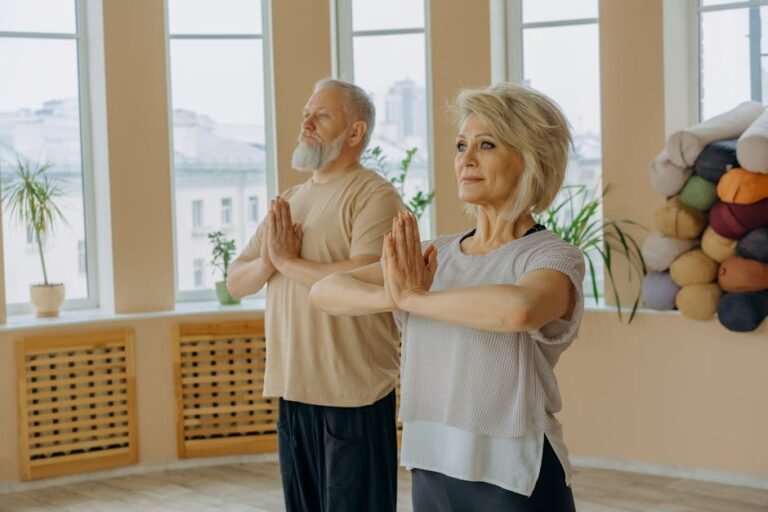
The following exercises are designed with seniors in mind — they’re gentle, safe, and easy to fit into your daily routine. You don’t need any equipment, and most can be done seated if standing feels too challenging. As always, if you have a chronic lung condition such as COPD, heart problems, severe arthritis, or have had recent surgery, check with your doctor before starting. Stop immediately if you feel chest pain, significant dizziness, or unusual shortness of breath.
1. Diaphragmatic Breathing with Upright Posture. This is the foundation of the whole routine. Sit tall in a sturdy chair with your feet flat on the floor, or stand comfortably with feet hip-width apart. Place one hand on your belly and the other on your chest. Breathe in slowly through your nose, aiming to let your belly rise first — the hand on your stomach should move more than the one on your chest. Then exhale slowly through pursed lips, taking longer to breathe out than you did to breathe in. Aim for 8 to 10 breaths in a calm, steady rhythm, and repeat this two or three times a day. It trains your diaphragm to do its job properly and helps reduce that uncomfortable feeling of breathlessness.
2. Wall Angels for Upper Back Mobility. Stand with your back against a wall, feet about six inches from the base. Your head, upper back, and buttocks should all be in contact with the wall. Bend your arms to 90 degrees at your sides like a goalpost, keeping your elbows and wrists touching the wall. Slowly slide your arms up toward the ceiling as you inhale, then lower them back down as you exhale. Aim for 8 to 12 repetitions in two to three sets. This movement gently opens the upper back and chest, helping you maintain the tall, open posture that lets your lungs expand more fully. If standing is difficult, you can do a seated version with your back supported by a chair.
3. Seated Side Stretch with Breath. Sit tall in your chair with feet flat on the floor. Rest one hand lightly on the chair for support, then inhale as you raise the other arm overhead, lengthening your spine. As you exhale, gently lean your torso to the opposite side, feeling a mild, comfortable stretch along the side of your rib cage. Hold for one breath, then return to centre. Repeat on the other side, aiming for six to eight stretches per side. This exercise opens up the sides of the rib cage, giving your lungs more room to expand in all directions — not just front to back.
4. Pursed-Lip Breathing. This one is beautifully simple and enormously helpful. Sit or stand tall with relaxed shoulders. Breathe in gently through your nose for about four counts. Then purse your lips as if you’re about to blow out a candle, and exhale slowly for six to eight counts. Repeat four to six cycles, two or three times daily, or any time you feel short of breath. This technique trains you to empty your lungs more completely with each breath cycle, which makes the next inhale feel much easier and more satisfying.
What You Can Do: Practical Tips for Getting Started
Getting started is often the hardest part, but this routine is designed to slot into your existing day with minimal fuss. Here are some practical ways to make it work for you:
- Start small. Begin with just 5 to 10 minutes a day. Even that modest amount is enough to build a habit and start feeling the benefits. You can gradually add time as you feel more comfortable.
- Pair it with something you already do. Try practising after your morning cup of tea, before or after a short walk, or even while watching your favourite TV programme. Attaching a new habit to an existing one makes it much easier to stick with.
- Set up a safe space. Use a sturdy chair with a back, make sure your floor surface is non-slip, and wear comfortable, supportive shoes if you’re standing. Safety first, always.
- Use reminders. A sticky note on the fridge, a phone alarm, or even a note by your kettle can be all it takes to prompt your practice until it becomes second nature.
- Keep a simple log. Mark the days you practise and jot a quick note about how you felt afterward. Seeing your consistency on paper is genuinely motivating.
- Stay hydrated. Drink water before and after your session. Good hydration helps your airways stay moist and supports easier breathing.
- Listen to your body. A mild sensation of stretch or gentle exertion is fine. But if you feel chest pain, significant dizziness, palpitations, or breathlessness beyond your usual level, stop and rest. If symptoms persist, contact a healthcare professional straight away.
- Combine with other gentle activities. A short walk, some light stretching, or a brief mindfulness meditation can complement your lung-focused exercises beautifully and support your overall wellbeing.
How These Exercises Help Over Time
Consistency is where the real magic happens. When you practise these posture and breathing exercises regularly, you’re essentially retraining the muscles involved in breathing — your diaphragm, the muscles between your ribs, and the postural muscles of your back and shoulders. Over weeks and months, these muscles become stronger, more coordinated, and better at doing their job efficiently.
The rib cage itself can also become more flexible with regular practice. Many older adults find that their chest feels quite rigid, especially if they’ve spent years in a rounded posture. Gentle movements like the seated side stretch and wall angels gradually work on that flexibility, allowing the chest to open more fully with each breath. More chest expansion means more room for the lungs, and more room for the lungs means a greater capacity for air with every inhale.
You might also notice improvements in your energy levels, your ability to walk without stopping as often, and even in your posture during everyday activities — sitting at the table, standing in a queue, or walking to the shops. Better breathing supports better movement, and better movement supports better breathing. It’s a wonderfully positive cycle.
Making It Comfortable: Modifications and Safety Guidance
One of the most important things about this routine is that it can be adapted to suit your individual needs. If you have arthritis in your hands or wrists, you don’t need to grip anything tightly — keep your hands relaxed throughout. If your knees make sitting and rising from a chair uncomfortable, choose a firmer, higher seat. If balance is a concern during standing exercises, always have a sturdy surface within arm’s reach, like a countertop or a solid chair back.
For those with arthritis in the spine or significant back stiffness, the seated versions of wall angels and the side stretch are just as beneficial as the standing versions. There’s no need to push into discomfort. A gentle, mild stretch is genuinely enough to produce good results over time — you don’t need to feel significant strain for an exercise to be working.
If you use an inhaler or have been prescribed breathing exercises by a respiratory therapist or physiotherapist, these posture exercises can often complement that existing programme beautifully. But do mention them to your healthcare provider so they can confirm they’re appropriate for your specific situation. Your health team is always your best resource for personalised guidance.
The Bigger Picture: Breathing Well for Independent Living
Lung capacity might not be something you think about much day to day, but it underpins so much of what makes life enjoyable and independent. It helps you walk farther, manage a flight of stairs without stopping at the top to catch your breath, recover more easily when you have a cold or chest infection, and feel generally more energised and capable throughout your day.
For seniors in particular, maintaining good lung function is a meaningful part of staying independent. When breathing becomes effortful, it’s easy to become less active — and less activity can lead to further deconditioning. By investing just a few minutes each day in posture exercises to improve lung capacity, you’re essentially investing in your ability to keep doing the things you love, on your own terms.
And here’s something worth remembering: you don’t need to be perfect at these exercises to benefit from them. Showing up consistently — even on the days when you only manage five minutes — is what builds strength and skill over time. Every single practice session is a step in the right direction, no matter how small it feels in the moment.
The Bottom Line: Good posture and lung capacity are more closely linked than most people realise, and the right exercises can genuinely help you breathe more easily, move with greater confidence, and feel more energised every day. The four-move routine in this post — diaphragmatic breathing, wall angels, seated side stretches, and pursed-lip breathing — is gentle, safe, and designed specifically for older adults. Start with just five to ten minutes a day, pair it with something you already do, and give yourself credit for every session you complete. With consistent, kind effort, you’ll likely notice more comfortable breathing, steadier energy, and a real boost to your everyday independence. You deserve to breathe easier — one gentle, mindful breath at a time.
This is not medical advice. Consult your healthcare provider before starting any new health routine or using any product mentioned here.