Exercise Progression for Spine Health: Moving from Stabilization to Functional Movement
This post contains affiliate links. As an Amazon Associate, I earn from qualifying purchases at no extra cost to you.
Free resources — no credit card required for trial
🎧 Listen to health & wellness audiobooks free for 30 days
Start 30-Day Free Trial →
🛒 Recommended Products
As an Amazon Associate we earn from qualifying purchases at no extra cost to you.
TRIDUCNA Shiatsu Neck Back and Shoulder Massager with Heat — Deep Tissue 3D Kneading Pillo
$49.99
Soothio Back Massager for Pain Relief Deep Tissue — Shiatsu 4D Motion with Heat and Car Ch
$89.99
pryfey Back Massager Rolling Up and Down with Heat — 4D Kneading Shoulder Massager for Pai
$59.99
3-in-1 Electric Lumbar Support Massager with Heat Vibration and Traction for Lower Back Pa
$79.99
📚 Read unlimited health books free for 30 days
Try Kindle Unlimited Free →
Picture your everyday life — bending down to pick up a child, reaching for something on a high shelf, taking a brisk evening walk, or simply sitting comfortably at your desk without wincing. Your spine is the unsung hero behind every single one of those moments. But when back pain, stiffness, or an old injury gets in the way, even the simplest tasks can feel like a challenge. The good news? Exercise progression — a smart, structured approach to therapeutic exercise — offers a genuine path back to a pain-free, active life. It’s not about pushing through pain or following a generic workout plan. It’s about rebuilding your body’s natural strength and resilience from the inside out, one purposeful step at a time.
Why Your Spine Deserves More Than a Quick Fix
We live in a world that loves instant solutions — a pill, a single treatment, a one-size-fits-all stretching routine shared on social media. And while those things might offer temporary relief, they rarely address the root cause of spinal problems. The spine is a wonderfully complex structure: a stack of vertebrae, shock-absorbing discs, strong ligaments, and an intricate web of muscles all working together to protect your spinal cord while allowing you to move freely in every direction. It’s designed for a perfect balance between stability and mobility.
When that balance is disrupted — through injury, prolonged poor posture, or the everyday wear and tear of a busy life — the effects go deeper than sore muscles. Spinal dysfunction involves how your brain communicates with your body (called neuromuscular control), your overall movement patterns, and even how you perceive pain. That’s why passive treatments like massage or medication, as helpful as they can be, often provide only temporary comfort. They soothe the symptoms without fixing what caused them.
True, lasting spinal health requires an active approach — one that progressively trains your body to support itself, move efficiently, and resist future injury. That’s exactly what a well-designed therapeutic exercise progression is designed to do. Think of it less like “rehab” and more like rebuilding your body into the strong, capable version of itself it was always meant to be.
Building Your Foundation: The Stabilization Phase of Exercise Progression
Every strong structure starts with a solid foundation. Before you can run, jump, or even safely lift groceries, your spine needs a reliable base of support — and that base comes from your deep stabilizing muscles. These aren’t the big, showstopper muscles you might picture in a fitness magazine. They’re smaller, deeper muscles that work quietly in the background, acting like your body’s own internal corset to support each segment of the spine.
The key players in this deep stabilizing system include the transversus abdominis (a deep abdominal muscle that wraps around your trunk like a belt), the multifidus (small muscles running along your spine that provide segment-by-segment support), the pelvic floor muscles (a hammock-like group at the base of your pelvis), and the diaphragm (your primary breathing muscle, which also helps create intra-abdominal pressure for core stability). Together, these muscles form a powerful support system — but here’s the catch: when you experience pain or injury, they’re often the first to “switch off.”
The first stage of any good exercise progression program focuses on waking these muscles back up. This phase isn’t about brute strength or sweating it out — it’s about mindful, precise muscle activation. Think of it as relearning how to send the right signals from your brain to muscles that have gone quiet. Exercises at this stage might look deceptively simple: gentle core activation, controlled breathing, subtle contractions. But don’t be fooled. This foundational work is absolutely critical. Without it, every movement you make is built on shaky ground — and your spine pays the price.
From Stability to Movement: Progressing to Functional Patterns
Once you’ve re-established that all-important deep core connection, the exciting part begins: translating that internal stability into real-world movement. This is where exercise progression really earns its name. Instead of staying in the realm of isolated muscle exercises, you start integrating your newfound strength into the kind of movements your body actually performs every day.
Functional movement patterns are exercises designed to mimic real-life activities — squatting to pick something up off the floor, reaching overhead to grab something from a shelf, twisting to look behind you, or pushing and pulling a heavy door. The goal isn’t just to make these movements possible; it’s to make them safe, efficient, and automatic, with your deep stabilizers kicking in naturally every time. Your body learns to move as an integrated, coordinated unit rather than a collection of disconnected parts.
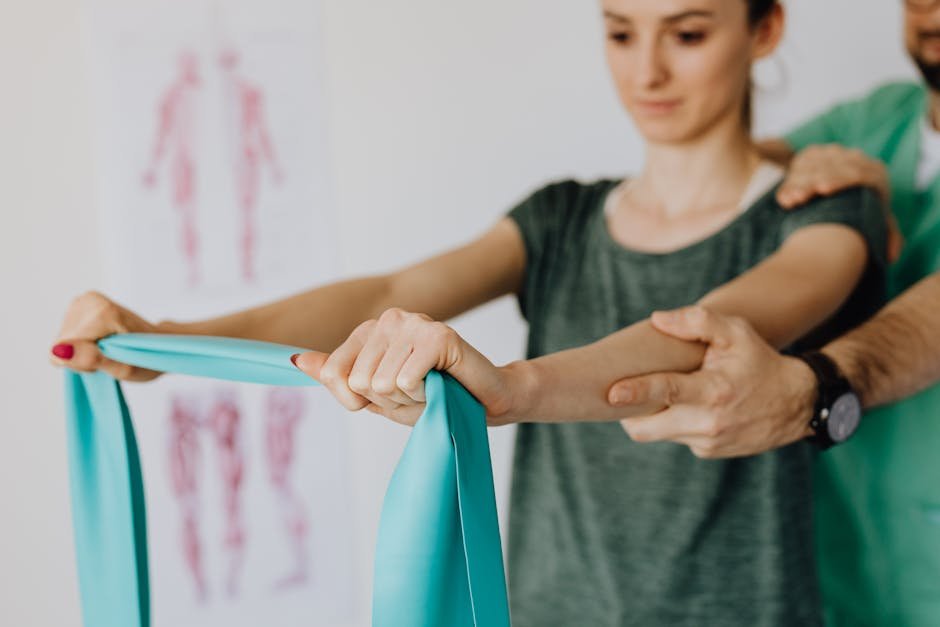
As you grow stronger and more confident, the challenge gradually increases. This might mean adding light resistance bands, incorporating body weight exercises in more demanding positions, or introducing load-bearing activities that build endurance and bone strength. The key word here is gradual — the stress on your system increases slowly and safely, giving your muscles, joints, and nervous system time to adapt without risking a setback.
It’s also worth remembering that your spine doesn’t exist in isolation. It’s intimately connected to your hips, shoulders, and neck — all part of what movement specialists call the “kinetic chain.” Effective exercise progression takes the whole chain into account. Improving hip mobility, mid-back (thoracic) rotation, and neck stability all play a role in keeping your spine healthy. An imbalance anywhere along this chain can quietly create problems for your back, so addressing movement quality across the whole body is essential for long-term results.
What About High-Performance Goals?
It’s a common assumption that therapeutic exercise is only for people recovering from injury or managing chronic pain. But the same principles of progressive loading and functional movement apply to anyone who wants to perform at a higher level — athletes, physically demanding job workers, or simply active adults who want to stay that way for decades to come.
Once the foundational and functional stages are well established, exercise progression can continue into sport-specific drills, agility training, and exercises that replicate the exact demands of a chosen activity. A weekend runner might work on hip strength and single-leg stability. Someone whose job involves heavy lifting might focus on loaded squatting patterns and rotational strength. The beauty of this approach is that it scales — the same principles that help a desk worker eliminate back pain can also help an athlete reach their peak performance and significantly reduce their risk of future injury.
The ultimate aim of any good exercise progression program is not just to manage symptoms — it’s to help you achieve the highest quality of movement your body is capable of, safely and sustainably.
Practical Tips: What You Can Do to Support Your Spine Health
Ready to take action? Whether you’re just starting out or looking to deepen your commitment to spinal health, these practical steps will help you get the most from a therapeutic exercise progression approach:
- Work with a qualified professional. If you’re dealing with pain, this is not the time to go it alone. A physical therapist, exercise physiologist, or qualified chiropractor can assess your specific needs, design a personalised program, and guide you safely through each stage of progression. Their expertise can make the difference between slow recovery and real, lasting results.
- Prioritise quality over quantity. Especially in the early stabilisation phase, doing an exercise correctly matters far more than doing it many times. A handful of perfectly controlled repetitions will do more good — and cause less harm — than a dozen sloppy ones. Slow down and focus.
- Listen to your body. Some mild muscle fatigue is normal and expected as you build strength. Sharp pain, increasing pain, or pain that radiates down your arms or legs is a signal to stop and consult your healthcare provider. Never push through pain.
- Consistency beats intensity. Building neuromuscular control and real strength takes time and regular practice. Short, focused exercise sessions several times a week will always outperform sporadic, all-out efforts. Make it a habit, not a heroic event.
- Be patient — progress isn’t always linear. Recovery has good days and frustrating days. Celebrate small improvements, trust the process, and remember that you’re building long-term resilience, not just chasing a quick fix.
- Move well throughout your day. Your structured exercise sessions are important, but so is how you move the rest of the time. Sit with good posture, stand up and stretch regularly, bend with your knees when lifting, and stay mindful of how you carry things. Your body is designed to move — give it the opportunity to do so well.
- Invest in supportive tools if needed. Resistance bands, foam rollers, and exercise mats can be helpful companions on your journey. Look for quality options that support your program — your healthcare provider can advise on what’s appropriate for your stage of progression.
Why This Approach Works for Long-Term Spinal Health
The reason exercise progression is so powerful — and so different from simply doing a few back stretches — is that it works with your body’s natural healing and adaptation systems. By starting with deep stabilisation and systematically building toward full functional movement, you’re retraining the neuromuscular pathways that control how your spine moves and protects itself. You’re not masking a problem; you’re actually solving it at the source.
Research and clinical experience consistently support this staged approach. When deep stabilising muscles are properly activated and functional movement patterns are trained, people experience not only reduced pain but also greater confidence in their bodies, improved posture, and a significantly lower risk of re-injury. It’s a genuinely holistic solution — one that honours the complexity of the spine rather than oversimplifying it.
Perhaps most importantly, this approach is empowering. It shifts the focus from “what’s wrong with me” to “what my body is capable of.” And that shift in perspective can be transformative. With the right guidance, the right progression, and a little patience, most people are genuinely surprised by how strong and capable their bodies can become — even after years of pain or limited movement.
The Bottom Line: Exercise progression — moving deliberately from deep stabilisation to functional movement patterns — is one of the most effective and evidence-supported approaches to lasting spine health. It’s not about working harder; it’s about working smarter, starting with the foundations and building upward with purpose. Whether you’re recovering from injury, managing chronic back pain, or simply want to move better and feel stronger, this progressive approach offers a clear, practical, and genuinely transformative path forward. Start where you are, work with a professional, stay consistent, and trust your body’s remarkable ability to heal and grow stronger.
This is not medical advice. Consult your healthcare provider before starting any new health routine or using any product mentioned here.