Daily Joint Mobility Routine for Seniors: Feel Looser, Move Better Every Day
This post contains affiliate links. As an Amazon Associate, I earn from qualifying purchases at no extra cost to you.
Free resources — no credit card required for trial
🎧 Listen to health & wellness audiobooks free for 30 days
Start 30-Day Free Trial →
🛒 Recommended Products
As an Amazon Associate we earn from qualifying purchases at no extra cost to you.
TheraBand First Step to Active Health Kit — Senior Exercise Program for Balance and Fall P
$19.99
EZ Off Jar Opener for Seniors — Under Cabinet Jar Opener for Weak Hands and Arthritis
$9.99
Omron 5 Series Upper Arm Blood Pressure Monitor — 2-User 100-Reading Memory Wide-Range Cuf
$44.99
OMRON 7 Series Wireless Wrist Blood Pressure Monitor — Clinically Validated with Connect A
$69.99
Vitality 4 Life Senior Resistance Band with Instruction Guide — Specifically for Elderly F
$16.99
📚 Read unlimited health books free for 30 days
Try Kindle Unlimited Free →
If your mornings start with stiff knees, achy hips, or shoulders that just don’t want to cooperate, you’re far from alone. Stiffness and reduced range of motion are among the most common challenges that come with getting older — but they don’t have to slow you down. A simple daily joint mobility routine can make a remarkable difference in how you feel and move, and the best part? It only takes 5 to 10 minutes. No gym membership needed, no special equipment required, and no fitness background necessary. Whether you’re standing at your kitchen counter or sitting in your favourite chair, this gentle routine is designed with you in mind.
What Is Joint Mobility and Why Does It Matter for Seniors?
Joint mobility simply means moving each of your joints through its comfortable range of motion. Think of it as keeping the hinges in your body well-oiled. When we age, joints can feel increasingly stiff, and the muscles around them may not work as smoothly as they once did. This can make everyday tasks — like reaching up to a cupboard shelf, bending to tie your shoes, or turning your head while reversing the car — feel harder than they should.
Here’s the encouraging news: gentle, regular movement actually helps lubricate your joints. Moving stimulates the production of synovial fluid, the natural liquid that cushions your joints and keeps them gliding smoothly. A consistent daily joint mobility routine also helps keep muscles balanced, improves circulation throughout the body, and can noticeably reduce that everyday stiffness that tends to creep in when we’ve been sitting or sleeping for a while.
Unlike high-impact exercise or intense stretching, mobility work is slow, controlled, and deeply respectful of where your body is today. The goal isn’t to push through pain or impress anyone — it’s simply to keep you moving comfortably and independently for as long as possible.
Getting Started: What You Need to Know Before You Begin
One of the best things about this routine is how accessible it is. You can do it standing beside a sturdy chair or countertop for balance, or entirely seated in a firm chair with both feet flat on the floor. If you have limited mobility, begin seated and adapt each movement to whatever feels comfortable for your body. There is absolutely no “wrong” version of this — the right version is the one that works for you today.
A few important safety points to keep in mind: always move within a comfortable range. You should feel a gentle loosening sensation, not sharp or shooting pain. If something hurts, skip it for the day and try again tomorrow with a smaller range of movement. Breathe steadily throughout — never hold your breath. And make sure your environment is set up safely: non-slip footwear, clear floor space, and good lighting go a long way in preventing falls.
If you have arthritis, osteoporosis, a recent surgery, or any other health concerns, it’s a good idea to check with your doctor or physical therapist before starting any new exercise routine. They may have specific modifications that are perfect for your situation. That said, for most seniors, gentle mobility work like this is not only safe — it’s actively recommended.
Your Step-by-Step Daily Joint Mobility Routine
This routine moves through the whole body from head to toe and takes around 5 to 10 minutes. You can do each movement once through, or repeat as you like. There’s no rush — slow and steady is exactly right here.
Start with a 1-minute gentle warm-up. March gently in place or simply tap your feet while breathing slowly in and out, swinging your arms a little. If marching feels uncomfortable, try lifting one knee at a time from a chair, or just wiggle your toes and ankles. This warms up the joints and signals to your body that movement is coming.
Neck mobility comes next — about 30 to 60 seconds. Slowly tilt your head toward one shoulder, hold for a moment, then switch sides. Do three on each side, then gently turn your head left to right in a smooth arc, three passes in each direction. Keep your shoulders relaxed and your movements unhurried.
Shoulder circles and rolls follow — about a minute. Roll both shoulders forward in small circles eight times, then backward eight times. If doing both together feels unsteady, do one shoulder at a time. This loosens the shoulder joints and the upper back beautifully.
Arms, elbows, and wrists are next. Slowly bend and straighten your elbows eight times, then make gentle circles with your wrists — eight circles in each direction. These movements improve the range of motion you rely on for everyday tasks like reaching and gripping.
Hands and fingers deserve their own moment. Open your hands wide, then gently make a fist and release — repeat eight to ten times. Then tap each fingertip to your thumb in sequence, ten taps per finger. This supports the fine motor function you need for buttons, doorknobs, and jars.
Torso and spine mobility is wonderful for posture. Sitting or standing tall, gently twist your upper body to the right, keeping your hips still, then return to centre and twist left. Aim for six twists on each side. Move through a comfortable range only, and stop if you feel any strain in your back.
Hips and legs come next — one to two minutes. If standing, gently circle each hip in a semi-circle six times in each direction. If seated, lift one knee a few inches toward your chest and lower it, alternating legs for six to eight repetitions each. Flexible hips help protect your knees and support your balance.
Knees and ankles follow. Standing with support, bend your knees slightly as if sitting back into a chair, then straighten — six to eight repetitions. Then do ankle circles (six to eight times in each direction per ankle) and ankle pumps — pointing and flexing your feet ten to twelve times. These keep your ankles and knees ready for walking and climbing stairs.
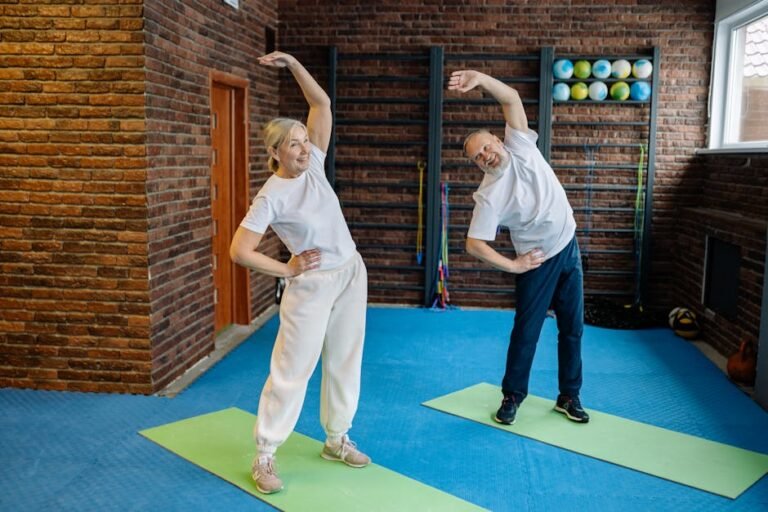
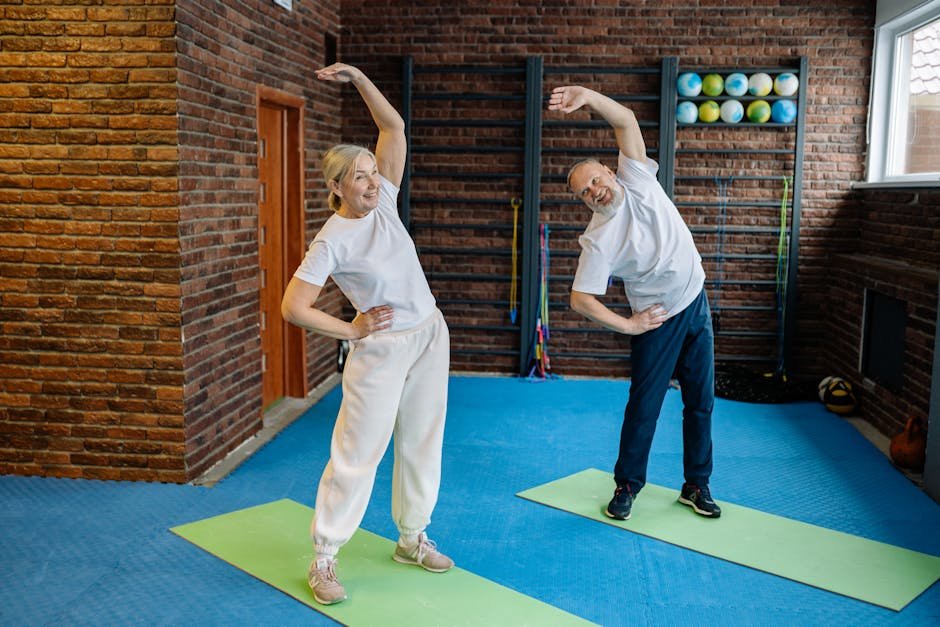
Finish with a full-body stretch and breath. Raise your arms overhead as you breathe in deeply, then lower them as you breathe out. Gently side-bend your torso to each side, holding for five to eight seconds. This wraps up the routine with a calm, full-body release.
Practical Tips: What You Can Do to Make This Routine Stick
- Pick a regular time. Whether it’s right after you get up, before breakfast, or in the evening while the kettle boils, doing your daily joint mobility routine at the same time each day helps it become a natural habit rather than a chore.
- Start with fewer repetitions. If you’re new to this, don’t worry about completing every set. Even just two or three of each movement is a brilliant starting point. Build up gradually as your confidence and comfort grow.
- Use a sturdy chair. A firm, non-wheeled chair is your best friend here — it gives you something to hold for balance during standing movements and a safe seat for the seated versions.
- Keep a simple tracker. A small calendar on the fridge where you add a checkmark each day you complete the routine can be surprisingly motivating. Watching those marks build up over weeks feels genuinely rewarding.
- Wear non-slip footwear. Socks on a smooth floor can be a hazard. Wear supportive shoes or non-slip socks to keep yourself stable.
- Invite someone to join you. A partner, friend, or family member can do this routine alongside you — it’s more fun together and helps both of you stay accountable.
- If you have arthritis, move extra slowly and allow a little more rest between movements. A gentle stretch held for a few seconds is far more beneficial than pushing hard into a range that causes discomfort.
- If you have osteoporosis or a history of falls, avoid fast twisting movements and always use support. Keep every movement slow and deliberate.
- Hydrate. Have a glass of water before you begin, especially in warmer weather. Stop immediately if you feel dizzy, lightheaded, or unusually short of breath.
- Pair it with something you enjoy. Do your routine with the radio on, during a favourite podcast, or right before a cup of tea you look forward to. Linking it to something pleasant makes it easier to show up for it daily.
What to Expect: Benefits You May Notice Over Time
It’s worth being realistic and encouraging in equal measure here. You may not notice a dramatic transformation after one or two sessions — and that’s completely normal. Joint mobility work is a long game, and its rewards are cumulative. Many people find that after one to two weeks of daily practice, their mornings feel a little easier. That stiffness when you first stand up? It tends to ease more quickly. Reaching for things overhead, turning to look behind you, walking up stairs — these everyday movements can start to feel less effortful.
Beyond the physical benefits, there’s something genuinely uplifting about having a small, positive daily ritual that belongs entirely to you. It’s five to ten minutes of your day that say: I’m investing in my own wellbeing. That mindset shift — from passive ageing to active self-care — can do a great deal for your mood and confidence too.
Over time, you may also find it easier to add to the routine. A short walk afterward, a few balance exercises, or a gentle yoga video can all complement your daily joint mobility work. But there’s absolutely no pressure to do more. For many seniors, five to ten minutes every single day is both achievable and genuinely transformative on its own.
When to Talk to Your Doctor or Physical Therapist
Most healthy seniors can begin a gentle mobility routine without any special clearance — but your individual health history matters. If you’ve had a recent joint replacement, fracture, or surgery, please check with your surgeon or physiotherapist before beginning. They can tell you which movements are safe and which to avoid during your recovery.
Similarly, if you notice joint swelling, unusual warmth around a joint, a rash, or pain that persists for more than a day or two after exercising, pause the routine and speak with your healthcare provider. These could be signs of an inflammatory flare or another condition that needs attention before you continue.
A physical therapist can also be an incredible ally if you’re not sure how to modify certain movements for your specific needs. Even one or two sessions can give you personalised guidance that makes the whole routine safer and more effective for your body. Many GP surgeries can refer you, or you can seek one out privately.
The Bottom Line: A daily joint mobility routine is one of the simplest, most accessible things you can do to protect your joints, reduce stiffness, and maintain the independence you value in everyday life. It takes just five to ten minutes, requires no equipment, and can be done from a chair if needed. By moving gently and consistently through each joint — from your neck and shoulders right down to your ankles — you keep your body lubricated, balanced, and ready for whatever the day brings. Start small, listen to your body, be patient with yourself, and celebrate every single session you complete. Your joints will thank you for it.
This is not medical advice. Consult your healthcare provider before starting any new health routine or using any product mentioned here.