Gentle Stretch and Strength Combo for Seniors: Move Better, Feel Stronger Every Day
This post contains affiliate links. As an Amazon Associate, I earn from qualifying purchases at no extra cost to you.
Free resources — no credit card required for trial
🎧 Listen to health & wellness audiobooks free for 30 days
Start 30-Day Free Trial →
🛒 Recommended Products
As an Amazon Associate we earn from qualifying purchases at no extra cost to you.
TheraBand First Step to Active Health Kit — Senior Exercise Program for Balance and Fall P
$19.99
EZ Off Jar Opener for Seniors — Under Cabinet Jar Opener for Weak Hands and Arthritis
$9.99
Omron 5 Series Upper Arm Blood Pressure Monitor — 2-User 100-Reading Memory Wide-Range Cuf
$44.99
OMRON 7 Series Wireless Wrist Blood Pressure Monitor — Clinically Validated with Connect A
$69.99
Vitality 4 Life Senior Resistance Band with Instruction Guide — Specifically for Elderly F
$16.99
📚 Read unlimited health books free for 30 days
Try Kindle Unlimited Free →
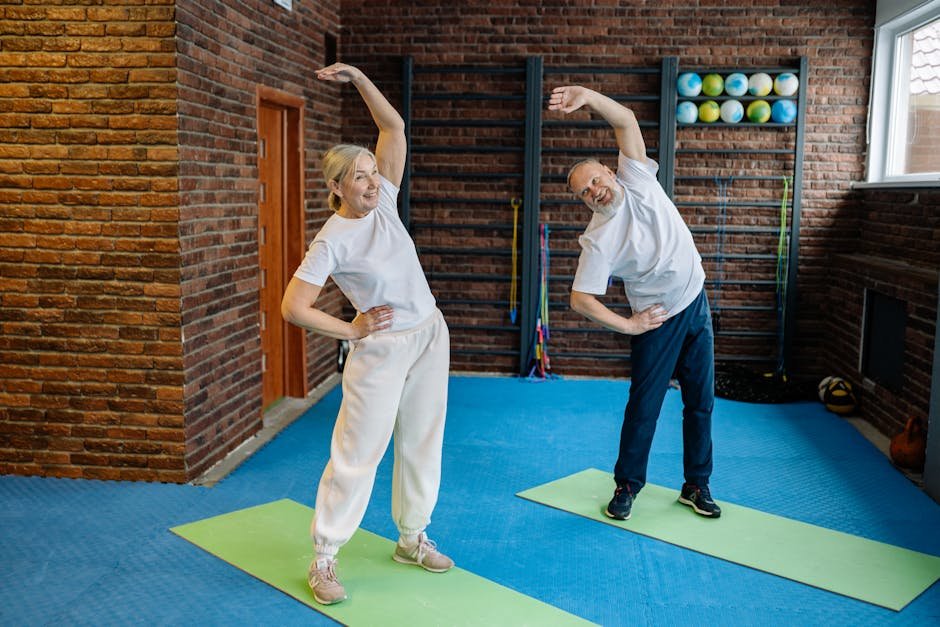
If mornings feel a little stiffer than they used to, or you’ve caught yourself holding the handrail a little tighter on the stairs, you are absolutely not alone. For many older adults, everyday movement can start to feel like more of an effort — and that’s completely understandable. But here’s the encouraging news: a gentle stretch and strength combo for seniors is one of the most effective, kind, and practical ways to turn that around. By pairing simple stretches with light strengthening exercises, you can improve how freely your joints move, build the muscle support your body needs, and feel steadier on your feet — all without pushing yourself to any painful extreme. This isn’t about running marathons or lifting heavy weights. It’s about moving better in the life you already have.
Why Combining Stretching and Strength Work Is a Game-Changer for Older Adults
You might have heard that stretching is good for flexibility, or that strength training helps with balance — but the real magic happens when you combine the two. Stretching helps free up tight joints and muscles, improving your range of motion so everyday movements like reaching for a high shelf or bending to tie your shoes feel easier. Strength work, even with light resistance, helps your muscles better support those joints, protecting them from strain and wear.
Together, this gentle stretch and strength combo addresses two of the most important pillars of healthy aging: mobility and stability. Mobility is how freely your body moves; stability is how well it holds itself steady. Both matter enormously for doing the things you love — walking in the park, getting in and out of a chair confidently, playing with grandchildren, or simply carrying groceries without worry.
The goal here is never to push to your limit. It’s about steady, comfortable progress. Every small improvement in flexibility and strength adds up, and your body will thank you for the consistency far more than it would ever thank you for one heroic workout.
Before You Begin: Safety Tips That Make All the Difference
A little preparation goes a long way when it comes to exercising safely and comfortably. The first thing to know is that you should always start with the easiest version of any movement and only increase difficulty when it genuinely feels comfortable to do so. There’s no rush, and there’s no competition — not even with your past self.
When you stretch, aim for a feeling of mild tension, not pain. If something hurts, stop or adjust. Pain is your body’s way of saying “not like that” — and listening to it is a sign of wisdom, not weakness. A sturdy chair, a kitchen countertop, or a wall are your best friends during this routine. Use them freely for balance and confidence.
Breathing is also more important than it might seem. Inhale to prepare for a movement, and exhale during the effort. Before any session, spend five minutes warming up — march gently in place, do some slow shoulder rolls, and make gentle circles with your ankles. This wakes up your joints and gets blood flowing before you ask more of your muscles. And if you have a recent injury, chronic pain, or a medical condition, please check with your healthcare provider before starting this or any new exercise routine.
The Six-Pair Gentle Stretch and Strength Routine
This routine is built around six body-area pairs — each one combining a gentle stretch with a beginner-friendly strengthening move. Work through them in order, moving slowly and with intention. For beginners, aim for one to two sets of eight to twelve repetitions, or hold each stretch for fifteen to thirty seconds per side. As you grow stronger and more confident, you can gradually increase your repetitions or add light weights or a resistance band.
Neck and Shoulders: Sit or stand tall and gently tilt your head toward one shoulder until you feel a comfortable stretch along the opposite side of your neck. Hold, then switch. Follow this with a seated or standing shoulder press — hold light dumbbells or a resistance band at shoulder height, press upward, then lower slowly. Use no weight at first if that feels better.
Chest and Upper Back: Stand in a doorway and gently press your forearm against the frame, turning your body slightly to open up the chest. Then try wall push-ups — hands flat against a wall at chest height, bend your elbows to bring your chest toward the wall, then press back. This is wonderfully effective and kinder on the joints than floor push-ups.
Back of Thighs and Hips: Sit tall in a chair, extend one leg with the heel resting on the floor, and hinge gently forward at the hips until you feel the stretch in the back of your thigh. For the strength move, try a glute bridge — lying on your back with knees bent, press through your heels to lift your hips, then lower slowly. This is excellent for the whole back of the body.
Hip Flexors and Legs: Step one foot forward into a gentle lunge position, keeping your back knee low. Tuck your pelvis slightly to feel the stretch along the front of your back hip. Then, standing in front of a sturdy chair, practise chair squats — lower your hips back toward the seat as if you’re about to sit, then press through your heels to stand. Use the chair for guidance and support as needed.
Calves and Ankles: Stand with one foot a step behind the other, press the back heel down to stretch the calf, and hold. Then try calf raises — standing tall, perhaps holding a chair, rise up onto your toes and lower back down slowly. This one is wonderful for ankle stability and circulation.
Torso and Back: Sitting tall in a chair, gently twist your upper body to one side, using the chair back or armrest for support. Then, with a resistance band anchored under your seat, perform a seated row — pull the band toward your torso, squeezing your shoulder blades together. This strengthens the muscles that support good posture all day long.
What You Can Do: Practical Tips for Making This Routine Work for You
- Start small and build gradually. Begin with just one set of each pair and only six to eight repetitions or fifteen seconds of stretching. Add more only when it feels genuinely comfortable.
- Use support freely. Chairs, walls, and countertops are there to help — never hesitate to use them. Reducing your range of motion slightly is also perfectly fine while you build confidence.
- Begin with no weights at all. Once bodyweight movements feel easy, try one to two pound dumbbells or a light resistance band. Increase resistance gradually as your strength improves.
- Aim for two to three sessions per week, with at least one rest day between workouts. Consistency over time matters far more than frequency in any single week.
- Always warm up for five minutes before beginning — gentle marching, shoulder rolls, and ankle circles prime your body beautifully.
- Finish with a gentle cooldown: a few deep breaths, arms stretched gently overhead, and light stretches for any muscles that feel worked.
- Stop if something hurts sharply. Mild stretch tension is normal; sharp or intense pain is not. Switch to a gentler version or skip that pair for the day.
- Keep a simple log or checklist. Print this routine, pop it on the fridge, and tick off each pair as you complete it. Seeing your progress in writing is genuinely motivating.
- Hydrate before, during, and after. Even gentle exercise is physical work, and staying hydrated supports your energy and recovery.
Listening to Your Body and Trusting the Process
One of the most important skills you can develop as you begin this routine is learning to read your body’s signals. Some days you’ll feel loose, energised, and ready to go — those are wonderful days. Other days, stiffness or fatigue may make the routine feel harder. Both are completely normal, and both are worth showing up for in some way, even if that means a shorter session or a gentler version of each move.
If you ever feel unusually dizzy, short of breath, or exhausted during exercise, pause, rest, and hydrate. These are signals to take seriously. Rest days are not setbacks — they are part of the programme. Your muscles repair and grow stronger during rest, not during the workout itself.
Progress in a gentle stretch and strength routine can feel subtle at first. You might not notice it until one day you realise you stood up from a chair more easily, or you walked up a slight hill without feeling winded. Those moments are worth celebrating, because they represent real, meaningful change in your daily life. Honour your pace, be patient with yourself, and keep the focus on comfort and gradual growth rather than any external benchmark.
The Bigger Picture: Why This Matters Beyond the Physical
It would be easy to reduce this routine to a list of exercises, but what it’s really about is something much more meaningful: confidence, independence, and quality of life. When your body moves more freely and feels steadier, you’re more willing to engage with the world around you — to take a walk, accept an invitation, try something new. That ripple effect on your mood, social life, and sense of self is just as valuable as any improvement in muscle tone.
Research consistently shows that regular movement — even gentle movement — can support balance and reduce the risk of falls, which is one of the biggest concerns for older adults and their families. It can also support better sleep, improved energy levels, and a more positive mood. And perhaps most powerfully, it gives you a sense of agency: the knowledge that you are actively doing something kind and meaningful for your body and your future.
You don’t need a gym membership, expensive equipment, or an hour a day. You need a sturdy chair, a small amount of clear floor space, and about twenty to thirty minutes a few times a week. That’s it. Everything else — the strength, the steadiness, the confidence — follows from showing up consistently and moving with care.
The Bottom Line: A gentle stretch and strength combo for seniors is one of the most practical, accessible, and rewarding things you can do for your health and independence. By pairing simple stretches with light strengthening moves across the major areas of your body, you’re building both mobility and stability — the two pillars that support nearly every movement you make each day. Start slowly, use support freely, listen to your body, and celebrate every small win along the way. Your body is capable of more than you might think, and every step you take toward caring for it today is an investment in a more active, confident, and vibrant tomorrow.
This is not medical advice. Consult your healthcare provider before starting any new health routine or using any product mentioned here.