
How to Reduce Back Pain from Sitting Too Long: Gentle, Practical Relief for Everyday Life
This post contains affiliate links. As an Amazon Associate, I earn from qualifying purchases at no extra cost to you.
Free resources — no credit card required for trial
🎧 Listen to health & wellness audiobooks free for 30 days
Start 30-Day Free Trial →
🛒 Recommended Products
As an Amazon Associate we earn from qualifying purchases at no extra cost to you.
TheraBand First Step to Active Health Kit — Senior Exercise Program for Balance and Fall P
$19.99
EZ Off Jar Opener for Seniors — Under Cabinet Jar Opener for Weak Hands and Arthritis
$9.99
Omron 5 Series Upper Arm Blood Pressure Monitor — 2-User 100-Reading Memory Wide-Range Cuf
$44.99
OMRON 7 Series Wireless Wrist Blood Pressure Monitor — Clinically Validated with Connect A
$69.99
Vitality 4 Life Senior Resistance Band with Instruction Guide — Specifically for Elderly F
$16.99
📚 Read unlimited health books free for 30 days
Try Kindle Unlimited Free →
If your back aches after a long day of sitting — whether you’ve been at a desk, watching your favourite shows, or enjoying a leisurely meal with family — you’re far from alone. Back pain caused by prolonged sitting is one of the most common complaints among adults, and it becomes even more noticeable as we get older. The stiffness, the dull ache, that feeling of tightness when you finally stand up — it can take the joy out of ordinary days. The wonderful news? You don’t need to overhaul your entire life to feel better. Small, consistent changes to how you sit, how often you move, and how you set up your space can make a genuinely meaningful difference. Let’s walk through everything you need to know, step by step.
Why Prolonged Sitting Causes Back Pain in the First Place
Understanding what’s actually happening in your body can help you make smarter choices about how to address it. When you sit for extended periods, your lower back and the discs between your vertebrae are under sustained pressure. If your posture is less than ideal — maybe you’re slouching slightly forward or your chair doesn’t offer much support — that pressure increases significantly, putting extra strain on the muscles and ligaments that hold your spine in place.
Over time, this leads to the familiar trio of sitting-related misery: stiffness, aching, and a reduced range of movement. Your muscles essentially “set” into the position you’ve been holding, which is why getting up after a long sit can feel so uncomfortable. The spinal discs also lose some of their natural cushioning effect when you’re seated for too long without a break, which can contribute to that deep, nagging lower back pain.
The encouraging part is that your back is remarkably responsive to gentle care. By supporting your spine’s natural curves, moving regularly throughout the day, and making a few simple tweaks to your seating setup, you can ease that strain considerably. You don’t need to be especially fit or flexible — you just need a little knowledge and the willingness to try.
Posture Adjustments That Help Reduce Back Pain from Sitting
Good posture doesn’t mean sitting rigidly like a soldier. It simply means positioning your body so that your spine is supported in its natural, gentle S-curve — which is actually the position it’s happiest in. A few mindful adjustments can transform how your back feels after even a long sitting session.
Start by sitting back fully in your chair so your lower back is touching or resting against the backrest. If there’s a gap between your back and the chair — which is common with dining chairs or sofas — roll up a small towel or grab a cushion and tuck it into that curve. Keep your feet flat on the floor, and if your feet don’t quite reach, a small footrest or even a thick book works beautifully. Your knees should be roughly level with your hips, or just slightly lower — this alignment takes the pressure off your lower back naturally.
Think about your head and neck too. Many of us tend to push our chin forward when we’re concentrating, particularly if we’re reading or looking at a screen. Try to keep your head balanced directly over your shoulders, as though a gentle thread is pulling the crown of your head toward the ceiling. Your shoulders should feel relaxed, not hunched up toward your ears. When you’re using a desk or table, aim to keep your elbows at roughly a 90-degree angle close to your body — if your setup forces your arms too high or too low, that imbalance travels right up into your back and neck.
A practical habit that helps enormously: do a quick posture check a few times each hour. You don’t need to be perfect all the time — just notice when you’ve drifted into a slump and gently correct it. That little moment of awareness, repeated throughout the day, adds up to significantly less strain on your back overall.
Gentle Stretches to Ease Stiffness and Keep Your Back Comfortable
Movement is genuinely one of the best medicines for back pain caused by sitting. You don’t need an intense exercise routine — gentle, regular movement keeps your muscles flexible, improves circulation, and signals your nervous system to relax. The stretches below are safe for most people, but always move slowly and stop immediately if anything causes sharp or worsening pain.
A seated gentle twist is a wonderful one to start with. Sit tall in a sturdy chair with both feet flat on the floor. Place your right hand on the back of the chair and your left hand on your right knee, then slowly rotate your upper body to the right. Hold for five to ten seconds, breathing gently, then return to centre and repeat on the other side. Two or three twists per side is plenty. A seated side bend is equally lovely: sit tall, reach one arm over your head, and lean gently in the opposite direction until you feel a stretch along your side. Hold briefly and switch sides.
If you can lie down comfortably, a pelvic tilt is one of the most effective and gentle exercises for lower back relief. Lie on your back with knees bent, then press your lower back gently toward the floor by tilting your pelvis slightly upward. Hold for five seconds and release. Repeat eight to twelve times. If lying down isn’t comfortable, this same movement can be done standing with your back against a wall. The cat-cow flow — whether on hands and knees or adapted to a seated position — is another gentle winner: slowly round your back (like a stretching cat) and then arch it gently (like a cow), moving through six to eight slow cycles.
Don’t overlook your upper body either. A simple shoulder blade squeeze — pulling your shoulder blades together and holding for five seconds, then releasing — directly counteracts the forward-slumping that screens encourage. And a gentle neck stretch, slowly tilting your head to each side and holding briefly, can release a surprising amount of tension that travels all the way down into the back. Finish with some calf raises while holding the back of a sturdy chair: rising up onto your toes and lowering slowly, ten to fifteen times. This helps with circulation and gently warms up the whole back body.
Practical Tips: What You Can Do Right Now to Support Your Back
Sometimes the most helpful thing is a simple, actionable list you can refer back to. Here are the most effective changes you can make today — many of them cost nothing at all:
- Add lumbar support: Roll up a towel, use a small pillow, or invest in a foam lumbar roll to fill the gap between your lower back and your chair. This single change can dramatically reduce lower back strain.
- Check your chair height: Adjust so your knees are roughly level with your hips and your feet rest flat on the floor. Use a footrest if needed.
- Raise your screen to eye level: Whether it’s a TV, computer monitor, or tablet, keeping the screen at eye level stops you from leaning forward and tilting your head down — a common cause of neck and upper back pain.
- Set a movement timer: Use your phone, a kitchen timer, or a smartwatch to remind yourself to stand up and move for one to two minutes every 30 to 60 minutes. Even a brief walk to the kitchen counts.
- Use a seat cushion: A good cushion can reduce pressure on your hips and lower back, especially on harder chairs. Look for ones with gentle pressure-relief foam.
- Take short walking breaks: A five to ten minute gentle walk around the house or garden is one of the best things you can do for a stiff back — it gets your circulation moving and gently loosens tight muscles.
- Sleep with support: A pillow between your knees when sleeping on your side can significantly reduce hip and lower back strain overnight, so you wake up with less morning stiffness.
- Stay hydrated: It sounds simple, but good hydration supports overall tissue health, including the discs in your spine.
- Check your posture hourly: A quick body scan — feet flat? lower back supported? shoulders relaxed? — takes seconds and keeps discomfort at bay throughout the day.
Incorporating More Movement Into Your Day (Without a Gym)
One of the gentlest and most effective ways to manage back pain caused by sitting is simply to sit less — and that doesn’t mean you need to start an intense fitness programme. It’s about weaving small bursts of movement into the rhythm of your existing day. The goal is to interrupt long periods of stillness before your muscles have a chance to tighten up and complain.
Think about natural pauses in your day and use them as movement cues. If you’re watching television, stand up during commercial breaks or after each episode. If you’re reading, set a bookmark and take a short stretch every hour. Keep a glass of water on the far side of the room so you have to walk to it. These tiny interruptions might feel insignificant in the moment, but they genuinely add up to less stiffness and more comfort by the end of the day.
Gentle activities that improve flexibility and strength without putting stress on a sensitive back are particularly valuable. Slow walking, light gardening, gentle swimming, or even slow dancing in your living room are all wonderful options. Practices like tai chi are especially worth exploring — they combine gentle movement, balance, and mindfulness in a way that many people find genuinely enjoyable and deeply beneficial for back health. The aim isn’t athletic achievement; it’s simply keeping your body moving in ways that feel good.
When to Ask a Healthcare Professional for Help with Back Pain
Most back pain that comes from sitting too long responds well to the gentle steps described above. But it’s important to know when your symptoms deserve a professional’s attention. Listening to your body and seeking help when you need it is a sign of wisdom, not weakness.
Reach out to your doctor or healthcare provider if your back pain has lasted more than a few weeks, keeps coming back despite your best efforts, or is getting worse rather than better. You should also seek professional advice if you experience numbness, tingling, or weakness in your legs or feet — these can be signs that a nerve is involved and needs proper assessment. Pain that wakes you up at night, severely limits your daily activities, or follows a fall or injury also warrants prompt medical attention.
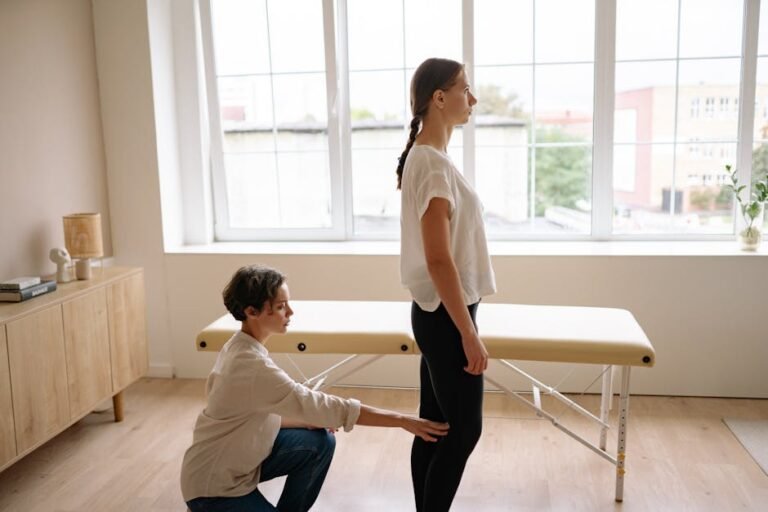
A primary care physician can assess for any underlying conditions and rule out anything more serious. A physiotherapist or physical therapist is a particularly valuable resource — they can design a personalised exercise programme, teach you correct form, and help you make the right modifications for your specific situation. An occupational therapist can also be enormously helpful, particularly if you’d like guidance on setting up your home seating environment to better support your back in daily life. You don’t have to figure this all out on your own, and professional guidance can make your journey to comfort both safer and faster.
The Bottom Line: Back pain caused by prolonged sitting is genuinely common, especially as we get older — but it is manageable. By making a few thoughtful adjustments to your posture, adding gentle stretches to your daily routine, setting up your seating with proper support, and building small movement breaks into your day, you can significantly reduce discomfort and protect your back for the long term. Start with one or two changes that feel achievable, and build from there. Small, consistent steps really do add up — and you deserve to feel comfortable, capable, and at ease in your own body every single day.
This is not medical advice. Consult your healthcare provider before starting any new health routine or using any product mentioned here.