Meditation for Seniors With Arthritis: A Gentle, Step-by-Step Guide to Finding Calm and Comfort
This post contains affiliate links. As an Amazon Associate, I earn from qualifying purchases at no extra cost to you.
Free resources — no credit card required for trial
🎧 Listen to health & wellness audiobooks free for 30 days
Start 30-Day Free Trial →
🛒 Recommended Products
As an Amazon Associate we earn from qualifying purchases at no extra cost to you.
TheraBand First Step to Active Health Kit — Senior Exercise Program for Balance and Fall P
$19.99
EZ Off Jar Opener for Seniors — Under Cabinet Jar Opener for Weak Hands and Arthritis
$9.99
Omron 5 Series Upper Arm Blood Pressure Monitor — 2-User 100-Reading Memory Wide-Range Cuf
$44.99
OMRON 7 Series Wireless Wrist Blood Pressure Monitor — Clinically Validated with Connect A
$69.99
Vitality 4 Life Senior Resistance Band with Instruction Guide — Specifically for Elderly F
$16.99
📚 Read unlimited health books free for 30 days
Try Kindle Unlimited Free →
Living with arthritis is no small thing. The daily aches, the morning stiffness, the fatigue that sneaks up on you — it all adds up. If you’ve ever wondered whether meditation for seniors with arthritis could actually help, the answer is a warm and encouraging yes. Meditation isn’t about twisting yourself into uncomfortable positions or clearing your mind completely (which, let’s be honest, nobody actually does). It’s about giving yourself permission to slow down, breathe, and gently shift the way your body and mind experience discomfort. And the best part? You can start from your favourite armchair, in as little as five minutes a day.
Why Meditation for Seniors With Arthritis Is Worth Trying
You might be thinking, “How is sitting still going to help my joints?” It’s a fair question. The connection between a calm mind and a more comfortable body is actually well-supported, and it works in some pretty remarkable ways. When we’re stressed or anxious, our bodies tighten up — muscles clench, breathing becomes shallow, and pain signals can feel louder. Meditation helps interrupt that cycle. By calming the nervous system, it can change the way the brain responds to pain signals, making discomfort feel more manageable rather than overwhelming.
Beyond pain perception, regular meditation practice has been linked to lower stress and anxiety, improved sleep quality, and a more positive mood — all of which matter enormously when you’re managing a chronic condition like arthritis. Better sleep means your body gets more time to repair itself overnight. A calmer mind means less muscle tension around those already-sensitive joints. And a more resilient outlook means the hard days feel a little less heavy. These aren’t small things. They’re the building blocks of a better quality of life.
The beautiful thing about meditation is that it asks nothing of your joints. There are no lunges, no stretches that strain — just breath, awareness, and kindness toward yourself. It truly can be adapted for anyone, regardless of mobility level or pain.
Setting Yourself Up Safely: What to Do Before You Begin
Before you dive in, a little preparation goes a long way. First, it’s always a good idea to let your healthcare provider know you’re planning to add meditation to your routine, particularly if you’ve had recent surgeries, deal with dizziness, or have significant bone or joint concerns. This isn’t because meditation is risky — it’s because they may have specific tips for you, and it’s always better to have your care team in the loop.
Next, think about your space. You don’t need a fancy meditation room or special equipment. A quiet corner with a comfortable chair is absolutely perfect. If you tend to feel cold when you’re still, have a light blanket nearby. Keep a glass of water within reach, and make sure the area is free of trip hazards in case you need to stand up slowly afterward. The goal is to feel safe and supported, not distracted by discomfort in your surroundings.
Dress for ease. Loose, soft clothing lets your joints relax without restriction. Tight waistbands or stiff fabrics can create unnecessary tension, so keep it comfortable and cosy. Once your space is ready and you’re dressed for success, you’re already halfway there.
Finding Your Best Position: No One-Size-Fits-All Here
One of the most liberating things about meditation for seniors with arthritis is that there is no “correct” posture that you must achieve. The goal is simply to find a position where you can breathe comfortably and stay reasonably still — or even gently moving, if that helps.
If sitting in a chair works for you, sit with your back supported, feet flat on the floor. If your hips or knees ache, try placing a cushion under your sit bones or choosing a chair with good lumbar support. You can also put a small pillow between your knees if that eases any hip discomfort. Many people find that a supportive recliner chair is a wonderful meditation seat — it takes pressure off the lower back and hips beautifully.
If sitting is painful on a given day, lying down is completely valid. Rest on your back with a small pillow under your knees and a rolled towel under your neck for gentle alignment. This position takes pressure off your joints and allows your whole body to soften. Some people even find that a very gentle, slow sway or rock of the torso helps ease stiffness enough to settle into stillness — and that’s perfectly fine too. Listen to your body; it knows what it needs.
A Simple, Arthritis-Friendly Meditation Practice to Try Today
Here’s a gentle, step-by-step practice you can try right now, starting at just five minutes and building from there. Don’t worry about doing it perfectly — there is no perfect here, only the kindness of showing up for yourself.
Step 1 — Settle and Soften (1–2 minutes): Get comfortable in your chosen position. Close your eyes gently, or simply soften your gaze downward. Take a few natural breaths. Let your shoulders drop, your jaw unclench, your neck release. Notice any areas of stiffness or pain without trying to fix them — just acknowledge them as part of your body in this moment. That simple act of noticing without judgment is itself a form of meditation.
Step 2 — Gentle Breathing (2–4 minutes): Place one hand lightly on your belly, just below your ribcage. Breathe in slowly through your nose, letting your belly rise softly. Exhale slowly, letting it fall. If breathing through your nose is uncomfortable, a relaxed mouth breath is just as wonderful. If you notice pain anywhere, try breathing toward that area with a soft, accepting breath — not to fix it, but simply to say, “I’m here with you.”
Step 3 — Body Scan With Kindness (3–5 minutes): Bring your attention slowly from your toes upward — through your feet, ankles, knees, hips, belly, chest, shoulders, arms, hands, neck, and head. At each area, breathe gently and imagine a soft warmth easing through your joints. If a particular joint feels tender, acknowledge it neutrally — “stiffness here” — and breathe through it without needing to change anything. If you need to adjust your position at any point, do so slowly and mindfully.
Step 4 — A Loving-Kindness Phrase (2–5 minutes): Choose one gentle phrase to repeat silently: something like “May I be comfortable, may I be calm” or simply “I am here, I am breathing.” When your mind wanders (and it will — that’s completely normal), simply guide it back with patience, not frustration. Each time you return to the breath is a small act of self-care.
Step 5 — Return Slowly (1–2 minutes): Gently become aware of the room around you. Wiggle your fingers and toes. Take one slow, deep breath, and open your eyes when you’re ready. Move slowly before standing, and give yourself a moment to re-orient. You’ve just done something genuinely good for yourself.
What You Can Do: Practical Tips for Making It Work for You
- Start with just 3–5 minutes. Shorter sessions done consistently are far more valuable than long sessions done rarely. Build up by one or two minutes each week as you feel comfortable.
- Try meditating at the same time each day. After morning tea, after lunch, or before bed are all popular times for seniors. Routine makes it easier to remember and stick with.
- Use a guided audio meditation. If you find it hard to follow a practice on your own, a soothing audio guide designed for beginners or seniors can help enormously. Look for a calm voice, gentle music, and a duration that suits you.
- Apply a warm compress before your session. For many people with arthritis, gently warming stiff joints before sitting down can make the experience more comfortable. Always follow your doctor’s advice about heat use.
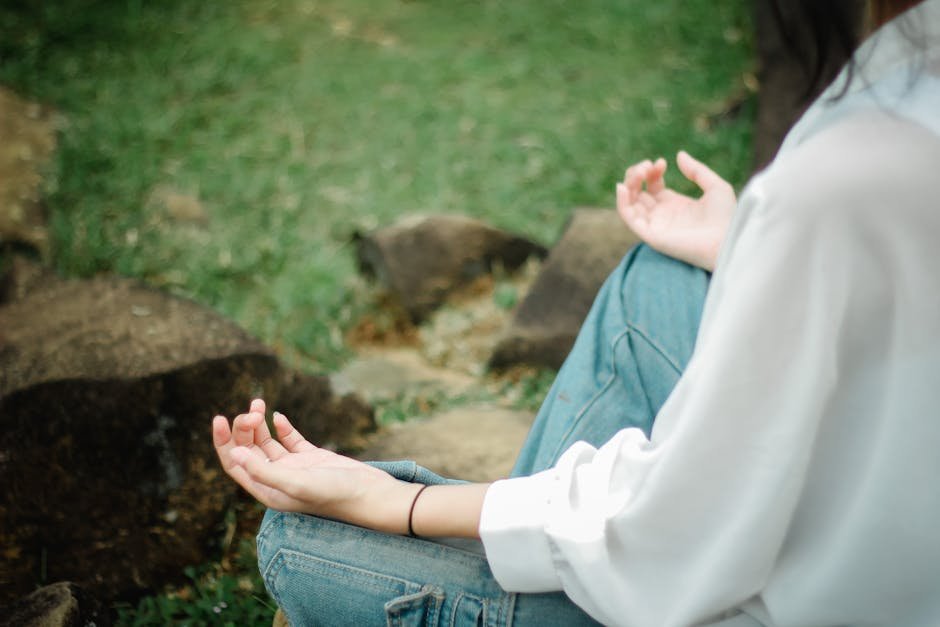
- Don’t worry about your hands. You don’t need to hold any special hand position. Simply rest your hands loosely on your lap or on your abdomen — wherever they feel relaxed.
- Pair meditation with an existing habit. This is called “habit stacking” — tying your new practice to something you already do, like resting after lunch or sitting down with your morning cup of tea. It makes the habit much easier to maintain.
- Use a sticky note or phone reminder. A gentle prompt — “5 minutes of calm today” — on your bathroom mirror or phone can be just the nudge you need.
- Be kind to yourself on the hard days. Some days arthritis will make everything harder, including sitting still. If you miss a session, simply begin again the next day without self-criticism.
- Keep water nearby. Staying hydrated during and after meditation is a small but important comfort, especially during longer sessions.
A 7-Day Starter Plan to Build Your Meditation Habit Gently
If you’re not sure where to begin, here’s a simple seven-day plan that builds slowly and kindly. Think of it as a gentle introduction to what could become one of the most nourishing daily habits of your life.
Days 1–2: Spend five minutes seated in your most comfortable chair, focusing only on your breath. Breathe in slowly, breathe out slowly. That’s it — simple and effective. Days 3–4: Extend to five to seven minutes and add a short body scan, moving your attention slowly from toes to head with a gentle, accepting breath. Days 5–6: Try seven to ten minutes, combining your breathing, body scan, and a quiet loving-kindness phrase like “May I be comfortable, may I be calm.” Day 7: Aim for ten to twelve minutes in whatever position feels best. If your joints allow it, end with a few gentle movements — a slow neck roll, a soft shoulder shrug — to ease back into the day.
After this first week, you can continue the same pattern, adjusting the duration up or down based on how you feel. There’s no finish line here — only a warm, ongoing practice that grows with you. The aim is simply a consistent, compassionate routine that respects your body’s needs and nurtures your mind and spirit at the same time.
The Bottom Line: Meditation for seniors with arthritis is a gentle, accessible, and genuinely powerful tool for managing daily discomfort and improving overall wellbeing. It won’t eliminate arthritis, but it can meaningfully change your relationship with pain, stress, and daily life — all from the comfort of your favourite chair. Start small, be patient with yourself, and remember that every single minute of calm you give yourself is a gift worth having. You deserve that ease today, and every day after.
This is not medical advice. Consult your healthcare provider before starting any new health routine or using any product mentioned here.