Yoga for Seniors with Osteoporosis: Safe, Gentle Poses to Support Bone Health and Balance
This post contains affiliate links. As an Amazon Associate, I earn from qualifying purchases at no extra cost to you.
Free resources — no credit card required for trial
🎧 Listen to health & wellness audiobooks free for 30 days
Start 30-Day Free Trial →
🛒 Recommended Products
As an Amazon Associate we earn from qualifying purchases at no extra cost to you.
TheraBand First Step to Active Health Kit — Senior Exercise Program for Balance and Fall P
$19.99
EZ Off Jar Opener for Seniors — Under Cabinet Jar Opener for Weak Hands and Arthritis
$9.99
Omron 5 Series Upper Arm Blood Pressure Monitor — 2-User 100-Reading Memory Wide-Range Cuf
$44.99
OMRON 7 Series Wireless Wrist Blood Pressure Monitor — Clinically Validated with Connect A
$69.99
Vitality 4 Life Senior Resistance Band with Instruction Guide — Specifically for Elderly F
$16.99
📚 Read unlimited health books free for 30 days
Try Kindle Unlimited Free →
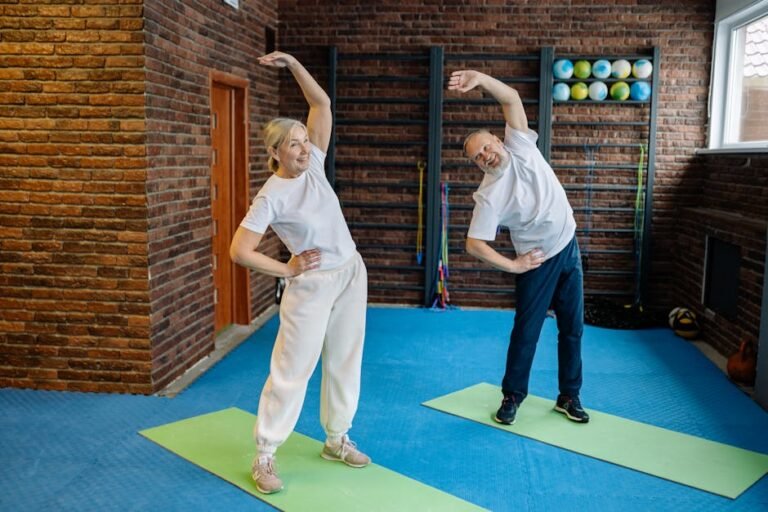
If you or someone you love has been diagnosed with osteoporosis, you may be wondering what kind of exercise is actually safe — and what might help. The good news is that yoga for seniors with osteoporosis can be a wonderfully gentle, effective way to build strength, improve balance, and support your bones, all without the jarring impact of high-intensity workouts. When approached thoughtfully and with the right modifications, yoga can become one of your most trusted allies in maintaining independence, confidence, and quality of life as you age.
Understanding Osteoporosis and Why Movement Matters
Osteoporosis is a condition where bones gradually lose density and become more fragile over time. It often develops quietly, without obvious symptoms, until a fracture happens — sometimes from something as simple as a minor stumble or an awkward turn. This can understandably make people nervous about exercise, but the truth is that the right kind of movement is actually one of the best things you can do for your bones and overall safety.
The goal of exercise with osteoporosis isn’t to push yourself hard — it’s to maintain and build muscular support around vulnerable joints and bones, improve your balance so you’re less likely to fall in the first place, and encourage better posture to reduce compression on the spine. Yoga checks all of these boxes when practiced with care and appropriate modifications. It also brings the bonus of mindful breathing and stress reduction, which supports your overall well-being in ways that go far beyond the physical.
One important note before we dive in: always check with your doctor or healthcare provider before starting any new exercise program, especially if you have a current fracture, significant vertebral compression, or other health concerns. And if you attend a yoga class, let your instructor know about your diagnosis so they can offer the modifications that are right for you.
How Yoga for Seniors with Osteoporosis Actually Helps
You might picture yoga as pretzel-like poses that feel miles away from what your body can do right now. But therapeutic yoga for osteoporosis looks very different — think gentle standing poses, seated movements, and supported stretches that work with your body, not against it. The benefits are real and well worth the effort.
Some yoga poses gently load the bones and strengthen the muscles that surround and protect them. This kind of weight-bearing activity, even when mild, can help maintain bone density and reduce fracture risk over time. Improved balance and coordination — which yoga naturally cultivates — directly lowers your chance of falling, which is the single biggest concern for people living with osteoporosis. Even a modest improvement in balance can make a meaningful difference in day-to-day safety.
Yoga also works wonders for posture. Many older adults develop a forward-hunching posture over time, which puts extra strain on the vertebrae and can compress the spine. The alignment cues built into yoga — lengthening the spine, lifting the crown of the head, drawing the shoulders back gently — help counteract this tendency. And through slow, deliberate movement, yoga teaches you how to transition in and out of positions safely, which translates directly into safer movement in everyday life.
Safe and Practical Yoga Poses for Osteoporosis
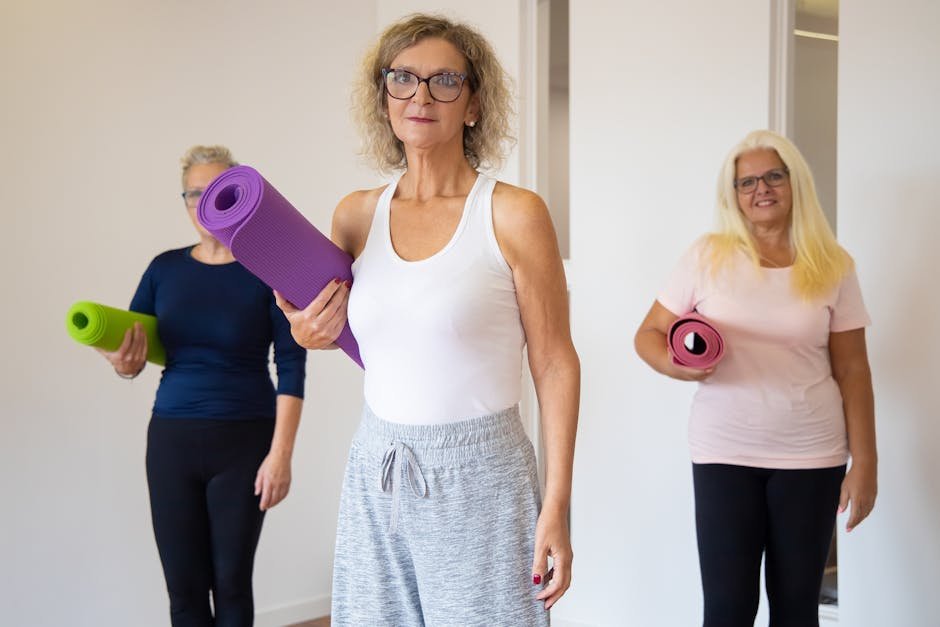
The following poses are gentle, effective, and easy to modify. You don’t need to do all of them in one session — pick three to five that feel comfortable and build from there. Always move slowly, breathe steadily, and use props like a sturdy chair, wall, yoga blocks, or a strap to support your practice.
Mountain Pose (Tadasana) with Wall Support: Stand with your feet hip-width apart, back close to a wall if you need extra support. Ground through all four corners of your feet, gently lengthen the crown of your head upward, and let your shoulders soften. Breathe slowly for five to eight breaths. This simple pose improves posture, leg engagement, and your sense of balance — and it’s a wonderful place to start every practice.
Tree Pose (Vrikshasana) with Chair or Wall: Stand beside a chair or wall. Place one foot on the opposite ankle or calf — never on the knee joint. Press through the standing foot, reach the crown upward, and hold for three to five breaths before switching sides. This builds balance, leg strength, and hip stability, all of which help reduce fall risk.
Warrior II with Chair Support: Take a wide stance with your front foot pointing forward and your back foot at a comfortable angle. Bend the front knee to roughly 90 degrees, keeping it directly over the ankle. Extend your arms to the sides at shoulder height and gaze over your front hand. A chair placed under the front thigh can provide welcome support. Hold for three to five breaths on each side to build leg and hip strength.
Seated Cat-Cow on a Chair: Sit tall in a sturdy chair with feet flat on the floor. On your inhale, gently arch your upper back and lift your chest. On your exhale, round the spine and tuck your chin slightly. Move slowly, matching breath to movement, for six to ten cycles. This is wonderful for spinal mobility, stiffness relief, and mindful breathing.
Gentle Seated Twist: Sitting tall, place one hand on the outside of the opposite knee and the other hand on the back of the chair. Inhale to lengthen the spine, then exhale to gently rotate from the upper back — keeping it soft and never forcing. Hold for three to five breaths, then switch sides. This supports mid-back mobility and breathing, but skip deep twists if you’ve been advised to do so.
Supported Bridge Pose: Lie on your back with knees bent and feet flat, or rest your feet on a chair seat so your shins are roughly parallel to the floor. On an inhale, gently lift your hips just a little — keeping it small and comfortable, no deep backbend needed. Hold for three to five breaths, then slowly lower. This strengthens the glutes and hamstrings and gently opens the chest. If you have a history of vertebral fracture, keep the lift very subtle or skip this one entirely.
Savasana (Resting Pose): Lie on your back with a small pillow under your head if needed, legs relaxed, arms by your sides. If lying down is uncomfortable, rest in a chair instead with feet flat and hands on your thighs. Breathe naturally for five to ten minutes. This calms the nervous system, eases tension, and supports better sleep — a powerful finish to any practice.
Putting It All Together: A Simple, Safe Routine
You don’t need an hour-long class to benefit from yoga. Even fifteen to twenty minutes of gentle, mindful movement a few times a week can make a real difference. Here’s a simple structure to follow.
Start with five to ten minutes of gentle warm-up — ankle circles, shoulder rolls, and gentle marching in place with a wall or chair nearby for support. Then move through three to five of the poses above, holding each for three to five slow breaths and repeating on both sides where applicable. Finish with five to ten minutes of Savasana or a comfortable seated rest. That’s it. Simple, manageable, and genuinely good for you.
As you get more comfortable, you can gradually add more poses or hold them a little longer. Progress in yoga isn’t about complexity — it’s about consistency and how you feel. If you’re guiding a parent or older loved one through a practice, keep it brief, enjoyable, and relaxed. A warm, encouraging approach makes all the difference and reinforces the idea that self-care really is something everyone can do.
What You Can Do: Practical Tips for Practising Safely
Safety is the foundation of any yoga practice for osteoporosis. Here are the key principles to keep in mind every time you roll out your mat — or pull up your chair:
- Always use props: A sturdy chair, wall, yoga blocks, a yoga strap, or even a folded blanket can help you maintain alignment and feel secure. Props aren’t a sign of weakness — they’re a sign of smart, sustainable practice.
- Move slowly and deliberately: Never rush transitions between poses. Take your time, and never push a pose beyond what feels comfortable.
- Breathe evenly: Avoid holding your breath. If you notice you’re holding it, that’s a sign you may be working too hard or forcing a range of motion.
- Warm up first, cool down after: Give your body a gentle transition into and out of movement. Cold muscles and joints need extra care.
- Avoid certain movements if advised: If your healthcare provider or specialist has told you to avoid deep spinal twists or backbends due to vertebral fractures or severe osteoporosis, honour that guidance. There are always safer alternatives.
- Listen to your body: Stop immediately if you feel sharp pain, dizziness, or numbness. These are signals to rest and, if needed, check in with your doctor.
- Tell your yoga instructor: Whether you’re attending a class in person or online, let the teacher know about your diagnosis. A good instructor will offer tailored modifications.
- Combine yoga with other recommended exercise: Yoga works best as part of a broader movement plan that may include balance training and resistance work as guided by your healthcare team.
The Benefits You May Notice Over Time
Starting a yoga practice when you’re managing osteoporosis is an act of genuine self-care, and the rewards — while gentle — can be truly meaningful. Many people notice improved balance and confidence in daily activities, from climbing stairs to walking on uneven ground. Better posture can reduce back pain and make breathing feel easier and more natural. The gentle bone-loading and muscle strengthening that comes from regular practice support long-term bone health without the risks of high-impact exercise.
Beyond the physical, the mindful breathing at the heart of yoga practice has been shown to reduce anxiety and stress, which often improves sleep quality too. And there’s something quietly powerful about showing up for yourself, moving with intention, and noticing — over weeks and months — that you feel steadier, stronger, and more at ease in your body. Every gentle breath and every mindful movement really is a step toward safer mobility and a more resilient life.
Remember, yoga for osteoporosis isn’t about achieving perfect poses or pushing through discomfort. It’s about building a safe, sustainable habit that supports your bones, your balance, and your overall sense of well-being. Start small, celebrate every small win, and be patient with yourself. The benefits accumulate quietly — and they’re well worth it.
The Bottom Line: Yoga for seniors with osteoporosis is not only possible — it’s genuinely beneficial when practiced thoughtfully, with the right modifications and proper guidance. By focusing on gentle weight-bearing poses, balance work, good alignment, and mindful breathing, you can support your bone health, reduce your risk of falls, improve your posture, and feel calmer and more confident in your body every day. Always consult your healthcare provider before beginning, use props generously, and move at your own pace. A little goes a long way — and every session is a meaningful investment in your health and independence.
This is not medical advice. Consult your healthcare provider before starting any new health routine or using any product mentioned here.