How to Rebuild Posture After Years of Slouching: A Gentle Guide for Seniors
This post contains affiliate links. As an Amazon Associate, I earn from qualifying purchases at no extra cost to you.
Free resources — no credit card required for trial
🎧 Listen to health & wellness audiobooks free for 30 days
Start 30-Day Free Trial →
🛒 Recommended Products
As an Amazon Associate we earn from qualifying purchases at no extra cost to you.
TheraBand First Step to Active Health Kit — Senior Exercise Program for Balance and Fall P
$19.99
EZ Off Jar Opener for Seniors — Under Cabinet Jar Opener for Weak Hands and Arthritis
$9.99
Omron 5 Series Upper Arm Blood Pressure Monitor — 2-User 100-Reading Memory Wide-Range Cuf
$44.99
OMRON 7 Series Wireless Wrist Blood Pressure Monitor — Clinically Validated with Connect A
$69.99
Vitality 4 Life Senior Resistance Band with Instruction Guide — Specifically for Elderly F
$16.99
📚 Read unlimited health books free for 30 days
Try Kindle Unlimited Free →
If you’ve noticed yourself rounding forward a little more than you used to, or you catch your reflection and think “when did I start looking like that?” — you’re not alone. After years of slouching at desks, on sofas, or simply moving through life with less-than-perfect alignment, our bodies adapt in ways that aren’t always comfortable. The great news is that rebuilding posture after years of slouching is absolutely possible, even later in life. It doesn’t require a gym membership or intense workouts. What it does require is a little patience, some gentle daily effort, and the belief that your body is worth caring for. Let’s walk through everything you need to know to stand a little taller, breathe a little easier, and feel more comfortable every single day.
Why Good Posture Matters So Much for Seniors
When we talk about posture, it’s easy to think it’s just about appearances — standing up straight so you look confident. But for older adults, posture is deeply tied to how well your body works day to day. Good alignment supports easier breathing, more comfortable movement, better balance, and less fatigue. Think about that for a moment: simply carrying your body in a more upright way can help you feel less tired and more steady on your feet. That’s a meaningful difference.
Years of slouching create what’s known as muscle imbalances. Your chest muscles become tight from being held in a shortened position, while the muscles across your upper back weaken from being overstretched. Your head can drift forward — sometimes called “forward head posture” — which puts enormous strain on your neck and shoulders. Your spine gradually learns a less-than-ideal way to carry itself, and over time, that becomes your new normal. The encouraging truth is that muscles can be retrained. Habits can shift. It takes time and consistency, but small, steady steps genuinely add up to real change.
Safety First: What to Know Before You Start
Before diving into any new exercise routine, especially if you’re managing conditions like osteoporosis, arthritis, heart issues, recent injuries, or any numbness or pain, it’s important to have a conversation with your healthcare provider. They can help tailor a plan to your specific needs and make sure you’re working within safe boundaries. This isn’t about creating barriers — it’s about making sure you’re set up for success from the very beginning.
Once you have the green light, start slowly. Five to ten minutes once or twice a day is a perfect beginning. There’s no rush here. If something hurts, twinges uncomfortably, or makes you feel lightheaded, stop and rest. Adapting movements to suit your body isn’t giving up — it’s being smart. Use chairs, walls, and pillows as support tools whenever they help you feel more stable and safe. Every body is different, and what feels right for you is the only standard that matters.
A Gentle Routine to Rebuild Posture Step by Step
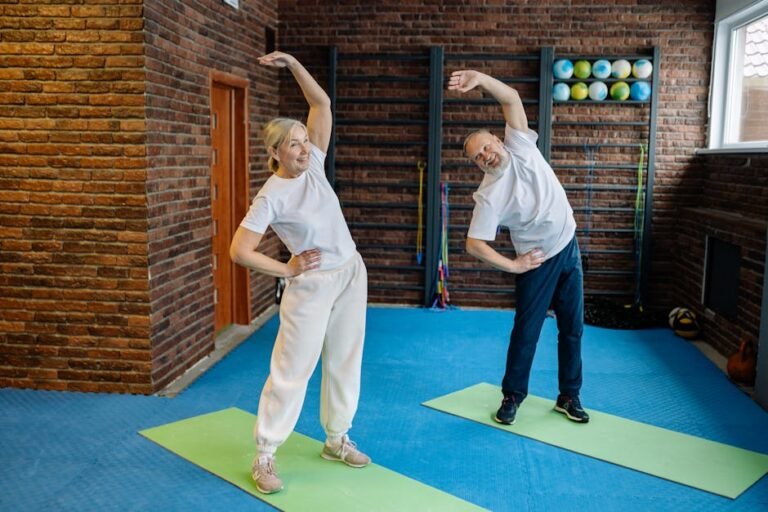
The following exercises are designed to be accessible, safe, and effective for rebuilding posture after years of slouching. Most can be done seated or standing — whichever feels most stable for you. Work through them at your own pace and gradually add time or repetitions as your confidence grows.
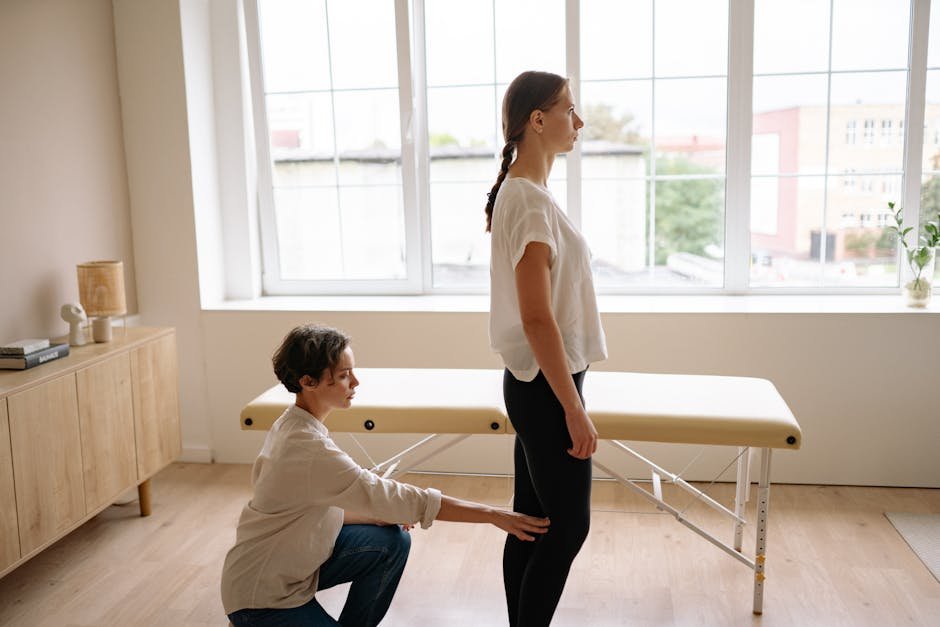
Posture Reset: Sit or stand tall so your ears are over your shoulders and your shoulders are over your hips. Take three slow, deep breaths and imagine a gentle string pulling the crown of your head toward the ceiling. You’re not forcing anything — just creating length. This is a lovely way to start any session and to reset during the day whenever you notice yourself slumping.
Chin Tuck: Gently tuck your chin back as if you’re trying to make a double chin. It’s a small, subtle movement. Hold for five to ten seconds, then release. Do this eight to ten times. This simple exercise helps bring your head back over your spine and gradually reduces that forward head position that so many of us develop.
Shoulder Blade Squeeze: Sit or stand tall and squeeze your shoulder blades together, as if you’re pinching a pencil between them. Hold for five to ten seconds, then release. Repeat ten times. This targets the upper back muscles that tend to weaken when we spend time hunched forward, and it’s one of the most effective moves for rebuilding posture.
Seated Cat-Cow: Sitting tall in a chair with feet flat on the floor, gently arch your back and lift your chest as you inhale (cow), then round your back and tuck your chin slightly as you exhale (cat). Move slowly and smoothly through eight to ten cycles. This wakes up spinal mobility in a wonderfully gentle way and feels lovely first thing in the morning.
Chest Opener: Stand beside a doorway and place your forearms on the frame at about shoulder height. Step forward gently until you feel a comfortable stretch across your chest. Hold for fifteen to thirty seconds, breathing steadily. This counteracts the tightening of chest muscles that comes from years of rounding forward. Repeat two to three times.
Pelvic Tilt: Lying on your back with knees bent and feet flat (or seated if lying down isn’t comfortable), gently press the small of your back toward the floor by tightening your abdominal muscles. Hold for five seconds, then relax. Repeat ten to fifteen times. This builds the core support your spine needs to hold better alignment throughout the day.
Daily Habits That Support a Taller, Healthier Spine
Exercise is only part of rebuilding posture after years of slouching. The other piece is what you do during the rest of your day. Small environmental tweaks and mindful habits can make a surprisingly big difference in how your body holds itself over time.
If you spend time sitting at a desk or table, try to set up your space so your computer screen is at eye level — this alone can dramatically reduce the pull of gravity on your neck and head. Use a small rolled towel or a lumbar pillow to support the natural curve of your lower back. Keep both feet flat on the floor, and if they don’t quite reach, a small footstool is a wonderful solution. Try to avoid crossing your legs for long stretches, as this can tilt the pelvis and throw your whole alignment off.
Movement breaks are one of the most powerful tools in your posture toolkit. Set a gentle reminder to stand up and walk for one to two minutes every thirty to sixty minutes. This keeps your joints moving, reinforces good alignment, and prevents the body from locking into a slouched position. When you carry bags or groceries, try to distribute the weight evenly and keep the load close to your body. Switching sides or using a backpack when possible helps keep your posture balanced.
Sleep posture matters too. A supportive pillow that keeps your neck in a natural, neutral position is worth investing in. If you sleep on your side, placing a pillow between your knees helps maintain hip alignment, which in turn supports your lower back. A firmer mattress can also help your spine rest in a healthier position overnight.
What You Can Do: Practical Tips for Rebuilding Posture Every Day
- Start with just five minutes a day. A short, consistent routine beats a long, occasional one every single time. Five minutes morning and evening is a great starting point.
- Do chin tucks during TV commercials. Pair your posture exercises with something you already do to build the habit easily.
- Set a phone reminder to do a posture reset. A quick nudge every hour to sit tall and take three deep breaths takes seconds and adds up beautifully over the day.
- Try diaphragmatic breathing after your routine. Place one hand on your belly and one on your chest. Breathe in through the nose, letting your belly rise first. Exhale slowly through your mouth. Five to ten breaths helps relax tension and supports better posture from the inside out.
- Use a lumbar support cushion on your favourite chair. This small investment can make a noticeable difference in how your lower back feels after a long sit.
- Keep a simple journal. Note what felt easier this week compared to last, when you noticed less stiffness, or when you caught yourself standing taller. Progress is motivating — but only if you take time to notice it.
- Try wall angels three times a week. Stand with your back against a wall, arms in a goalpost position, and slowly slide your arms up and down. This builds shoulder mobility and upper back awareness beautifully.
- Celebrate small wins out loud. Did you stand taller during your morning coffee? Did your neck feel less stiff today? These moments are worth acknowledging. Positivity fuels consistency.
Staying Motivated: The Mindset That Makes the Difference
One of the biggest challenges with rebuilding posture isn’t the exercises themselves — it’s sticking with them long enough to see real results. Posture is partly habit and partly muscle conditioning, and both take time to change. The key is setting small, specific goals rather than vague ones. Instead of “I want better posture,” try “I’ll do my shoulder blade squeezes and chin tucks every morning for the next two weeks.” Specific goals are achievable goals, and achieving them feels wonderful.
Pairing your posture routine with something you enjoy can help it feel less like a chore. Do your seated exercises right after your morning coffee, or run through a few movements before your afternoon walk. Make it something you look forward to rather than something you dread. If you miss a day, simply pick up where you left off — no guilt, no drama. Consistency over weeks and months matters far more than perfection on any given day.
Track your progress in a simple way — even just circling days on a calendar when you completed your routine gives you a visual reminder of your commitment. Over time, you may notice things like feeling less stiff when you get up in the morning, taking fuller breaths, or feeling steadier on your feet. These are meaningful improvements that go well beyond how you look in the mirror. They’re signs that your body is responding, adapting, and getting stronger. That’s worth every single chin tuck and shoulder squeeze.
The Bottom Line: Rebuilding posture after years of slouching is a gradual journey, not a quick fix — but it is absolutely within your reach. Through gentle daily exercises, mindful habits, and a compassionate approach to your own body, you can restore more comfort, ease, and confidence to your everyday life. Start small, stay consistent, listen to your body, and remember that every moment you spend caring for your spine is an investment in your health, your balance, and your overall wellbeing. You deserve to feel good in your body. You’ve absolutely got this.
This is not medical advice. Consult your healthcare provider before starting any new health routine or using any product mentioned here.