Morning Mobility Routine for Seniors: A Gentle, Safe Way to Start Your Day Feeling Great
This post contains affiliate links. As an Amazon Associate, I earn from qualifying purchases at no extra cost to you.
Free resources — no credit card required for trial
🎧 Listen to health & wellness audiobooks free for 30 days
Start 30-Day Free Trial →
🛒 Recommended Products
As an Amazon Associate we earn from qualifying purchases at no extra cost to you.
TheraBand First Step to Active Health Kit — Senior Exercise Program for Balance and Fall P
$19.99
EZ Off Jar Opener for Seniors — Under Cabinet Jar Opener for Weak Hands and Arthritis
$9.99
Omron 5 Series Upper Arm Blood Pressure Monitor — 2-User 100-Reading Memory Wide-Range Cuf
$44.99
OMRON 7 Series Wireless Wrist Blood Pressure Monitor — Clinically Validated with Connect A
$69.99
Vitality 4 Life Senior Resistance Band with Instruction Guide — Specifically for Elderly F
$16.99
📚 Read unlimited health books free for 30 days
Try Kindle Unlimited Free →
What if just 10 to 15 minutes each morning could change how your whole day feels? For many older adults, those first moments after getting out of bed can be the stiffest and most uncomfortable of the entire day. The good news is that a simple, gentle morning mobility routine for seniors can make a remarkable difference — loosening stiff joints, warming up tired muscles, improving circulation, and even lifting your mood before breakfast. You don’t need a gym, fancy equipment, or any prior fitness experience. All you need is a sturdy chair, a safe space, and the willingness to move your body with a little kindness each morning.
Why a Morning Mobility Routine for Seniors Matters So Much
As we age, our joints naturally lose some of their lubrication, and our muscles can become tighter overnight after hours of rest. That familiar morning stiffness — in the hips, knees, lower back, or shoulders — isn’t just uncomfortable. Over time, reduced mobility can affect your balance, your confidence in moving around the house, and your ability to enjoy activities you love. A short daily routine specifically designed to address these issues can help you maintain the flexibility and strength needed for everyday independence.
A morning mobility routine isn’t about intense exercise or pushing through pain. It’s about gently waking the body up in a safe, controlled way. Think of it like warming up a car on a cold morning — you wouldn’t immediately floor the accelerator, and you shouldn’t immediately jump into demanding movement either. Gentle, coordinated movements give your body the signal that it’s time to engage, helping blood flow return to muscles and joints progressively and comfortably.
Beyond the physical benefits, there’s a real emotional boost that comes from starting the day with intention. Taking 10 to 15 minutes for yourself — to breathe, move, and check in with your body — can set a positive, empowered tone for everything that follows. It’s a small act of self-care that compounds into something meaningful over weeks and months.
What You’ll Need Before You Begin
One of the best things about this routine is how simple the setup is. You don’t need a yoga mat, resistance bands, or any kind of equipment subscription. The essentials are: a sturdy chair with good back support (something that won’t tip or slide), non-slip footwear or supportive shoes, and a nearby wall or countertop you can hold onto if needed. Keep a small bottle of water close by for a sip after you finish — hydration matters even during gentle movement.
Choose a calm, quiet space with good lighting, ideally somewhere warm and comfortable. Many people find that doing their routine near a window, with natural morning light coming in, makes the whole experience feel more pleasant. If you like, put on some soft, uplifting music in the background. The goal is to make this feel like a welcome ritual rather than a chore. Wear loose, comfortable clothing that doesn’t restrict your movement — flexible trousers, a soft top, and supportive shoes are ideal.
Step-by-Step: Your Complete Morning Mobility Routine
This routine takes about 10 to 15 minutes and can be done seated, standing, or a combination of both. Every movement has a seated modification, so no matter your current ability level, you can participate fully. Always move within a comfortable range — if something hurts, ease back or skip it entirely.
Start with Gentle Wake-Up Breaths (1 minute). Sit tall or stand near a wall. Breathe in slowly through your nose for a count of three, feeling your belly rise. Exhale gently through your mouth for a count of four, letting your shoulders soften. This alone helps calm the nervous system and signals the body to begin loosening up.
Neck Mobility (1 minute). Gently tilt your head toward one shoulder, hold for a breath, then return to center and repeat on the other side. Follow with small, slow head circles in each direction. Never force this stretch — keep the range small and comfortable. Shoulder Rolls and Arm Circles (1 minute) come next: roll your shoulders up, back, and down for 5–8 repetitions, then make small arm circles forward and backward. If balance is a concern, do these seated with your back supported.
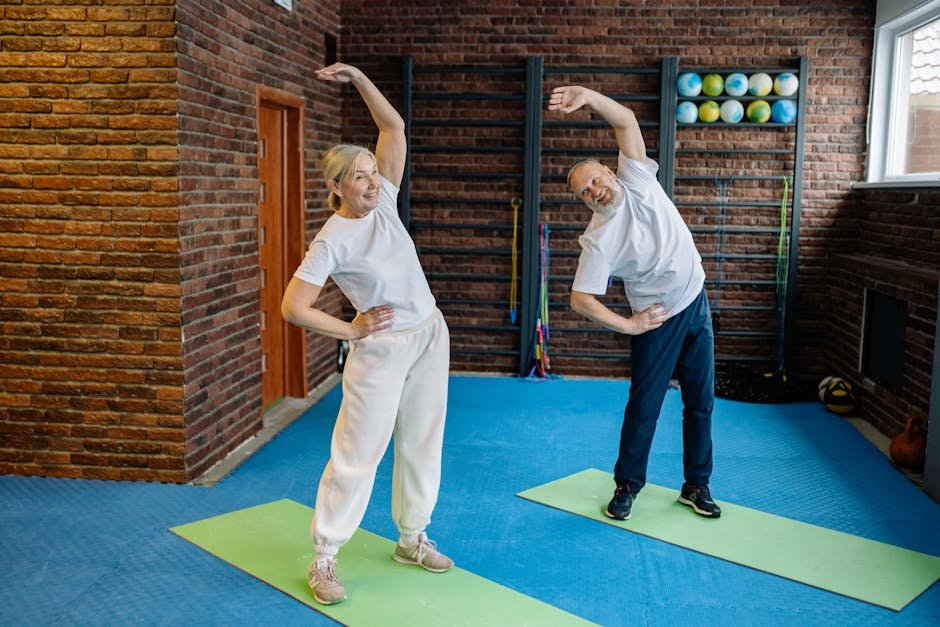
Seated or Standing Cat-Cow (1 minute) warms up the spine beautifully. Place your hands on your thighs or hips, arch your back gently on the inhale, and round your spine on the exhale — repeat for 6–8 slow cycles. Follow this with Torso Twists (1 minute): sitting tall with feet flat on the floor, place one hand on the opposite knee and gently rotate your upper body, holding for a breath before switching sides.
Hip Circles and Leg Wakes (1–2 minutes) help prepare the hips and legs. Standing near your chair for balance, draw small circles with each hip. If balance is tricky, do this seated. Ankle Circles and Calf Activation (1 minute) follow — rotate each ankle in both directions, then point and flex your feet. These movements are especially valuable for reducing the risk of falls by keeping ankles strong and responsive.
For a gentle boost, try Marching in Place or Step-Touches (2 minutes) — a light cardio lift that wakes up the heart and gets blood flowing throughout the body. Keep a comfortable pace and lightly touch a wall or chair if needed. Finish with a Hamstring and Calf Stretch (2 minutes combined): hinge gently at the hips with one foot forward to stretch the back of the thigh, and lean gently toward a wall with one foot stepped back to stretch the calf. Finally, take a minute for Hand, Wrist, and Finger Mobility — spread your fingers wide, make a loose fist and release, and circle your wrists gently. This is especially helpful for those with arthritis.
Staying Safe: Important Modifications and Precautions
Safety is the cornerstone of this routine. The goal is never to push through discomfort or compete with how you moved years ago. Every movement should feel manageable and pain-free. If you have balance concerns, always keep one hand on a sturdy surface. If you have osteoporosis, a recent fracture, or significant joint issues, avoid deep back bends and keep all twists small and gentle. Stop immediately and seek medical attention if you experience chest pain, dizziness, severe shortness of breath, or pain that worsens during any movement.
For those who need extra modifications, here’s how to adapt the routine to your needs. If you have limited flexibility, simply reduce the range of every movement — tilt the neck only slightly, roll shoulders minimally, and hinge just a few inches at the hips. If you have arthritis, perform every movement slowly with longer pauses between sections, and use cushions or pillow support to make seated positions more comfortable. If you live alone or have significant balance challenges, consider doing the routine with a family member or caregiver nearby, at least until you feel fully confident.
A chair-based version of this entire routine is completely valid and effective. Every single movement in the sequence can be adapted to sitting in a sturdy chair. Seated doesn’t mean easier — it means safer and more appropriate for your body, and that’s always the right choice.
What You Can Do: Practical Tips to Build a Lasting Habit
Knowing what to do is only half the battle — making it stick is where the real magic happens. Here are some genuinely useful strategies for turning this morning mobility routine into a reliable daily habit:
- Attach it to an existing habit. Do your routine right after brushing your teeth or making your morning cup of tea. Pairing it with something you already do automatically makes it much easier to remember.
- Keep it short and doable. If life feels busy, even 8 minutes is worthwhile. You can always add a minute or two as the weeks go on and your body becomes more accustomed to the movement.
- Create a welcoming environment. A warm, well-lit, quiet space makes the routine feel pleasant rather than like a task. Open the curtains, play gentle music, or light a candle if that helps you settle in.
- Dress the part. Keep a pair of non-slip shoes and comfortable, flexible clothing near your bed the night before, so there’s no friction between waking up and getting started.
- Track your progress visually. A simple paper calendar where you tick off each day you complete the routine can be surprisingly motivating. Seeing a row of checkmarks builds momentum and a sense of accomplishment.
- Hydrate before and after. A small glass of water before you begin and another sip after you finish helps your body function at its best, especially in the morning when you may be mildly dehydrated from sleep.
- Add a mindfulness moment. Even 30 seconds of slow, intentional breathing at the end of your routine can leave you feeling calmer and more centred for the day ahead.
- Don’t let a missed day derail you. Everyone misses a session sometimes. Simply return the next morning without self-criticism. Consistency over weeks matters far more than perfection on any single day.
The Bigger Picture: How Daily Mobility Supports Your Independence
It can be easy to underestimate what a short daily routine can accomplish. But the benefits of regular, gentle movement truly add up over time. Better circulation means your heart and muscles are better supplied with oxygen. Improved joint flexibility means getting up from a chair, reaching for something on a shelf, or walking to the mailbox becomes a little easier. Better balance means a reduced risk of the falls that are one of the leading causes of injury in older adults. These aren’t small things — they’re the building blocks of daily independence and quality of life.
There’s also a mental health dimension that’s worth celebrating. Movement — even gentle movement — stimulates the release of feel-good chemicals in the brain. Many people who establish a morning mobility habit report feeling more alert, more optimistic, and more connected to their bodies throughout the day. It’s a way of saying to yourself, every single morning: I am worth caring for. That message matters.
Over time, you may find that this routine becomes the part of your morning you genuinely look forward to. It’s yours — quiet, personal, and entirely at your own pace. As your flexibility and confidence grow, you might find yourself naturally adding a few more repetitions or holding stretches a little longer. That’s progress, and it’s worth acknowledging.
The Bottom Line: A morning mobility routine for seniors is one of the most accessible and effective things you can do for your health, independence, and daily comfort. In just 10 to 15 minutes — seated, standing, or a mix of both — you can loosen stiff joints, improve circulation, reduce the risk of falls, and start every day with a genuine sense of accomplishment. You don’t need to be athletic, flexible, or pain-free to begin. You just need a sturdy chair, a safe space, and the willingness to show up for yourself each morning. Start where you are, move at your own pace, and trust that every small, consistent effort is building something meaningful for your long-term well-being.
This is not medical advice. Consult your healthcare provider before starting any new health routine or using any product mentioned here.