Safe Posture Exercises for Seniors with Limited Mobility: Feel Taller, Breathe Easier, Move Better
This post contains affiliate links. As an Amazon Associate, I earn from qualifying purchases at no extra cost to you.
Free resources — no credit card required for trial
🎧 Listen to health & wellness audiobooks free for 30 days
Start 30-Day Free Trial →
🛒 Recommended Products
As an Amazon Associate we earn from qualifying purchases at no extra cost to you.
TheraBand First Step to Active Health Kit — Senior Exercise Program for Balance and Fall P
$19.99
EZ Off Jar Opener for Seniors — Under Cabinet Jar Opener for Weak Hands and Arthritis
$9.99
Omron 5 Series Upper Arm Blood Pressure Monitor — 2-User 100-Reading Memory Wide-Range Cuf
$44.99
OMRON 7 Series Wireless Wrist Blood Pressure Monitor — Clinically Validated with Connect A
$69.99
Vitality 4 Life Senior Resistance Band with Instruction Guide — Specifically for Elderly F
$16.99
📚 Read unlimited health books free for 30 days
Try Kindle Unlimited Free →
If you’ve ever caught yourself slumping in a chair, felt that familiar ache creeping up your neck and shoulders, or noticed that standing tall just takes more effort than it used to, you’re far from alone. Good posture isn’t just about looking confident — it affects how you breathe, how you balance, how much your back hurts, and even how easily you can get through your day. The wonderful news? Safe posture exercises for limited mobility are absolutely within reach, no matter your current fitness level. You don’t need a gym, a personal trainer, or fancy equipment. Most of these exercises can be done right from the comfort of your own chair, at your own pace, on your own schedule.
Why Posture Matters More Than You Might Think
Many of us grew up hearing “sit up straight!” — but good posture is about so much more than appearances. When your spine is properly aligned, your lungs have more room to expand, which means you can breathe more fully and easily. That’s a bigger deal than it sounds, especially if you ever feel short of breath just going about daily activities. Proper upright alignment also supports smoother digestion, which is a welcome bonus.
For seniors especially, posture plays a direct role in balance and falls prevention. A steadier spine and a stronger upper back give you a more stable foundation whether you’re sitting, standing, or moving from one position to another. Falls are one of the most serious health risks for older adults, and improving your posture is one practical step toward reducing that risk.
There’s also the everyday comfort factor. Even small improvements in how you hold yourself can reduce stiffness in your neck, shoulders, and back — and ease the kind of low-grade aches that make everything feel harder. When you’re in less pain and moving more freely, daily tasks become easier and safer. That’s what independence looks and feels like, and you deserve every bit of it.
Before You Begin: Safety Tips to Keep in Mind
Before diving into any new exercise routine, it’s always a good idea to check in with your doctor — particularly if you have osteoporosis, have had recent surgery, or live with chronic pain. These exercises are designed to be gentle and safe, but your healthcare provider knows your personal history best and can give you the green light with confidence.
When you’re ready to start, set yourself up for success with the right chair. Choose one with a firm seat and a straight back. Sit toward the front edge so your feet rest flat on the floor and your hips feel comfortably supported. This simple positioning makes a surprising difference in how effective — and comfortable — each exercise feels.
A few golden rules to carry through every session: move slowly, breathe steadily, and listen to your body. If something hurts, stop and try a smaller, gentler version of the movement. Never hold your breath — exhale smoothly as you work. And if you ever feel dizzy, lightheaded, or short of breath, sit back and rest. There’s no rush here. Slow and steady really does win this race.
Safe Posture Exercises for Limited Mobility: Your At-Home Routine
Here are seven gentle, effective exercises you can do mostly from a seated position. Together, they form a complete, balanced routine that targets the key areas of posture — your lower back, upper back, neck, shoulders, and chest.
1. Seated Pelvic Tilt and Neutral Spine. This one sets the foundation. Sit tall with your feet flat and hands resting on your thighs. Gently tilt your pelvis backward — imagine tucking your tailbone slightly under — until you feel your lower back press lightly toward the chair. Hold for 3–5 seconds, then return to a natural position. Repeat 10–12 times. The movement should be small and controlled. This simple exercise helps reposition the pelvis, align the lower spine, and ease that common lower back strain.
2. Seated Shoulder Blade Squeeze. Sit tall with relaxed shoulders. Slowly squeeze your shoulder blades together, as if you’re trying to pinch a pencil between them. Hold for 3–5 seconds, then release. Repeat 10 times. Keep your neck relaxed throughout — resist the urge to lift your shoulders toward your ears. This builds upper back strength and encourages a more open, upright chest, which naturally combats that forward rounding that so many of us develop over time.
3. Chin Tuck and Neck Alignment. Sit tall and look straight ahead. Gently draw your chin toward your throat — as though you’re making a slight double chin — while keeping your ears in line with your shoulders. Hold for 5 seconds, then relax. Repeat 8–12 times. This exercise targets forward head posture, one of the most common postural issues for people who spend a lot of time sitting. A mirror can be a helpful tool here to check your alignment as you go.
4. Seated Thoracic Extension with a Towel Roll. Grab a small rolled towel or foam roll. Place it behind your upper back, between your shoulder blades. Cross your arms over your chest or let your hands rest on your shoulders. Gently lean back against the roll to feel a light, comfortable stretch through the middle of your back. Hold for 5 seconds, then return to upright. Repeat 8–12 times. This one is wonderful for easing that stiffness in the mid-back and encouraging a more upright stance. If you have osteoporosis or any spine condition, keep the movement very small and within your comfort zone.
5. Seated Chest Opener with a Towel or Strap. Sit tall and reach both hands behind you to hold a long towel, belt, or strap at about shoulder width. Gently pull your hands apart to open the chest. Hold for 15–20 seconds, then relax. Repeat 3–4 times. If reaching behind is difficult, try holding the towel with one hand higher and one lower, and gradually increase your range as you feel comfortable. This stretch counteracts the tendency to round forward and supports easier, deeper breathing.
6. Seated Wall Angels. Sit tall — not pressed hard into the chair back — and if you have a nearby wall, lightly rest your upper back against it. Bend your elbows to 90 degrees, like a goalpost position. Slowly slide your arms upward along the wall as far as feels comfortable, keeping elbows and wrists in contact with the surface. Return to start and repeat 8–12 times. No wall? No problem — do the same arm motion in the air, lifting only as high as feels comfortable. This exercise builds shoulder mobility and encourages a beautifully elongated spine.
7. Diaphragmatic Breathing with Posture Awareness. Sit comfortably or lie in a supported position. Place one hand on your abdomen and one on your chest. Inhale slowly through your nose for about 4 seconds, letting your abdomen rise gently as air fills your lungs. Exhale slowly through pursed lips for 6–8 seconds. Repeat for 5–10 breaths. This isn’t just a breathing exercise — it’s also a posture exercise. Keeping your spine tall and relaxed as you breathe reinforces good alignment while simultaneously reducing tension and calming your nervous system.
What You Can Do: Practical Tips for Building a Lasting Habit
Knowing the exercises is one thing — making them a regular part of your life is another. The good news is that a little consistency goes a very long way. Here’s how to make this routine work for you:
- Start with 2–4 sessions per week, each lasting just 10–15 minutes. Short and regular beats long and occasional every single time.
- Follow a sensible order: Begin with the Pelvic Tilt, move to Chin Tucks and Shoulder Blade Squeezes, then progress to the Thoracic Extension and Chest Opener, and finish with Wall Angels and Breathing. This warms things up gently and winds down smoothly.
- Link your exercises to something you already do, like your morning coffee, an afternoon TV programme, or right before bed. Habit stacking makes it much easier to stay consistent.
- Increase gradually. As exercises start to feel easier, slowly extend your hold times or gently increase your range of motion. There’s no need to rush — your body will tell you when it’s ready for more.
- Practice posture awareness throughout the day. Every time you sit down — for meals, reading, or watching TV — do a quick check: shoulders relaxed and slightly back, chin level, hips aligned, feet flat on the floor. Small reminders add up to big changes over time.
- Celebrate small wins. Sat a little taller during dinner? Shoulders feeling less tight after your morning session? That’s real, meaningful progress worth acknowledging.
- Consider useful tools. A foam roller or a firm rolled towel, a long yoga strap or belt, and a sturdy chair are all you truly need. These are inexpensive, easy to find, and genuinely helpful for several of the exercises above.
When to Seek Extra Support
It’s completely normal for progress to feel slow at first. Posture habits built over years don’t change overnight, and that’s okay. Give yourself permission to go at your own pace and trust that even the smallest improvements are meaningful. Sitting a little taller, feeling a little less stiff, being able to hold a position a few seconds longer — these are all genuine victories.
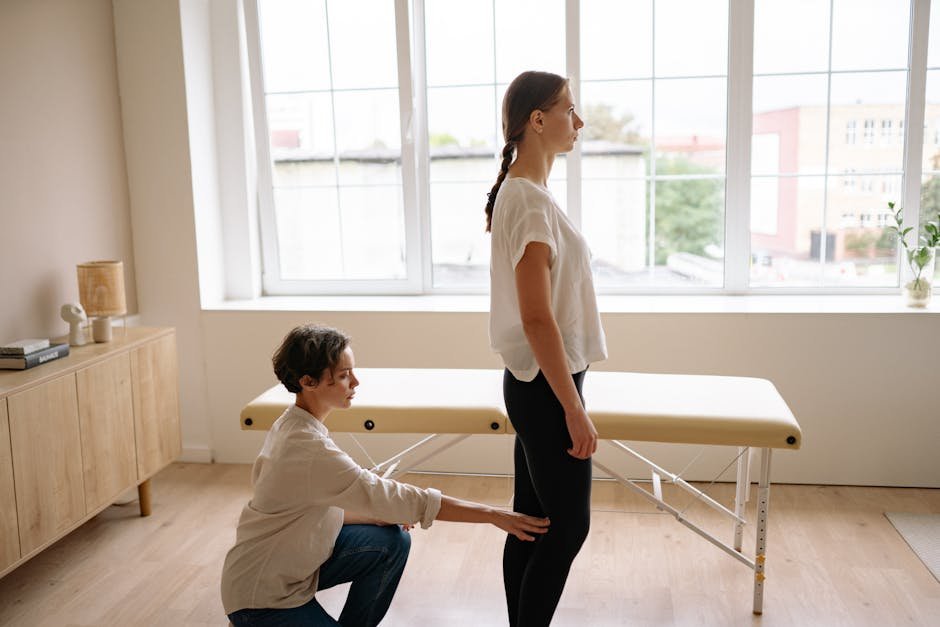
If you experience pain, dizziness, or significant discomfort during or after any of these exercises, stop and give your healthcare provider a call. Pain is your body’s way of communicating, and it’s always worth listening. A physical therapist or occupational therapist can be an incredible resource if you want more personalised guidance. They can tailor a safe programme specifically to your needs, offer hands-on support, and make sure every movement works with your medical history rather than against it.
You don’t have to navigate this alone. Whether it’s a trusted doctor, a physical therapist, a supportive family member, or a friendly online community — having people in your corner makes the journey so much easier and more enjoyable.
Posture as a Daily Practice, Not a One-Time Fix
One of the most freeing things you can understand about posture is that it’s not a destination you arrive at — it’s a practice you return to, every single day. That means every session counts, even the short ones. Every mindful breath, every gentle shoulder squeeze, every moment you catch yourself and sit a little taller — it all adds up.
Your body is remarkable in its capacity to adapt and improve, even with limited mobility and even later in life. These safe posture exercises for limited mobility are designed to honour where you are right now while gently guiding you toward where you want to be: more comfortable, more upright, more confident, and more capable in daily life. The investment you make in your posture today pays dividends in easier breathing, less pain, better balance, and greater independence tomorrow.
So take a deep breath, sit tall, and begin. You’ve absolutely got this.
The Bottom Line: Safe posture exercises for limited mobility don’t require a gym, a trainer, or an hour of your day. With seven gentle, mostly seated exercises — from Pelvic Tilts and Shoulder Blade Squeezes to Chest Openers and Diaphragmatic Breathing — you can meaningfully improve your alignment, reduce stiffness, support your balance, and feel more comfortable in your own body. Aim for short, consistent sessions two to four times a week, check in with your doctor before starting, and remember that every small step forward is worth celebrating. Your posture — and your wellbeing — are worth every mindful moment you invest in them.
This is not medical advice. Consult your healthcare provider before starting any new health routine or using any product mentioned here.