Using Walking Aids Without Hurting Your Back: A Complete Guide for Safer, More Comfortable Movement
This post contains affiliate links. As an Amazon Associate, I earn from qualifying purchases at no extra cost to you.
Free resources — no credit card required for trial
🎧 Listen to health & wellness audiobooks free for 30 days
Start 30-Day Free Trial →
🛒 Recommended Products
As an Amazon Associate we earn from qualifying purchases at no extra cost to you.
TheraBand First Step to Active Health Kit — Senior Exercise Program for Balance and Fall P
$19.99
EZ Off Jar Opener for Seniors — Under Cabinet Jar Opener for Weak Hands and Arthritis
$9.99
Omron 5 Series Upper Arm Blood Pressure Monitor — 2-User 100-Reading Memory Wide-Range Cuf
$44.99
OMRON 7 Series Wireless Wrist Blood Pressure Monitor — Clinically Validated with Connect A
$69.99
Vitality 4 Life Senior Resistance Band with Instruction Guide — Specifically for Elderly F
$16.99
📚 Read unlimited health books free for 30 days
Try Kindle Unlimited Free →
If you’ve recently started using a walking aid — or you’re thinking about it — you may have noticed something surprising: a cane or walker that isn’t quite right for you can actually make your back feel worse, not better. The good news is that using walking aids without hurting your back is absolutely achievable, and it comes down to a few key things: choosing the right device, setting it up properly, and learning some simple posture habits that protect your spine every time you move. Whether you’re managing lower back pain, recovering from an injury, or simply looking for more confidence on your feet, this guide will walk you through everything you need to know — practically, warmly, and without the medical jargon.
Why Your Walking Aid Choice Matters for Your Spine Health
Not all walking aids are created equal, and what works beautifully for your neighbour might put unnecessary strain on your lower back. The key is matching the device to your specific needs — your balance, your strength, your pain patterns, and the spaces you move through every day.
If you feel mostly steady but occasionally wobble or stumble, a standard cane is often enough. It’s lightweight, easy to manoeuvre in tight hallways, and gives you just enough reassurance to move confidently. On the other hand, if your balance is more uncertain or your legs feel unreliable, a walker provides a much larger, more stable support base — and that extra stability means you’re less likely to lurch forward or twist awkwardly to catch yourself, both of which can be hard on the spine.
Think about your environment, too. Uneven outdoor surfaces, narrow doorways, and thick carpets all influence which device will serve you best. A rolling walker, for example, glides smoothly and requires less lifting effort than a standard four-legged walker — which can be a real benefit if lifting repeatedly causes you back or shoulder pain. A quad cane (with four small feet at the base) offers more stability than a straight cane while still being compact enough for indoor use. There’s no single “right” answer, but there is a right answer for you — and a physical therapist or occupational therapist can help you find it if you’re not sure where to start.
Getting the Fit Right: The Most Important Step You Might Be Skipping
Here’s something that surprises many people: a walking aid that’s even slightly too tall or too short can force you into a hunched or overreached posture — and over time, that puts real stress on your lower back, shoulders, and neck. Getting the height right isn’t complicated, but it does require a moment of attention.
For a cane, stand tall with your shoes on and your arms relaxed at your sides. The handle of the cane should sit at roughly the height of your wrist crease. When you hold the handle, your elbow should have a gentle bend — somewhere around 20 to 30 degrees. If your elbow is straight or your shoulder is hiking up to reach the handle, the cane is too tall. If you’re stooping down to hold it, it’s too short. Both situations send your spine out of alignment with every single step.
For a walker, the same wrist-height principle applies. Stand inside the frame, let your arms hang naturally, and the handgrips should be right there at wrist level. Your elbows should have that same comfortable, slight bend. You should feel upright and relaxed — not reaching forward, not hunching over. If the walker seems to pull you into a forward lean, it’s almost certainly set too low. Many walkers and canes are height-adjustable, so take the time to dial yours in. It genuinely makes a difference you’ll feel from your very first walk.
Posture and Technique: How to Use Walking Aids Without Hurting Your Back
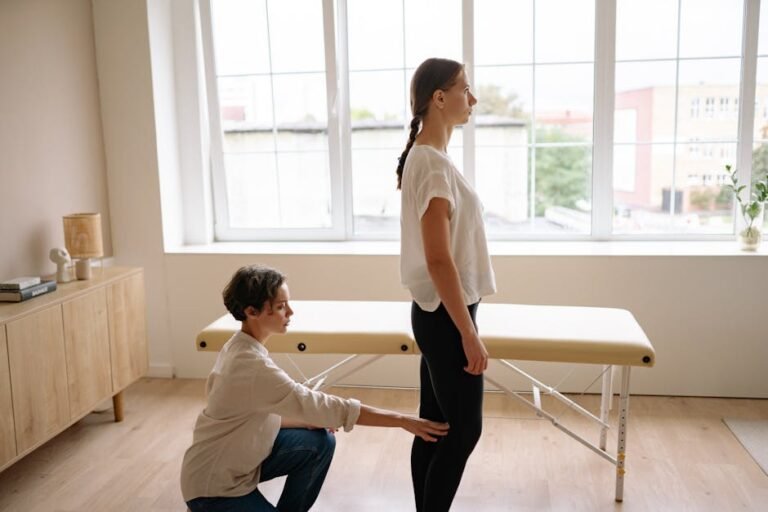
Once your device is the right height, posture and movement technique become your next big allies. The goal is to keep your spine in a long, gentle alignment — not rigid like a soldier, but tall and relaxed, like a string is gently lifting the crown of your head toward the ceiling. Your ears, shoulders, hips, and ankles should feel roughly in line as you move.
With a cane, always hold it in the hand opposite your weaker or more painful leg. This might feel counterintuitive, but it mirrors the way your body naturally distributes weight when you walk, and it’s far gentler on your back and hips. Move the cane forward about one step, bring your weaker leg forward to meet the cane, then step through with your stronger leg. Keep your shoulders relaxed, look ahead (not down at your feet), and avoid leaning forward to reach the cane — that forward lean is one of the most common causes of back strain with cane use.
With a standard walker, stand inside the frame with a firm but relaxed grip on the handles. Move the walker forward a short distance, step your weaker leg into the centre of the walker, then bring your stronger leg through. Resist the urge to lean heavily on the frame — the walker is there to support your balance, not to take your full body weight. With a rolling walker, always engage the brakes when you stop or turn, push the walker forward in small increments, and avoid the habit of pulling it back toward you, which can throw off your balance and strain your lower back.
One more thing worth mentioning: your core. You don’t need to “brace” dramatically, but gently engaging your belly muscles — just a soft tightening, without holding your breath — gives your spine important support as you walk. Think of it as your body’s own built-in back belt, always available and completely free to use.
Common Mistakes That Can Strain Your Back (And How to Avoid Them)
Even with the right device and the right height, a few common habits can quietly work against your spine health. The most frequent culprit is bending at the waist to reach objects or navigate the environment. Whether it’s picking something up off the floor, leaning to open a door, or bending toward the device because it’s set too low, waist-bending puts disproportionate load on the lower back. Instead, bend your knees when you need to lower yourself, and adjust your environment so you don’t need to reach awkwardly.
Looking down constantly is another sneaky habit. It feels natural — you want to see where you’re stepping — but keeping your gaze fixed on the floor encourages your head to drop forward, which rounds the upper back and increases strain across the whole spine. Practice trusting your peripheral vision and occasional glances, rather than a constant downward stare. And when turning, remember to pivot with your feet rather than twisting at the hips or waist. That twist, especially when it’s sudden or repeated, is a common trigger for back pain.
Two more things to watch: grip and pace. Gripping the handle so tightly that your knuckles whiten creates tension that travels up through your shoulders, neck, and back. Aim for a firm but relaxed hold. And resist the urge to rush. Short, steady steps are much kinder to your spine — and to your balance — than long, hurried strides. Walking with an aid is not a race. It’s a practice, and slower and smoother almost always wins.
What You Can Do: Practical Tips for Building a Safe Daily Routine
The best walking aid in the world won’t help much if it’s sitting in the corner unused. Building a gentle, consistent practice is where the real benefits for your spine health and independence come from. Here are some simple, actionable steps to get started:
- Start small and build gradually. Begin with just 5–10 minutes a day in a clear, safe space. Add a few extra minutes or steps each week as your confidence grows.
- Create a daily routine. Pair your practice with something you already do — a short walk after breakfast, a loop around the living room after dinner. Consistency matters more than duration.
- Set up your environment for success. Remove rugs that might catch on your device, ensure hallways are well-lit, and keep your walking aid somewhere you’ll actually use it — by the bed, near your favourite chair, or at the front door.
- Use real-life tasks to build confidence. Walk to the kitchen, to the letterbox, or to the car using the technique you’ve practised. Real-world practice cements the habit.
- Wear the right footwear. Non-slip shoes with supportive soles make a genuine difference to your stability and back comfort. Avoid slippers or anything with a smooth, slick bottom.
- Rest when your body asks you to. If you feel back or leg pain, stop and rest. Don’t push through sharp or worsening discomfort — that’s your body asking for a break.
- Maintain your equipment. Check cane tips and walker glides regularly for wear, clean the handles, and make sure brakes on rolling walkers are working properly. Replace worn parts promptly — worn tips or glides reduce stability and can increase your risk of slipping.
- Ask a professional for a personalised check. A physical therapist or occupational therapist can assess your posture, fit, and technique in person, and tailor advice to your specific spine health and goals.
When to Pay Close Attention: Safety and Red Flags
Using walking aids correctly is generally very safe, but there are some signs that should prompt you to pause and seek advice. If you notice new or worsening back pain, numbness, tingling, or unexplained weakness in your legs while using your walking aid, stop and contact your healthcare provider promptly. These could signal that something needs medical attention, or simply that your device needs a height or fit adjustment — but it’s always worth checking.
If your device feels unstable, tips easily, or slips unexpectedly, don’t continue using it until you’ve had it inspected and corrected. Likewise, if stairs or uneven outdoor surfaces feel daunting, don’t guess your way through them — seek guidance from a therapist or a supervised mobility programme to learn the safest technique for your situation. Stairs in particular often require a different approach depending on your device and your strength, and learning the right method from a professional is far better than learning the hard way.
It’s also worth remembering that carrying things in your hands while using a walking aid shifts your centre of gravity and can make both your back and your balance less stable. If you need to transport items, consider a small backpack, a bag attached to your walker frame, or making two trips instead of one. Small adjustments like this, made consistently, add up to a noticeably safer and more comfortable experience.
The Bottom Line: Using walking aids without hurting your back is genuinely within reach for most people — it simply requires the right device for your needs, a proper height adjustment, good posture habits, and a little consistent practice. Whether you choose a cane for light support or a walker for greater stability, the principles are the same: stand tall, move smoothly, protect your spine with a gentle core engagement, and avoid the common mistakes that create unnecessary strain. Start small, build steadily, and don’t hesitate to ask a healthcare professional for personalised guidance. With patience and the right approach, your walking aid can become a trusted companion that helps you move with comfort, confidence, and independence every single day.
This is not medical advice. Consult your healthcare provider before starting any new health routine or using any product mentioned here.