
Muscular Responses to Segmental Instability: Why Your Back Muscles Are Both Your Best Friend and Worst Enemy
This post contains affiliate links. As an Amazon Associate, I earn from qualifying purchases at no extra cost to you.
Free resources — no credit card required for trial
🎧 Listen to health & wellness audiobooks free for 30 days
Start 30-Day Free Trial →
📚 Read unlimited health books free for 30 days
Try Kindle Unlimited Free →
Have you ever woken up with a stiff, aching back and wondered why it just won’t loosen up — even after a good night’s sleep? Or maybe you’ve felt that sudden, sharp twinge when reaching for something on a high shelf, leaving you frozen and a little worried. You’re not alone. Back pain and spinal discomfort are among the most common health complaints adults experience, and yet the why behind them is often surprisingly misunderstood. When your spine encounters a problem — whether that’s a wobbly segment, a disc issue, or general instability — your muscles don’t simply wait around. They kick into overdrive, attempting to protect you. This muscular response to segmental instability is one of the most fascinating and important things to understand about your spine. And here’s the twist: those protective muscles can actually become a big part of the problem if the situation isn’t properly addressed. Let’s unpack exactly what’s happening in your body and, more importantly, what you can do about it.
Your Incredible Spine — And Why It’s Surprisingly Vulnerable
Before we dive into what happens when things go wrong, it helps to truly appreciate just how remarkable your spine is. Far more than a simple stack of bones, your spine is essentially your body’s central command structure. It performs three critical jobs simultaneously, every single day. First, it’s your structural foundation — holding your head, torso, and upper body upright against the constant pull of gravity. Second, it acts as a protective tunnel, housing your spinal cord and the vast network of nerves that carry signals between your brain and every part of your body. Third, it’s a dynamic, flexible platform that makes all your movement possible — from bending down to tie your shoes to twisting around to reverse your car.
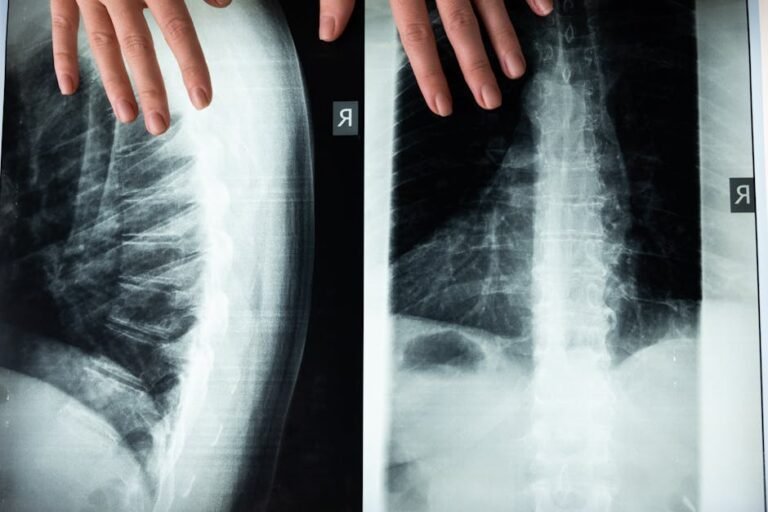
That’s an enormous workload for one structure, and the engineering involved is genuinely breathtaking. But with complexity comes vulnerability. Your spine relies on a delicate balance of many moving parts: vertebrae (the individual bones), intervertebral discs (the cushioning pads between them), ligaments (the tough bands holding bones together), and the muscles that surround and support the whole structure. When any part of this system is disrupted — through injury, age-related wear and tear, conditions like scoliosis, or what specialists call “segmental instability” (where a specific section of the spine becomes less stable than it should be) — the whole system is thrown off balance. And that’s when your muscles start doing something very interesting indeed.
Understanding Segmental Instability: What It Actually Means
The term “segmental instability” might sound intimidating, but it simply refers to a situation where a particular segment of your spine isn’t holding together as firmly as it should. Think of your spine as a tower of building blocks. Normally, each block sits solidly on the one below it, with just enough flexibility to allow movement. When one block starts to shift or wobble more than it should — perhaps because a disc has degenerated, a ligament has been stretched, or there’s been some structural change — that segment becomes unstable. It doesn’t necessarily mean your spine is about to collapse; it means that particular area is doing its job less efficiently and with less control than normal.
Segmental instability can arise from a number of causes. Natural ageing and disc degeneration are common culprits, as the discs gradually lose their height and hydration over time. Injuries — from car accidents, sports, or even repetitive strain — can stretch or damage the ligaments that hold spinal segments in place. Conditions like disc herniation (a “slipped disc”) can also alter the mechanical behaviour of that spinal segment. Even changes following spinal surgery can affect how a segment moves and loads. Regardless of the cause, the result is the same: the spine sends out an urgent call to the muscles surrounding it, essentially saying, “We need backup — now.”
The Muscular Response to Segmental Instability: Your Body’s Emergency Team
When your spine detects instability or injury in one of its segments, the surrounding muscles respond immediately and instinctively. This is your body’s built-in emergency system at work — an adaptive response designed to protect the vulnerable area from further damage. Those muscles tighten and brace around the unstable segment, acting like a natural splint. They’re trying to limit painful or dangerous movements, absorb load that the compromised structures can’t safely handle, and keep things from getting worse while the area potentially heals.
This response is genuinely clever and, in the short term, genuinely helpful. If you’ve ever “thrown your back out” and found that you instinctively stood very rigidly and avoided certain movements, that’s exactly this system in action. Your lower back muscles were guarding the injured area. You might also notice you unconsciously shift your posture, favour one side, or change the way you walk after a back injury. These compensatory movements are your body’s way of redistributing the load away from the painful, vulnerable area. In the immediate aftermath of an injury or during an acute flare-up, these muscular responses are doing exactly what they should — they’re your body’s first responders.
The muscles most deeply involved in this response are your deep stabilising muscles — particularly those in the core, including the muscles of the lower back and deep abdominals. When these work well and respond appropriately, they genuinely do provide meaningful support and protection to the spinal segments they surround. Understanding this highlights why core strength matters so much for spinal health — these muscles are your spine’s primary active support system, the ones your body calls on first when trouble arises.
When Protective Muscles Become Part of the Problem
Here’s where things get complicated — and where understanding the muscular response to segmental instability becomes genuinely important for anyone dealing with chronic back pain. What starts as a brilliant, protective short-term strategy can evolve into what researchers call “maladaptive patterns” — essentially, the body getting stuck in its emergency response mode long after the emergency has passed, or adapting in ways that create new problems.
Imagine those muscles that tightened up to protect your unstable spinal segment. If that tightening continues for weeks, months, or even years, those muscles become chronically shortened and rigid. They lose their natural flexibility. They start to restrict the healthy range of motion in nearby joints. Everyday activities — bending, reaching, even just walking — begin to feel stiff and uncomfortable. Meanwhile, other muscles — the ones that should be contributing to stable, balanced movement — may become weak and underused, because their overactive neighbours have been compensating for them. This creates a genuinely vicious cycle: the original spinal issue triggered the muscle changes, and now those muscle changes are actively contributing to ongoing pain, stiffness, and dysfunction.
Modern spinal health experts increasingly recognise that persistent back pain is rarely just a structural issue. Your spine functions as an integrated system, where the passive structures (bones, discs, ligaments) are in constant dynamic conversation with your active muscular system and the neural control mechanisms of your brain and nervous system. When something disrupts that conversation — whether it’s the original segmental instability or the maladaptive muscle patterns that follow — persistent pain and limited movement are often the result. This is why simply treating the structural problem (for example, a surgery or injection) doesn’t always resolve the pain. The muscular patterns that developed in response may still need to be addressed.
What You Can Do: Practical Tips for Managing Spinal Instability and Muscular Imbalance
The good news in all of this is that understanding the relationship between segmental instability and muscular response is genuinely empowering. It helps explain why a holistic, movement-centred approach to spinal health tends to be more effective than simply waiting for pain to pass or relying on one treatment alone. Your muscles can be retrained, rebalanced, and strengthened — and doing so can make a profound difference to how your spine feels and functions.
Here are some practical, evidence-informed steps you can take to support your spinal health and help break the cycle of maladaptive muscular responses:
- Don’t dismiss persistent pain: While occasional aches are a normal part of life, chronic or recurring back pain is your body’s signal that something needs attention. Don’t write it off as “just getting older.” Persistent discomfort deserves a proper evaluation.
- Seek a comprehensive assessment: Look for a healthcare provider — whether that’s a physiotherapist, chiropractor, or sports medicine physician — who takes an integrated approach. The best assessments look beyond imaging alone to assess your movement patterns, muscle balance, and functional ability.
- Prioritise core strengthening: Focus on exercises that target your deep stabilising muscles — the ones that directly support your spine. Pilates, specific physiotherapy exercises, and targeted gym programmes can all be excellent options. Always build up gradually and ideally under professional guidance if you’re managing an existing issue.
- Keep moving (appropriately): Prolonged rest is rarely the answer for spinal issues. Gentle, regular movement helps prevent muscles from becoming further deconditioned and keeps joints mobile. Swimming, walking, and yoga are often well-tolerated options for those managing back problems.
- Practise mindful movement in daily life: Simple changes make a real difference. Engage your core when lifting — and use your leg muscles, not your back, for heavy loads. Avoid sitting in one position for extended periods. If you work at a desk, set reminders to get up and move regularly.
- Explore diverse therapeutic approaches: Depending on your individual situation, therapies such as physiotherapy, massage, acupuncture, yoga, or chiropractic care can help re-educate tight muscles, restore healthy movement patterns, and address the imbalances that have built up over time.
- Listen to your body’s signals: Learn to distinguish between the healthy discomfort of muscle work and genuine pain signals that suggest you’re doing too much or moving in a way that’s harmful. This awareness is a skill worth cultivating.
- Consider supportive tools: Ergonomic lumbar support cushions, foam rollers for muscle release, resistance bands for targeted strengthening, and quality yoga mats can all be useful additions to your routine. Look for highly-rated options on Amazon to support your at-home practice.
The Bigger Picture: Treating Your Spine as an Integrated System
One of the most important shifts you can make in how you think about your spinal health is to move away from viewing it as a purely mechanical problem — a “bad disc” or a “bad back” — and start seeing it as an integrated system that involves your bones and discs, yes, but also your muscles, your nervous system, your movement habits, and even your stress levels. Chronic tension, anxiety, and poor sleep can all influence how your muscles behave and how sensitive your nervous system is to pain signals. This is why the most effective approaches to managing spinal instability and muscular dysfunction tend to be multidimensional.
This doesn’t mean that structural issues don’t matter — of course they do. But it does mean that addressing the muscular and movement dimensions of spinal health is just as important as addressing the structural ones. When you work to retrain and rebalance your muscles, improve your posture, build your core strength, and move more mindfully, you’re not just treating a symptom. You’re actively supporting the entire integrated system that keeps your spine healthy and functional. That’s a genuinely powerful position to be in.
Remember too that progress with spinal health issues can be gradual. It often takes consistent, patient effort to retrain long-standing muscular patterns. Be encouraging with yourself, celebrate small improvements in mobility and comfort, and stay consistent with whatever programme you and your healthcare provider agree on. The body has a remarkable capacity to adapt and improve when given the right support and stimulus.
The Bottom Line: Your muscles are doing their very best to protect your spine when instability or injury arises, and that protective muscular response to segmental instability is genuinely impressive in the short term. But over time, those same protective patterns can become the source of chronic stiffness, pain, and limited movement — creating a cycle that’s hard to break without the right approach. By understanding this relationship, seeking comprehensive care, prioritising appropriate movement and core strength, and treating your spine as the integrated system it truly is, you give yourself the best possible chance of breaking that cycle and building real, lasting spinal health. Your spine is designed for strength and resilience — and with the right knowledge and support, you can help it live up to that potential.
This is not medical advice. Consult your healthcare provider before starting any new health routine or using any product mentioned here.