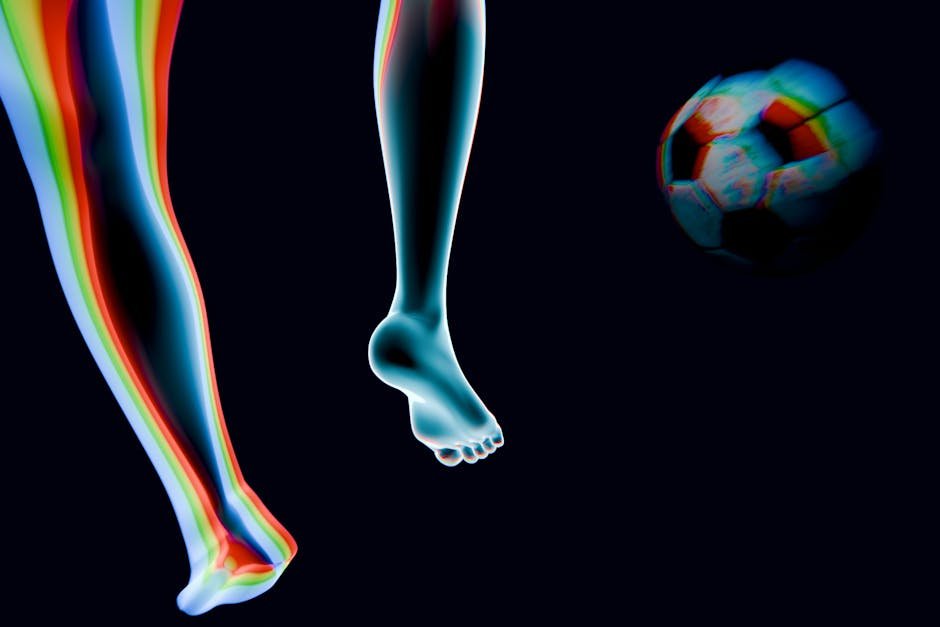
Fascial Integration and Load Sharing: How Your Spine and Kinetic Chain Really Work
This post contains affiliate links. As an Amazon Associate, I earn from qualifying purchases at no extra cost to you.
Free resources — no credit card required for trial
🎧 Listen to health & wellness audiobooks free for 30 days
Start 30-Day Free Trial →
📚 Read unlimited health books free for 30 days
Try Kindle Unlimited Free →
Have you ever wondered why a stiff neck can trigger lower back pain, or why that old ankle injury still seems to cause ripples of discomfort in your knee years later? If you’ve chalked it up to bad luck or just “getting older,” you’re not alone — but there’s actually something far more fascinating going on. Your body is telling you a profound truth about fascial integration and the kinetic chain: everything is connected. Your spine isn’t simply a stack of bones holding you upright. It’s a brilliantly engineered, living system that constantly transmits forces, shares loads, and adapts to every move you make. Understanding how this works could genuinely change the way you think about pain, posture, and movement — and give you real tools to feel better every single day.
More Than Bones: Your Spine as a Dynamic Kinetic Chain
Most of us picture the spine as something like a rigid pillar — a central column that holds us up and keeps us from crumbling. But that image doesn’t do it justice at all. Your spine is more accurately described as a dynamic kinetic chain: an interconnected series of segments that work together, influencing and responding to one another just like the links in a bicycle chain. Move one link, and the rest follow. It’s elegant, responsive, and surprisingly intelligent.
This means that forces don’t just stop where they originate. When you take a step, the impact doesn’t simply stay in your foot or ankle. That energy travels upward through your leg, into your pelvis, and continues all the way up through your spine to your head and neck. The reverse is equally true: when you lift something heavy, the load travels downward from your arms and shoulders through your spine and into your lower body. Your body is constantly managing this two-way flow of force — and it does so remarkably well, most of the time.
A key principle behind this incredible design is called biotensegrity. It might sound technical, but the idea is beautifully simple. Your body isn’t held together purely by compression — like bricks stacked on top of each other — but by a combination of compression and tension working in harmony. Think of a tent: the poles push outward (compression), while the ropes pull inward (tension), creating a structure that’s both stable and flexible. Your spine works in much the same way, with your bones providing compression and your muscles, ligaments, and connective tissues providing the balancing tension. This interplay allows your spine to move freely in multiple directions, maintain upright posture, and protect the delicate nerves running through it — all at the same time.
The Remarkable Role of Fascia in Load Sharing
If the kinetic chain is the concept, fascia is one of the most important physical players making it all possible. Fascia is a continuous, three-dimensional web of connective tissue that wraps around and weaves through every muscle, bone, organ, and nerve in your body. It’s like a living, responsive suit of armour underneath your skin — one that never truly switches off. And when it comes to fascial integration and load sharing, this tissue plays a starring role.
When you reach for something on a high shelf, the effort isn’t isolated to your arm and shoulder. Your fascial network, working in concert with your muscles and other connective tissues, distributes that effort across your back, core, and even your legs to provide stability and prevent any single area from becoming overwhelmed. This load sharing is what stops every movement from placing dangerous stress on one isolated joint or muscle. It’s your body’s built-in protection system, and it works automatically — as long as the whole system is functioning as it should.
A helpful image: imagine pulling a single thread in a tightly woven sweater. You’ll see a ripple of movement travel across the entire garment, not just around the spot you pulled. Your fascial network behaves in a remarkably similar way. Tension or restriction in one area sends signals and effects rippling throughout the system. This is why a tight calf, for example, might subtly alter the way you walk, which in turn affects your knee, your hip, and eventually your lower back. It’s all woven together — quite literally.
When the System Breaks Down: Pain, Stiffness, and Compensation Patterns
So what happens when this beautifully coordinated system starts to falter? When one part of the kinetic chain becomes stiff, weak, or restricted, the rest of the chain doesn’t simply stop working — it adapts. Your body finds a workaround. These “compensation patterns” are clever short-term solutions, but over time, they can create new problems in areas that were previously perfectly fine.
A common example: if your hip flexors are chronically tight from long hours of sitting at a desk, they can limit your hip extension when you walk or stand. To make up for this lack of movement at the hip, your lower back may start to overarch. That extra strain on the lumbar spine can gradually build into pain, stiffness, or even injury — even though the original problem was in your hips, not your back. Similarly, restricted mobility in the upper back can force your neck and shoulders to overcompensate during everyday tasks like typing or reaching, leading to persistent headaches or shoulder tension that seems to come from nowhere.
This is exactly why treating pain in isolation so often leads to frustration. You address the sore knee, it feels better for a while, and then it comes back — because the root cause (perhaps a stiff ankle or weak glutes disrupting the kinetic chain) was never addressed. Understanding your body as an integrated whole, rather than a collection of separate, unrelated parts, opens up a much more effective approach to both treating and preventing pain. When you start looking upstream and downstream in the chain, patterns that once seemed mysterious start to make a great deal of sense.
Fascial Integration and the Science of Biotensegrity — Simplified
You don’t need a degree in biomechanics to appreciate the genius of how your body manages movement, but it helps to understand a few key ideas. Biotensegrity, as mentioned earlier, is the principle that your body maintains stability through a balance of tension and compression — not through rigidity. This means your spine and surrounding structures are designed to be adaptable, springy, and resilient, not stiff and locked in place.
Fascia plays a central role here because it is one of the main structures providing that continuous tension throughout the system. When your fascia is healthy — well-hydrated, mobile, and free from restrictions — it allows forces to travel efficiently through your body, supporting smooth and pain-free movement. When it becomes restricted (through injury, prolonged poor posture, lack of movement, or dehydration), those forces can’t travel as efficiently. Some areas become overloaded, others underused, and the whole system becomes less resilient.
The encouraging news is that fascia is a living tissue. It responds to movement, hydration, and targeted therapy. Practices like yoga, Pilates, foam rolling, and manual therapies such as massage or myofascial release are all aimed, at least in part, at restoring mobility and healthy function to the fascial system. The more you understand this, the more you can make informed choices about how to support your body’s natural ability to self-regulate and heal.
What You Can Do: Practical Tips for Supporting Your Kinetic Chain
The good news about understanding fascial integration and the kinetic chain is that it’s genuinely empowering. You don’t need to be an athlete or a fitness enthusiast to take meaningful steps toward better spinal health and whole-body balance. Small, consistent habits can make a significant difference over time. Here are some practical, evidence-grounded tips to help you support this incredible integrated system:
- Move regularly and vary your movements: Our bodies are built for movement, not prolonged stillness. Avoid staying in any single position for too long. Throughout your day, incorporate walking, stretching, reaching, and gentle twisting to keep your entire kinetic chain engaged and fluid.
- Practise mindful movement: As you go about your day, start paying attention to how movement in one area affects other parts of your body. This simple awareness can help you spot stiffness, tightness, or compensation patterns before they develop into pain.
- Build balanced strength and flexibility: Rather than focusing on isolated muscle groups, aim for exercises that strengthen and stretch your whole body. Your core — the deep muscles surrounding your spine and pelvis — is especially important for spinal stability. Yoga, Pilates, and functional strength training are all excellent choices.
- Think of good posture as dynamic, not rigid: Healthy posture isn’t about holding yourself perfectly still and straight. It’s about maintaining your spine’s natural curves while allowing for easy, fluid movement. Think effortless alignment rather than a military stance.
- Stay hydrated: Fascia is largely composed of water. Staying well-hydrated helps keep your connective tissues supple and functional, which supports efficient load sharing throughout the body.
- Listen to your body’s signals: Persistent aches or discomfort are your body’s way of flagging that something in the chain may be out of balance. Don’t dismiss these signals — treat them as valuable information worth investigating.
- Consider professional support: If you have ongoing pain, stiffness, or movement difficulties, a physical therapist, osteopath, or chiropractor can assess your kinetic chain as a whole, identify imbalances, and guide you toward personalised strategies for recovery and long-term resilience.
Even incorporating just a few of these habits into your daily routine can help your body’s integrated system function more efficiently — reducing the risk of injury, easing existing discomfort, and supporting greater overall vitality.
Why This Whole-Body Perspective Changes Everything
Shifting your perspective from “my back hurts” to “something in my kinetic chain is out of balance” is genuinely transformative. It moves you from feeling like a passive victim of random pain to an active participant in your own health. When you understand that your spine is the dynamic core of an exquisitely connected system — one influenced by everything from the health of your fascia to the strength of your feet — you start making different choices. You stretch not just the area that hurts, but the areas that feed into it. You notice how your posture during a long meeting affects how your back feels that evening. You understand why your yoga teacher keeps reminding you to engage your core before you move.
This holistic understanding is particularly important for anyone dealing with recurring or chronic pain. If you’ve been stuck in a cycle of treating symptoms without lasting relief, exploring the kinetic chain and fascial integration may offer a new and genuinely helpful lens through which to view your body. It doesn’t replace professional medical advice — but it can help you ask better questions and engage more meaningfully with the care you receive.
Your body has an extraordinary capacity to adapt, recover, and thrive. By understanding and respecting the remarkable interconnectedness of your fascial system and kinetic chain, you can work with your body rather than against it — moving with greater ease, reducing discomfort, and building the kind of resilience that lasts well into later life.
The Bottom Line: Your spine and the entire kinetic chain that supports it are far more sophisticated than most of us realise. Through the principles of fascial integration and biotensegrity, your body shares loads, distributes forces, and compensates for weaknesses in ways that are constantly working to keep you moving. When one part of this chain becomes restricted or weak, the effects ripple outward — sometimes showing up as pain in a completely different area. The key to lasting spinal health isn’t just treating symptoms where they appear; it’s nurturing the whole connected system through regular movement, balanced strength, good hydration, and mindful attention to how your body feels. Start small, stay consistent, and remember: your body is always working with you, not against you.
This is not medical advice. Consult your healthcare provider before starting any new health routine or using any product mentioned here.