How to Maintain Self-Care When Life Feels Overwhelming: A Practical Guide for Older Adults
This post contains affiliate links. As an Amazon Associate, I earn from qualifying purchases at no extra cost to you.
Free resources — no credit card required for trial
🎧 Listen to health & wellness audiobooks free for 30 days
Start 30-Day Free Trial →
🛒 Recommended Products
As an Amazon Associate we earn from qualifying purchases at no extra cost to you.
TheraBand First Step to Active Health Kit — Senior Exercise Program for Balance and Fall P
$19.99
EZ Off Jar Opener for Seniors — Under Cabinet Jar Opener for Weak Hands and Arthritis
$9.99
Omron 5 Series Upper Arm Blood Pressure Monitor — 2-User 100-Reading Memory Wide-Range Cuf
$44.99
OMRON 7 Series Wireless Wrist Blood Pressure Monitor — Clinically Validated with Connect A
$69.99
Vitality 4 Life Senior Resistance Band with Instruction Guide — Specifically for Elderly F
$16.99
📚 Read unlimited health books free for 30 days
Try Kindle Unlimited Free →
There are days when life piles on all at once — health worries, family responsibilities, financial stress, and a to-do list that never seems to shrink. If you’ve ever looked at the phrase “self-care” and thought, “I barely have time to breathe,” you’re not alone. For many older adults, maintaining self-care when life feels overwhelming can seem like just one more task on an already impossible list. But here’s the truth: self-care isn’t a luxury or a reward you earn after everything else is done. It’s the very foundation that helps you get through the hard days with more calm, more energy, and more of yourself still intact. The good news? You don’t need hours of free time or a spa budget to make it work. Small, simple, consistent actions are all it takes — and this guide will show you exactly how to start.
Why Self-Care Matters Most When You’re Overwhelmed
It might feel counterintuitive, but the moments when you feel least like taking care of yourself are precisely when it matters the most. When we’re stressed, our bodies release hormones like cortisol that, over time, can affect sleep, digestion, immune function, and mood. Neglecting the basics — rest, hydration, gentle movement, connection — during tough stretches can make everything harder to manage, not easier.
For older adults especially, the stakes are real. Physical changes that come with age can mean that stress hits the body harder, and recovery takes longer. Caregiving duties, loss of loved ones, changing health conditions, and social isolation are all common pressures that can accumulate quietly until they feel crushing. Recognising that taking care of yourself isn’t selfish — it’s essential — is the first and most important step.
Think of self-care as your internal safety net. When you keep even the most basic routines in place, you give yourself a steady place to land when things get rough. And when life is overwhelming, that steady ground makes all the difference.
Start Small: Tiny Steps That Add Up to Real Change
When you’re already overwhelmed, the last thing you need is an ambitious new health plan that adds pressure. The most effective approach is to start almost embarrassingly small. We’re talking three-minute breathing exercises, one-minute stretches, a single glass of water. These aren’t consolation prizes — they’re genuinely powerful tools that accumulate into real wellbeing over time.
Try sitting comfortably, closing your eyes, and breathing in slowly through your nose for a count of four, then out through your mouth for a count of four. Do this for just three minutes. It sounds simple, but this kind of intentional breathing can actually calm the nervous system and create a small but meaningful sense of space in a crowded mind. Pair this with one tiny physical movement — ankle circles while seated, gentle shoulder rolls, or a slow walk to the kitchen and back — and you’ve already done something kind for your body today.
Small comfort rituals matter too. A glass of water with a slice of lemon, a few pages of a favourite book, or completing one manageable task like watering a plant or sorting a single drawer can restore a surprising sense of calm and control. Finishing small things builds confidence and chips away at the feeling that everything is spiralling. The goal isn’t perfection — it’s consistency, however gentle that looks on any given day.
Build a Simple Daily Routine That Feels Realistic
A predictable daily rhythm is one of the most effective antidotes to overwhelm. When your day has a loose structure, your brain doesn’t have to work as hard to figure out what comes next — and that saved energy can go toward the things that actually matter to you. The key word here is “simple.” A good routine for overwhelming times doesn’t look like a packed schedule; it looks like a few anchor points scattered through the day.
Consider building your self-care habits around things you already do. After brushing your teeth in the morning, drink a glass of water. After your bath or shower, take two minutes to apply moisturiser and do a gentle stretch. Attaching new habits to existing ones makes them stick without requiring extra willpower. Over time, these small additions become second nature.
Pay particular attention to sleep. A calming pre-sleep routine — dimming the lights an hour before bed, avoiding caffeine in the afternoon and evening, stepping away from screens, and going to bed at a consistent time — can dramatically improve the quality of your rest. Good sleep supports mood, sharpens thinking, and helps your body repair itself. If you wake in the night, try listening to soft music or a familiar audiobook rather than reaching for your phone. The goal is to settle the mind, not stimulate it.
Hydration and nourishment are also non-negotiables. Keep a water bottle nearby throughout the day. If cooking feels like too much on hard days, it’s perfectly okay to rely on simple, ready-to-eat options that are still nutritious — tinned fish, pre-washed salad greens, boiled eggs, or yoghurt with fruit. Eating well doesn’t have to be complicated to be effective.
Move Your Body Safely — Even on the Hard Days
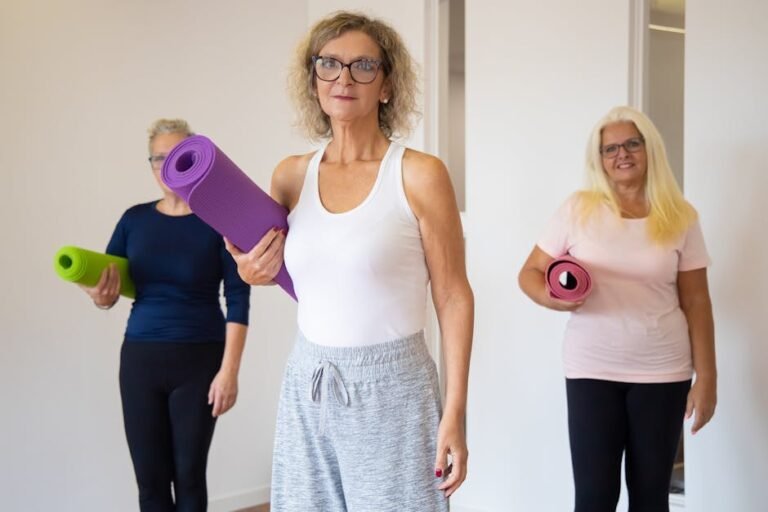
Movement is one of the most powerful mood-regulators we have, and the good news is that it doesn’t have to be strenuous to be beneficial. For older adults, safe and gentle movement is the priority. Chair yoga, seated leg lifts, balance exercises using a sturdy chair for support, or even a slow walk around the block with a neighbour can do wonders for both physical and mental wellbeing.
Safety always comes first. Before starting any new exercise routine, it’s worth checking with your doctor — particularly if you have joint pain, dizziness, heart concerns, or breathing difficulties. At home, take a few moments to reduce fall risks: remove loose rugs, add non-slip mats in the bathroom, make sure hallways are well lit, and keep frequently used items within easy reach. Wear supportive, well-fitting shoes with good grip whenever you’re up and moving around. If you ever feel faint, dizzy, or short of breath, sit down slowly and don’t hesitate to call for help.
Even on the days when getting up feels hard, remember that any movement counts. A stretch from bed, rolling your shoulders while seated, or taking a few deep breaths while standing at the window — these all contribute to your physical wellbeing. Be gentle with yourself and celebrate what you can do, not what you can’t.
What You Can Do: Practical Tips for Maintaining Self-Care When Life Feels Overwhelming
Here’s a quick-reference list of practical, doable actions you can draw from whenever the days feel heavy. You don’t need to do all of these — choose one or two that feel manageable right now:
- Try a 3-minute breathing exercise — breathe in for four counts, out for four counts, and repeat. Do this first thing in the morning or whenever tension rises.
- Drink a glass of water before your morning coffee — hydration is one of the simplest and most overlooked acts of self-care.
- Schedule one social contact per day — a short phone call, a text message, or a doorstep chat with a neighbour can meaningfully lift your mood.
- Limit your daily task list to three priorities — choose what truly matters, break big tasks into smaller steps, and let go of the rest for now.
- Create a simple “comfort kit” — keep a water bottle, a healthy snack, a small blanket, your phone, and a list of important contacts in one easy-to-reach spot.
- Use gentle self-talk — when negative thoughts creep in, try saying to yourself: “I’m doing my best today, and that is enough.”
- Try a five-minute journal entry — write down one worry to get it out of your head, and then write one small thing that went okay today.
- Take a short walk outside — even five minutes of fresh air and natural light can shift your perspective and energy.
- Ask for practical help — if grocery shopping, housekeeping, or transportation feels unmanageable, reach out to a trusted person or look into community support services. Asking for help is a strength, not a weakness.
- Celebrate small completions — after finishing even a minor task, take a moment to acknowledge your effort. Progress, however small, is still progress.
Connection and Community: You Don’t Have to Do This Alone
One of the heaviest parts of feeling overwhelmed is the loneliness that can come with it — the sense that everyone else is managing just fine while you’re struggling. But isolation and overwhelm tend to feed each other. The more isolated we feel, the harder everything becomes; and when things are hard, it’s tempting to withdraw further. Breaking that cycle, even in a small way, can be genuinely life-changing.
Regular connection doesn’t have to be elaborate. A brief daily phone call with a friend or family member, joining a local book club, attending a light exercise class at a senior centre, or participating in a faith-based community group can all provide both companionship and structure. Shared activities — even simple ones — remind us that we belong and that others care about how we’re doing.
Don’t underestimate the power of asking for help with practical matters either. Many communities have volunteer programmes that can assist with errands, friendly visits, or transportation. You don’t have to carry every responsibility alone. Seeking and accepting support is not a sign of weakness — it is one of the wisest and most self-respecting things you can do. And if you find yourself experiencing persistent sadness, anxiety, or worry about your safety, please reach out to your healthcare provider or a trusted family member. Recognising when you need more support is its own form of strength.
Planning Ahead: How to Protect Your Self-Care on the Hardest Days
Even the best intentions can crumble under a truly difficult day. That’s why it helps to plan your self-care safety nets in advance, before you need them. Think about what tends to derail you — a bad night’s sleep, a stressful appointment, unexpected news — and decide in advance what one or two things you’ll always try to hold onto, no matter what. Maybe it’s your morning breathing routine. Maybe it’s a glass of water and five minutes outside. Whatever those anchors are, make them non-negotiable.
Keep a written list of calming strategies somewhere visible — on your fridge, by your bed, or in your phone. When emotions run high and thinking clearly feels impossible, having a simple written reminder of what helps can be incredibly grounding. Your list might include: “Take three slow breaths. Make a warm drink. Call someone I trust. Step outside for a moment.” Simple, but effective.
It’s also wise to keep a basic emergency plan in place: know who to call if you feel unwell or unsafe, keep an updated list of your medications and doctor’s contact details somewhere accessible, and make sure at least one trusted person knows your routine. Being prepared doesn’t mean expecting the worst — it means giving yourself the peace of mind to focus on today without fear of being caught off guard.
The Bottom Line: Maintaining self-care when life feels overwhelming doesn’t mean doing everything perfectly — it means doing small, kind things for yourself consistently, even on the hard days. Start with the tiniest step you can manage today: three deep breaths, a glass of water, a call to someone you love. Build from there at your own pace. Every small action is a genuine act of self-respect, and over time, these moments accumulate into real resilience, real calm, and a real sense of control over your own wellbeing. You deserve that care — and you are absolutely capable of giving it to yourself.
This is not medical advice. Consult your healthcare provider before starting any new health routine or using any product mentioned here.