The Erector Spinae: Your Spine’s Unsung Hero and the Key to a Stronger, Healthier Back
This post contains affiliate links. As an Amazon Associate, I earn from qualifying purchases at no extra cost to you.
Free resources — no credit card required for trial
🎧 Listen to health & wellness audiobooks free for 30 days
Start 30-Day Free Trial →
🛒 Recommended Products
As an Amazon Associate we earn from qualifying purchases at no extra cost to you.
Branfit Shoulder and Back Brace Posture Corrector — Breathable Posture Trainer for Upper B
$24.99
Posture Corrector for Women and Men — Comfortable Effective Brace for Shoulder and Back Pa
$22.99
Bodywellness Posture Corrector for Men and Women — Adjustable Back Straightener with Clavi
$19.99
Updated Posture Corrector — Adjustable Upper Back Brace for Clavicle Support and Neck Pain
$21.99
TRIDUCNA Shiatsu Neck Back and Shoulder Massager with Heat — Deep Tissue 3D Kneading Pillo
$49.99
📚 Read unlimited health books free for 30 days
Try Kindle Unlimited Free →
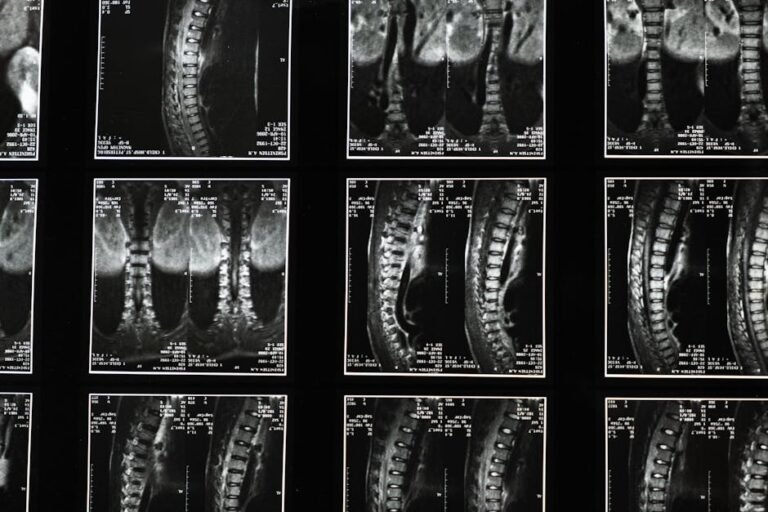
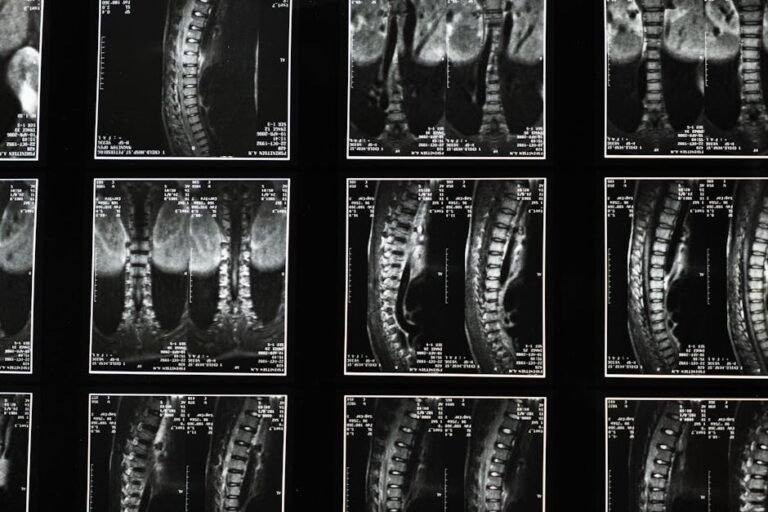
Have you ever stopped to think about what actually keeps you upright? Right now, as you read this, a remarkable group of muscles is working quietly in the background — counteracting gravity, balancing your posture, and making sure your spine stays steady through every nod, lean, and stretch you make. These are your erector spinae muscles, and most of us have never given them a second thought. Yet these powerhouse muscles run the entire length of your back, from your pelvis all the way up to the base of your skull, and they are absolutely central to how you stand, move, and feel every single day. Whether you’re dealing with nagging back tension, trying to improve your posture, or simply curious about your own body, understanding the erector spinae could genuinely change the way you take care of yourself.
Meet the Erector Spinae: Your Spine’s Built-In Support System
Your spine is a brilliantly engineered structure — flexible enough to bend and twist, yet strong enough to protect your spinal cord and carry the weight of your entire upper body. But bones alone can’t do that job. They need muscular support, and that’s exactly where the erector spinae group steps in. Often called the “sacrospinalis group,” these muscles form the largest and most visible assembly of muscles running along your back. Think of them as a continuous, powerful scaffold holding your spinal “mast” in place — like the rigging on a tall ship that keeps everything steady even in rough waters.
The erector spinae isn’t just one single muscle — it’s actually made up of three distinct columns working in concert: the iliocostalis, the longissimus, and the spinalis. You don’t need to memorise those names, but knowing that these three groups work as a coordinated team gives you an appreciation for just how sophisticated your back really is. Their muscle fibres run predominantly up and down your spine, which makes them perfectly positioned to perform two crucial roles: acting as your body’s primary anti-gravity mechanism, and serving as the principal coordinators of trunk movement.
In plain terms, this means your erector spinae muscles are constantly switching on — sometimes powerfully, sometimes subtly — to keep you upright, help you move with control, and distribute the forces travelling through your spine so that no single disc or vertebra takes on too much strain. From the moment you get out of bed in the morning to the moment you lie back down at night, these muscles are on duty. That’s a remarkable level of dedication for muscles most people can’t even name.
More Than Just Posture: The Erector Spinae in Everyday Life
It would be easy to assume that the erector spinae muscles are only important when you’re doing something physically demanding — lifting weights at the gym or carrying heavy bags. But the truth is, these muscles are engaged in almost everything you do. Even sitting at your desk right now involves a constant, low-level contraction of your erector spinae to keep your torso from collapsing forward. The moment you lean over to pick up a pen, your erector spinae lengthen and stretch to control that forward movement, then contract to bring you back upright. They’re like shock absorbers and engines rolled into one.
One of their most important jobs is maintaining the natural S-shaped curve of your spine. That gentle double curve isn’t just an aesthetic quirk — it acts like a spring, dispersing the impact of walking, running, and jumping so that your discs and vertebrae don’t absorb the full force of every step. Your erector spinae actively maintain those curves, adjusting in real time as your body moves and shifts. Without their constant engagement, your spine would be far more vulnerable to injury and accelerated wear and tear.
And it’s not just about bending and lifting. When you swing a golf club, throw a ball, run for a bus, or even just laugh hard enough to feel it in your abs, your erector spinae are involved. They don’t work in isolation either — they’re part of an integrated system that connects with your core muscles, glutes, and even your legs. When your erector spinae are strong and well-coordinated, everything in that system works more efficiently. When they’re weak or fatigued, other muscles have to compensate, which can create imbalances, poor movement patterns, and over time, pain or injury.
A Story Millions of Years in the Making: Erector Spinae and Human Evolution
Here’s something genuinely fascinating: the reason your erector spinae muscles are so well-designed for their job is because they’ve been evolving and adapting for millions of years. When our ancient ancestors made the extraordinary transition from moving on all fours to walking upright on two legs — a shift known as bipedalism — the entire architecture of the human back had to change. Suddenly, gravity wasn’t pulling the spine forward or backward like it does in four-legged animals; it was pulling straight down along the length of the spine. That required a completely new muscular strategy.
The erector spinae evolved to meet this challenge beautifully. Unlike the back muscles of quadrupeds, which are built primarily for bursts of strength, our human erector spinae became extraordinarily good at sustained, endurance-based effort. They can hold us upright for hours at a time — something most other animals simply couldn’t manage. This shift was essential not just for standing, but for walking efficiently across long distances, which allowed early humans to explore, hunt, and thrive in ways that no other species could.
What makes the erector spinae particularly clever in evolutionary terms is their segmental organisation. Rather than being one long slab of muscle, they’re made up of many smaller, overlapping bundles connected by layers of fascia (the tough connective tissue that wraps around muscles). This design lets them perform both large, sweeping movements — like arching your back — and incredibly fine, precise adjustments, like the micro-corrections your body makes dozens of times per second to keep you balanced as you walk. It’s this combination of power and precision that makes human bipedal locomotion so uniquely efficient and adaptable.
What Happens When the Erector Spinae Struggle
Given how central these muscles are to virtually everything you do, it won’t come as a surprise that when your erector spinae aren’t functioning well, you tend to feel it. Weakness, tightness, or poor coordination in these muscles is one of the most common contributors to lower back pain — a condition that affects a staggering number of adults at some point in their lives. When the erector spinae can’t do their job properly, other structures in the spine (discs, joints, ligaments) end up under more stress than they should be, which can lead to discomfort, stiffness, and in some cases, more serious injuries.
Prolonged sitting is a particular challenge for these muscles. When you’re seated for hours — especially in a slouched or poorly supported position — your erector spinae are either chronically lengthened and weakened, or they’re working overtime to compensate for poor posture. Over time, this can lead to that familiar, dull ache in the lower back that so many desk workers know well. Similarly, sudden unaccustomed movements — like picking something up awkwardly after a period of inactivity — can strain these muscles if they haven’t been kept strong and supple.
The good news is that the erector spinae respond very well to targeted attention. Strengthening, stretching, and simply moving more can make a significant difference to how these muscles feel and perform. You don’t need a complicated programme or expensive equipment — consistency and the right approach are far more valuable than any single exercise.
Practical Tips: How to Strengthen and Care for Your Erector Spinae
Taking care of your erector spinae doesn’t have to be complicated. Small, consistent habits can make a real difference to how your back feels and functions over time. Here’s a practical guide to giving these hardworking muscles the attention they deserve:
- Move regularly throughout the day: Our bodies are built for movement, not prolonged stillness. Incorporate activities like walking, swimming, cycling, and dancing into your week — these all engage your erector spinae in natural, functional ways and support overall back health.
- Build a strong core to support your back: Your erector spinae work best when your core is also strong. Exercises like planks, bird-dogs, and glute bridges build the integrated strength your entire back system needs to function well. A stable core takes pressure off your erector spinae and helps them do their job more efficiently.
- Practise mindful posture: Whether you’re sitting, standing, or lifting something heavy, try to maintain a neutral spine — not overly arched, not slouched. Engage your core gently, relax your shoulders, and when lifting anything from the floor, bend your knees, keep your back straight, and let your legs do the driving.
- Stretch and improve your flexibility: Tight hamstrings and hip flexors can pull on your lower back and put extra stress on your erector spinae. Regular gentle stretching of your back, hips, and hamstrings can relieve this tension. Yoga and Pilates are particularly effective for building both flexibility and functional strength throughout the back.
- Set up an ergonomic workspace: If you spend significant time sitting at a desk, invest in a good chair that supports the natural curve of your lower back, position your screen at eye level, and make sure your feet are flat on the floor. Even with a great setup, aim to stand and move for a few minutes every hour.
- Listen to your body: Some muscle fatigue is normal after a workout, but persistent or worsening back pain is a signal to pay attention to. Don’t push through pain, and if back discomfort becomes chronic or severe, it’s always worth speaking to a qualified healthcare professional.
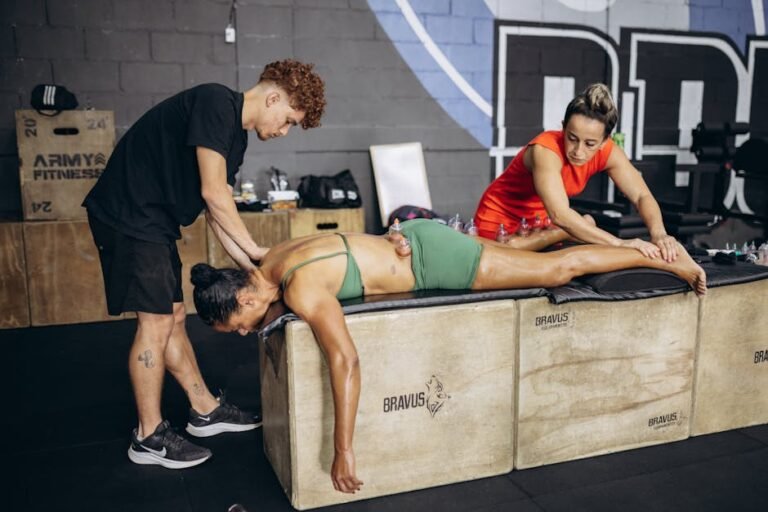
- Consider supportive tools for recovery: Foam rollers, lumbar support cushions, and resistance bands (for strengthening exercises) can all be useful additions to your back care routine. Look for well-reviewed options that suit your specific needs and budget.
The key is consistency. Even ten minutes of targeted movement or stretching a day adds up to meaningful change over time. Your erector spinae are incredibly resilient muscles — give them regular care, and they’ll reward you with a stronger, more comfortable back.
The Bigger Picture: Why Your Erector Spinae Deserve More Respect
It’s easy to take the muscles of our backs for granted — they work silently, reliably, and without fanfare. But when you understand just how much the erector spinae do for us every single day, it’s hard not to feel a little in awe of them. They are a direct product of millions of years of evolution, uniquely shaped by the demands of human upright life. They keep us standing, moving, bending, and balancing. They protect our spines from injury, maintain our natural curves, and connect seamlessly with the rest of our body’s movement system.
Most back pain isn’t inevitable, and it’s rarely the result of the spine being inherently fragile. More often, it comes down to muscles that have been under-used, over-stretched, or asked to compensate for poor movement habits over time. That means most people have a real opportunity to improve how their back feels through thoughtful movement, posture awareness, and consistent strengthening. The erector spinae are central to all of that.
Whether you’re recovering from back discomfort, trying to prevent future problems, or simply want to move and feel better as you age, understanding and caring for your erector spinae is one of the most practical investments you can make in your long-term health. These muscles have been carrying humanity upright since before recorded history — the least we can do is return the favour.
The Bottom Line: Your erector spinae muscles are the backbone of your back health — quite literally. Running from your pelvis to the base of your skull, this powerful group of muscles keeps you upright, coordinates your movements, protects your spine from injury, and reflects millions of years of evolutionary adaptation to bipedal life. By strengthening your core, moving regularly, practising good posture, and staying flexible, you can keep these essential muscles in excellent shape — reducing your risk of back pain and helping your body move with greater ease, confidence, and resilience for years to come.
This is not medical advice. Consult your healthcare provider before starting any new health routine or using any product mentioned here.