Simple Arm Exercises for Seniors: Safe, Gentle Ways to Build Strength at Home
This post contains affiliate links. As an Amazon Associate, I earn from qualifying purchases at no extra cost to you.
Free resources — no credit card required for trial
🎧 Listen to health & wellness audiobooks free for 30 days
Start 30-Day Free Trial →
🛒 Recommended Products
As an Amazon Associate we earn from qualifying purchases at no extra cost to you.
TheraBand First Step to Active Health Kit — Senior Exercise Program for Balance and Fall P
$19.99
EZ Off Jar Opener for Seniors — Under Cabinet Jar Opener for Weak Hands and Arthritis
$9.99
Omron 5 Series Upper Arm Blood Pressure Monitor — 2-User 100-Reading Memory Wide-Range Cuf
$44.99
OMRON 7 Series Wireless Wrist Blood Pressure Monitor — Clinically Validated with Connect A
$69.99
Vitality 4 Life Senior Resistance Band with Instruction Guide — Specifically for Elderly F
$16.99
📚 Read unlimited health books free for 30 days
Try Kindle Unlimited Free →
Whether it’s reaching for a jar on the top shelf, carrying a bag of groceries, or pushing yourself up from a chair, strong arms make everyday life feel so much easier — and more independent. If you’re an older adult looking to gently rebuild upper body strength, you’ve come to the right place. These simple arm exercises for seniors are designed to be done safely at home, with minimal equipment, and at a pace that works for your body. No gym membership needed, no complicated routines — just clear, effective movements you can actually stick with.
Why Arm Strength Matters More As We Age
It’s easy to take our arms for granted when they’re working well. But as we get older, muscle mass naturally decreases — a process called sarcopenia — and the muscles in our arms are no exception. The good news is that it’s never too late to start building strength, and even modest improvements can make a real difference to your daily quality of life.
Stronger arms help with so much more than just lifting. They support better posture, improve your ability to balance when reaching or bending, and give you greater confidence in your movements. For many seniors, maintaining upper body strength is also linked to a reduced risk of falls and a greater sense of independence at home.
Beyond the physical benefits, regular gentle exercise can lift your mood, improve sleep, and give you a sense of accomplishment. Think of these arm exercises not as a chore, but as an investment in the life you want to keep living — on your own terms.
Getting Started Safely: What You Need to Know First
Before jumping into any new exercise routine, it’s always wise to check in with your healthcare provider — especially if you have chronic conditions like arthritis, heart disease, or osteoporosis, or if you’ve had a recent shoulder or back injury. Your doctor or physiotherapist can help you understand which movements are best suited to your individual health needs.
Once you have the all-clear, start slowly and pay close attention to how your body responds. If you feel sharp pain, dizziness, or unusual shortness of breath during any exercise, stop and rest. A little muscle fatigue is normal; pain is not. The goal is always gradual, comfortable progress.
For equipment, you don’t need much. A pair of light dumbbells (1–3 pounds) or even filled water bottles work perfectly. A resistance band at a light level is another great option. You’ll also want a sturdy chair with a back for seated exercises, non-slip footwear, and a clear space to move safely. A quick 5–10 minute warm-up before you start — think gentle shoulder rolls, arm swings, and marching in place — will help prepare your muscles and joints and reduce the risk of strain.
Simple Arm Exercises for Seniors: A Step-by-Step Routine
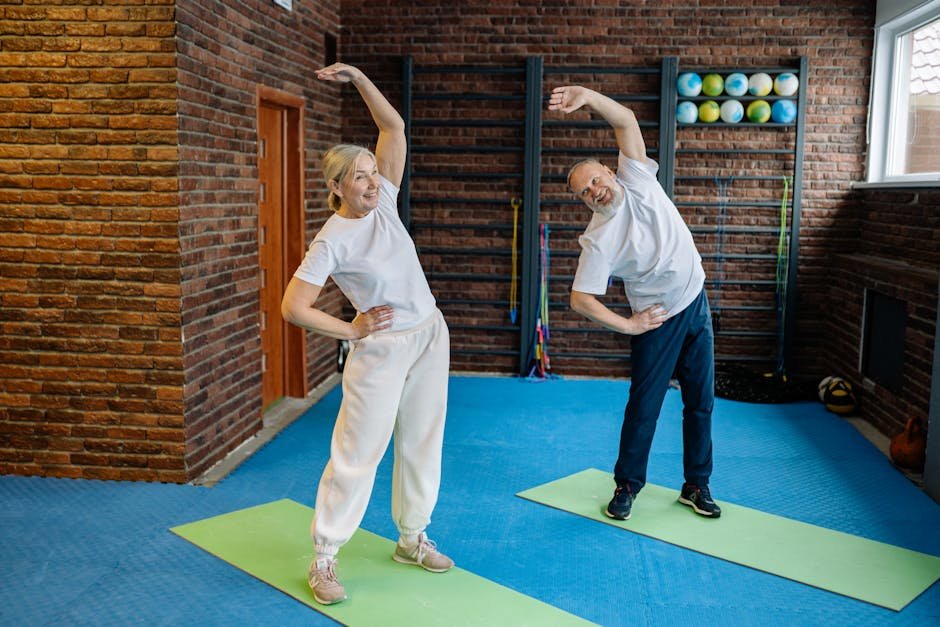
This routine covers five gentle but effective exercises that target the biceps, triceps, shoulders, and chest — the key muscle groups involved in most everyday arm movements. Each one can be adapted to your current fitness level, so don’t worry if some feel easier or harder than others.
Seated Bicep Curls are a wonderful starting point. Sit tall in your chair with feet flat on the floor. Hold a light weight in each hand, arms at your sides, palms facing forward. Keeping your elbows close to your body, slowly curl the weights up toward your shoulders, pause briefly, then lower them back down with control. Aim for 8–12 repetitions. This movement strengthens the front of your upper arms and supports everyday tasks like lifting and carrying. If you don’t have weights, simply perform the curling motion without them — your muscles still benefit.
Seated Overhead Press targets the shoulders and upper arms. Hold one light weight at shoulder height with both hands, or one in each hand. Sit up straight, brace your core gently, and slowly press the weight upward until your arms are nearly straight — but don’t lock your elbows. Lower back down with control. This exercise helps you reach overhead shelves and lift objects more comfortably. If full extension feels stiff, work within a shorter range of motion — that’s perfectly fine.
Seated Tricep Extension works the back of your upper arms, which are the muscles you use when pushing off a chair or opening a heavy door. Hold one light weight with both hands and bring it up above your head. Keeping your elbows pointed toward the ceiling and tucked close to your head, slowly lower the weight behind your head, then extend back up. Move slowly and with control, keeping your spine upright throughout.
Wall Push-Ups are a brilliant low-impact way to strengthen the chest, shoulders, and arms without putting stress on your joints. Stand about an arm’s length from a solid wall, place your hands at shoulder height and slightly wider than shoulder-width, then bend your elbows to bring your chest toward the wall. Push back with control. If this feels challenging, move your feet closer to the wall. You can also try this against a kitchen counter or table for a slightly easier version.
Arm Circles finish the routine beautifully. Sit or stand and extend your arms out to your sides at shoulder height. Start with small forward circles for 10–15 seconds, gradually increasing the size, then reverse direction. This simple movement improves shoulder mobility, reduces stiffness, and works wonderfully as both a warm-up and a cool-down movement.
How Often Should Seniors Do Arm Exercises?
Consistency matters far more than intensity when it comes to building strength safely. Aim to do these arm exercises 2–3 days per week on non-consecutive days — for example, Monday, Wednesday, and Friday. This gives your muscles time to rest and recover between sessions, which is actually when the strengthening happens.
Start with just one set of 8–12 repetitions for each exercise. After 2–3 weeks, if you’re feeling comfortable and your form is solid, increase to two sets. After another 3–4 weeks, you might progress to three sets. There’s no rush — gradual progression is the safest and most sustainable approach.
Rest for 45–90 seconds between sets, and always end your session with a gentle 5-minute cool-down. Light stretching of the arms and shoulders after exercise helps maintain flexibility and reduces post-workout soreness. The whole routine, including warm-up and cool-down, should take around 30–45 minutes — very manageable even on busy days.
Practical Tips for Making This Routine Work for You
- Start lighter than you think you need to. It’s always easier to add a little more weight or effort than to recover from overdoing it. Even water bottles are a perfectly effective starting point.
- Focus on slow, controlled movements. Moving slowly is actually harder — and more effective — than rushing. Avoid swinging your body to lift the weight; let the targeted muscle do the work.
- Breathe with intention. Exhale during the effort (e.g., when lifting or pressing), and inhale on the return. Holding your breath can raise blood pressure and increase strain.
- Make sure your chair is stable. Use a sturdy chair on a non-slip surface, and keep your exercise space free of clutter to reduce any trip or fall hazards.
- Invite a friend or family member to join you. Exercising with someone else makes it more enjoyable and adds a layer of safety. A caregiver or family member can also help with spotting proper form or adjusting the routine to your needs.
- Track your progress. Keep a simple notebook or use a free app to note how many sets and reps you completed. Seeing your progress over time is genuinely motivating.
- Don’t skip the warm-up. Even five minutes of gentle movement prepares your joints and muscles and significantly reduces injury risk.
- Listen to your body every single session. Some days you’ll feel great; others you might feel a little tired or achy. On lower-energy days, do fewer reps or lighter weights — any movement is better than none.
- If joint pain increases, ease back. Reduce your range of motion or drop the weight, and speak with your healthcare provider before continuing.
Equipment Worth Considering for Your Home Workout
You truly don’t need a lot to get started, but having the right tools on hand makes it easier to stay consistent. A pair of light adjustable dumbbells — ideally between 1–5 pounds — gives you flexibility as your strength grows without needing to buy multiple sets. Look for ones with a comfortable, non-slip grip, which is especially helpful if you have arthritis or reduced hand strength.
Resistance bands are another fantastic option. They’re inexpensive, lightweight, easy to store, and surprisingly versatile. A light-resistance band can replace weights entirely or be used alongside them for added variety. Many seniors find them easier on the joints than traditional weights while still providing an effective workout.
If balance is a concern during standing exercises like wall push-ups, a non-slip exercise mat can provide added stability underfoot. And don’t underestimate the value of a good sturdy chair — one with a firm back and solid legs makes all the seated exercises much safer and more comfortable. These are small investments that pay off enormously in the long run.
The Bottom Line: Simple arm exercises for seniors don’t need to be complicated, intense, or time-consuming to make a real difference. With just a few gentle, well-chosen movements done consistently a few times a week, you can meaningfully improve your upper body strength, support your independence, and feel more capable and confident in your daily life. Start slowly, focus on good form, progress at your own pace, and celebrate every small step forward — because every rep really does count.
This is not medical advice. Consult your healthcare provider before starting any new health routine or using any product mentioned here.