Deep Spinal Stabilizers: The Hidden Muscles That Hold Your Spine Together
This post contains affiliate links. As an Amazon Associate, I earn from qualifying purchases at no extra cost to you.
Free resources — no credit card required for trial
🎧 Listen to health & wellness audiobooks free for 30 days
Start 30-Day Free Trial →
📚 Read unlimited health books free for 30 days
Try Kindle Unlimited Free →
You reach for your morning coffee. You twist to buckle your seatbelt. You sit at your desk for hours without thinking twice about it. In every single one of these ordinary moments, your spine is performing something genuinely remarkable — a perfectly choreographed dance of movement and stability that most of us take completely for granted. We hear a lot about building a strong core, doing more planks, or tightening those abs, and while those things certainly matter, they only tell part of the story. Beneath those familiar surface muscles lies a deeper, more sophisticated system that is arguably the real foundation of a healthy, pain-free back. These are your deep spinal stabilizers — and understanding what they do, how they work, and what happens when they stop working could genuinely change how you approach your spine health for the rest of your life.
What Are Deep Spinal Stabilizers and Why Do They Matter?
Picture your spine as a tall, delicate stack of building blocks, each vertebra balanced carefully on top of the next. Now imagine trying to keep that stack perfectly upright and steady while you move, bend, breathe, and go about your day. That’s essentially the job your deep spinal stabilizers are doing every single moment — and they do it without you ever consciously asking them to.
These muscles sit right up against your spine, nestled deep beneath the larger, more visible back muscles you might stretch after a workout. The main players include the multifidus, rotatores, intertransversarii, interspinales, and the deeper portions of the erector spinae. Unlike the big surface muscles that power your big movements — lifting, twisting, reaching — these deep muscles work in subtle, precise ways, making tiny adjustments to individual vertebrae to keep everything perfectly aligned and stable.
Think of them less like bodyguards and more like meticulous architects. Your larger back muscles might move the whole building, but your deep spinal stabilizers are constantly checking that every brick is sitting exactly where it should be. Without them working properly, even the strongest surface muscles can’t fully protect your spine from strain, instability, and injury.
The Remarkable Anatomy That Makes Deep Stabilizers Unique
What sets these muscles apart isn’t just where they sit — it’s how they’re built. Deep spinal stabilizers have several unique anatomical and physiological features that make them perfectly designed for their precise, protective role. Understanding these features helps explain why standard gym workouts often aren’t enough to keep them functioning well.
First, many of these muscles have very short fibers that attach directly from one vertebra to the next, or span just a couple of segments. This gives them incredible mechanical advantage for fine-tuning the position of individual spinal segments. Rather than moving large sections of your back, they make micro-corrections — the kind of subtle adjustments that prevent one vertebra from slipping slightly out of alignment during a movement.
Second, these muscles are predominantly made up of what scientists call slow-twitch, or Type I, muscle fibers. If you think of muscles as athletes, slow-twitch fibers are your endurance runners — built not for explosive power, but for sustained, low-level effort over long periods. This means your deep stabilizers are designed to stay active all day long, providing continuous background support to your spine without tiring easily. They are, in the truest sense, always on duty.
Third — and perhaps most fascinatingly — these muscles are packed with specialised sensory receptors called muscle spindles. These tiny structures act like your spine’s internal GPS system, constantly feeding your brain precise information about where each part of your spine is in space, how it’s moving, and at what speed. This rich sensory feedback allows your nervous system to make instant, automatic adjustments to keep your spine safe, even during complex or unexpected movements. Without this constant stream of information, your spine would be far more vulnerable to sudden, jarring injuries.
What Happens When Deep Spinal Stabilizers Break Down
Given how central these muscles are to spinal health, it probably won’t surprise you to learn that when they stop functioning properly, the consequences can be significant. Research has consistently found strong connections between dysfunction in this deep stabiliser system and a wide range of spinal problems — including one of the most common complaints in the world: chronic low back pain.
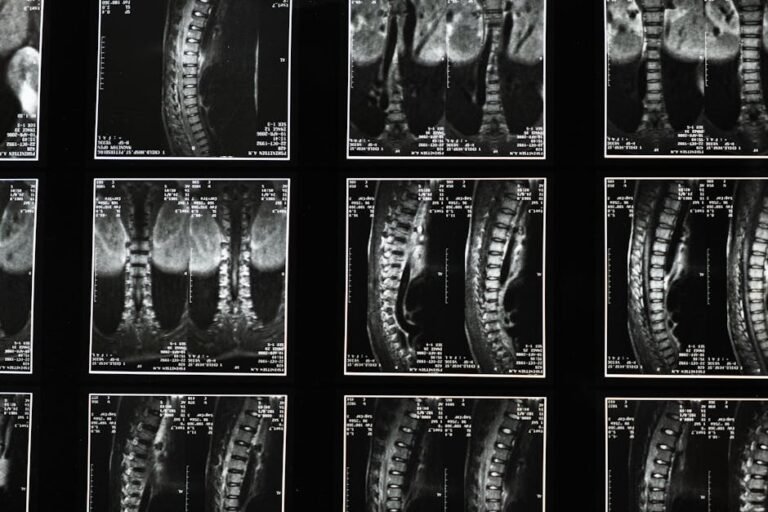
Here’s something that might genuinely surprise you. Studies using MRI imaging have shown that even after a single episode of acute low back pain — even a relatively minor one — the multifidus muscle can begin to atrophy (waste away) within just days. And it doesn’t stop there. Fatty tissue can actually infiltrate the muscle, replacing healthy muscle fibres with tissue that can no longer do the job. This isn’t a temporary blip. It’s a real, structural change that can persist long after the initial pain has gone, quietly setting the stage for recurring pain, segmental instability — where individual spinal segments become too loose and mobile — and longer-term issues like degenerative disc disease.
When the deep stabilisers falter, the larger surface muscles often try to pick up the slack. But they’re not designed for that sustained, precise role. The result is a spine that feels stiff, overworked, and increasingly unreliable — a vicious cycle that many people with chronic back pain know all too well. Understanding this process makes it clear that simply “resting” a sore back or jumping straight into heavy strengthening exercises often misses the point entirely. What the spine really needs is targeted retraining of these specific deep muscles.
Deep Spinal Stabilizers and Spinal Rehabilitation: A Different Kind of Strength Training
Recognising the unique role of deep spinal stabilizers has genuinely transformed the way spinal rehabilitation is approached by health professionals. The old model of back care — rest, painkillers, maybe some general strengthening — is giving way to a more nuanced understanding that effective rehabilitation needs to specifically re-educate these deep muscles and restore their precise, automatic function.
This type of training looks very different from what most people think of as “core work.” It’s not about doing more crunches or holding a plank longer. It’s about quality over quantity — learning to feel and activate muscles that most of us have lost touch with, especially after injury. It requires patience, mindfulness, and often the guidance of a skilled professional who can identify exactly where your control is breaking down and how to address it.
The encouraging news is that these muscles can be retrained. With the right approach, it’s entirely possible to restore their function, rebuild the sensory feedback loop between your spine and your brain, and give your back the stable, intelligent support it was always designed to have. It simply requires taking a different approach — one that prioritises precision and awareness over power and intensity.
What You Can Do: Practical Tips for Supporting Your Deep Spinal Stabilizers
You don’t need to wait until you have back pain to start paying attention to these muscles. In fact, the best time to nurture your deep spinal stabilizers is right now, before problems develop. Here are practical, evidence-informed steps you can take to support this crucial system:
- Learn to activate your deep core gently: Practice gently drawing your belly button in towards your spine without sucking in your breath or tilting your pelvis. This subtle contraction, often taught alongside diaphragmatic breathing, is a foundational way to begin engaging your deep stabilisers rather than just your surface muscles.
- Try gentle, targeted exercises: Movements like the bird-dog, pelvic tilts, cat-cow stretches, and diaphragmatic breathing exercises are excellent starting points for waking up your deep core. The focus should always be on smooth, controlled movement — not effort or intensity.
- Breathe properly: Deep, diaphragmatic breathing — where your belly rises rather than your chest — naturally engages your deep core muscles and helps create internal spinal support. Try to avoid shallow, chest-only breathing throughout your day.
- Be mindful of your posture: Whether you’re sitting at a desk, standing in a queue, or lifting a bag of groceries, aim to maintain a neutral spine — not rigidly straight, but gently aligned in its natural curves. This allows your deep stabilisers to work efficiently without being overloaded.
- Move regularly throughout the day: Prolonged static postures — whether sitting or standing — can reduce the activity of your deep stabilisers. Set a reminder to move, stretch gently, or simply change position every 30–45 minutes.
- Seek specialist guidance after any back injury: Given how quickly the multifidus can atrophy following even a minor episode of back pain, it’s worth consulting a physiotherapist, chiropractor, or osteopath who specialises in spinal rehabilitation sooner rather than later. They can assess how well your deep stabilisers are functioning and guide you through targeted retraining.
- Don’t skip the basics: Good sleep, staying hydrated, managing stress, and maintaining a healthy weight all support muscle health broadly — including these deep, hardworking stabilisers.
Remember, the goal here isn’t to become obsessed with every micro-movement of your spine. It’s simply to develop a greater awareness of how your back actually works and to give the right muscles the attention they deserve — especially if you’ve had any history of back pain or want to avoid it in future.
Building a Lasting Partnership With Your Spine
One of the most empowering shifts in modern spinal health thinking is the move away from seeing the back as something fragile and easily broken, towards understanding it as an intelligent, adaptable system that can be supported, trained, and strengthened at any age. Your deep spinal stabilizers are a huge part of that system — and they respond remarkably well when you start paying attention to them.
It’s worth remembering that this isn’t about overnight transformation. Retraining deep muscles and rebuilding that finely tuned sensory feedback loop takes time and consistency. But the payoff — a more stable, more resilient spine that supports you through all the activities you love — is absolutely worth the investment. Many people who have struggled for years with recurring back pain find that once they begin specifically addressing these deep stabilisers, things start to genuinely improve in ways that previous treatments never quite managed.
If you’re currently living with back pain, or you simply want to be proactive about keeping your spine healthy for decades to come, understanding deep spinal stabilizers is one of the most valuable pieces of knowledge you can have. It shifts the focus from simply “getting stronger” to getting smarter about how your back works — and that makes all the difference.
The Bottom Line: Your deep spinal stabilizers — including the multifidus, rotatores, and their neighbouring muscles — are the quiet, tireless architects of a healthy spine. Built with short, precise fibres, slow-twitch endurance capacity, and an extraordinary ability to sense and respond to movement, these muscles provide the foundational stability that keeps every vertebra where it belongs. When they’re disrupted — even by a single episode of back pain — the effects can be lasting and serious. But the good news is that with mindful movement, targeted exercise, proper breathing, and expert guidance where needed, you can absolutely reconnect with and retrain these vital muscles. Start small, stay consistent, and give your spine the deep support it was always designed to have.
This is not medical advice. Consult your healthcare provider before starting any new health routine or using any product mentioned here.