Neuromuscular Control and Spinal Health: How Your Muscles and Nervous System Work Together to Protect Your Spine
This post contains affiliate links. As an Amazon Associate, I earn from qualifying purchases at no extra cost to you.
Free resources — no credit card required for trial
🎧 Listen to health & wellness audiobooks free for 30 days
Start 30-Day Free Trial →
📚 Read unlimited health books free for 30 days
Try Kindle Unlimited Free →
Have you ever marvelled at how your spine lets you bend down to tie your shoes, twist around to reverse the car, and then sit comfortably at a desk — all in the same morning? Most of us only think about our spine when something starts to ache. But behind every smooth, pain-free movement is an extraordinary system of bones, muscles, and nerves working in perfect harmony. Understanding neuromuscular control and spinal health isn’t just for athletes or physiotherapists — it’s genuinely useful knowledge for anyone who wants to move well and protect their back for years to come. Once you understand what’s actually going on inside your spine, taking care of it starts to feel a whole lot more intuitive.
Your Spine Is Far More Than a Stack of Bones
It’s easy to picture the spine as a simple column — a kind of internal scaffolding that holds us upright. But that image doesn’t do it justice. Your spine is simultaneously one of the strongest load-bearing structures in the body and one of the most flexible. It lets you carry heavy shopping bags and perform a graceful stretch — sometimes in the same moment. That combination of strength and suppleness is genuinely remarkable, and it doesn’t happen by accident.
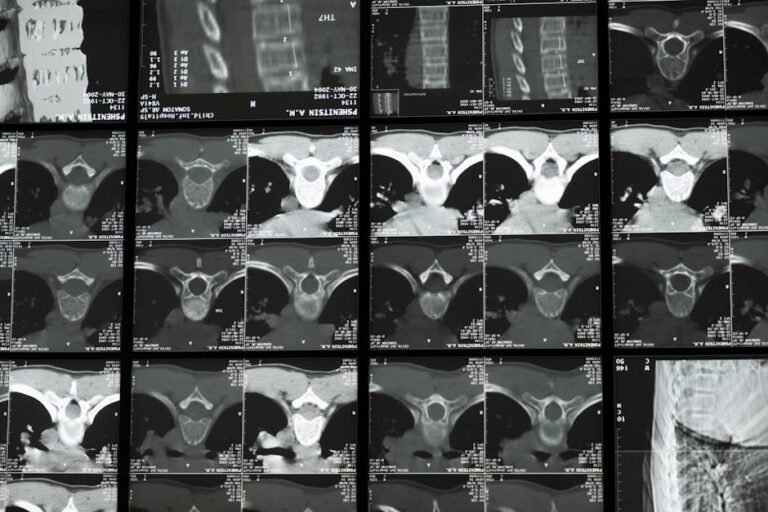
The spine is made up of individual vertebrae (the bones themselves), intervertebral discs that act like cushioned shock absorbers between each vertebra, and tough ligaments that act like strong elastic bands holding everything in place. Together, these form what scientists call the “passive” system — the raw structural material of your spine. They provide the framework, but they can’t keep you stable and moving safely on their own. That’s where your muscles and nervous system step in, and this is where the real magic begins.
Think of the passive structures as the frame of a house. Solid and essential, yes — but without the plumbing, wiring, and people living in it, it wouldn’t function the way it’s meant to. Your muscles are the active workforce, and your nervous system is the intelligent wiring that keeps everything coordinated and responsive.
The Three Pillars of Spinal Stability (And Why All Three Matter)
For decades, researchers have studied what actually keeps the spine stable — not just during exercise, but during the ordinary moments of daily life. One of the most influential ideas in this field came from scientist Dr. Manohar Panjabi, who proposed that spinal stability depends on three interconnected systems working together. Understanding these three pillars can completely change how you think about back health.
The first pillar is the passive spinal column — the bones, discs, and ligaments we just mentioned. These provide the physical architecture and some built-in resistance to movement. Crucially, though, they can only do so much on their own. If you removed all the muscle support from around your spine, it would buckle under very little load.
The second pillar is the active muscular system. This is the powerhouse of spinal stability. The muscles surrounding your spine aren’t only there to help you move — they’re constantly working at a low level to maintain your posture, distribute weight evenly across your discs, absorb the impact of everyday movement, and make quick adjustments when you stumble or shift your weight unexpectedly. They’re like a smart support crew, always on duty.
The third pillar is the neural control system — your brain and nervous system. This is the intelligent conductor that ties everything together. Your nervous system receives constant information from your body about where it is in space, how it’s moving, and what forces are acting on it. It then sends precise, lightning-fast instructions to your muscles telling them exactly when to contract, by how much, and in what sequence. This happens almost entirely below the level of conscious thought. It’s the reason you can catch yourself before you fall without having to think about it. Taken together, these three pillars form the foundation of what we mean by neuromuscular control and spinal health.
What Your Spinal Muscles Are Actually Doing All Day
Most people think of muscles as engines for movement — the things that help you lift, push, and pull. And while your spinal muscles certainly do that, their job description is far broader and more subtle than most of us realise. Even when you’re sitting completely still, your spinal muscles are quietly engaged, working in what researchers call “tonic, low-level activation.” This is a gentle, continuous background effort that keeps you upright and maintains good alignment without you having to consciously think about it.
When you pick up something heavy, your spinal muscles do something clever: they coordinate to distribute the load across multiple structures, preventing any single disc or vertebra from bearing too much stress. They act like a smart load-sharing network, protecting your spine from the kind of concentrated forces that cause injury over time. Similarly, every step you take sends impact forces rippling upward through your body. Your spinal muscles help absorb and dampen those forces through controlled contractions, acting as natural shock absorbers.
Perhaps the most impressive aspect is their capacity for precision. Your nervous system can direct your spinal muscles to make incredibly fine-tuned adjustments — from tiny shifts at the level of individual muscle fibres, right up to large coordinated movements involving multiple muscle groups. This layered, hierarchical control is what allows you to perform both explosive movements (like jumping to catch a ball) and sustained, steady efforts (like sitting with good posture during a long meeting) with the same underlying machinery.
The key takeaway here is that healthy spinal muscles aren’t just strong — they’re smart. Strength without coordination and responsiveness isn’t enough. The goal is muscles that are well-connected to your nervous system, quick to respond, and capable of adapting to whatever you’re doing.
How Your Spine Adapts to Different Activities
One of the most fascinating things about your spinal muscular system is how dynamically it adjusts to match the demands of any given moment. It’s not operating on a single setting — it’s constantly recalibrating. During quiet standing, your spinal muscles are mostly in what you might call “maintenance mode.” They’re gently activated just enough to hold you upright against gravity, like a car idling at traffic lights. It’s efficient, low-effort, and largely automatic.
Shift into a more demanding activity — lifting a bag of groceries, walking briskly, reaching up to a high shelf — and the whole system shifts gear. Different muscles engage and relax in rapid, coordinated sequences, generating movement while simultaneously protecting each spinal segment from excessive stress. It’s like switching from a gentle hum to a full orchestra, with each instrument playing at exactly the right moment and volume.
This adaptability is also why variety in movement matters so much for spinal health. When you regularly expose your spine to different types of movement — walking, reaching, bending, carrying — you’re essentially training your neuromuscular system to stay responsive across a wide range of scenarios. A spine that only ever does one type of movement becomes less prepared for the unexpected demands of real life.
Practical Tips for Supporting Your Neuromuscular Control and Spinal Health
The science behind neuromuscular control might sound technical, but supporting these systems in everyday life is genuinely straightforward. You don’t need expensive equipment or hours at the gym. Small, consistent habits make a real difference over time. Here are some practical steps you can start taking today:
- Move regularly throughout the day. Prolonged sitting or standing in one position can stiffen the spine and reduce the effectiveness of your postural muscles. Set a reminder to stand up, stretch, and walk around for a few minutes every hour.
- Develop body awareness. Periodically check in with how you’re holding yourself. Are your shoulders rounded forward? Is your lower back slumped? Simply noticing these patterns gives your nervous system the signal to correct them, gradually retraining your posture over time.
- Gently engage your core muscles. You don’t need intense abdominal crunches. Try gently drawing your lower belly inward (without holding your breath) while sitting or standing. This subtle engagement activates deep spinal stabilisers and supports your lower back throughout the day.
- Vary your movement diet. Walking, swimming, yoga, light stretching, and everyday activities like gardening all challenge your spine in different ways. Variety keeps your neuromuscular system adaptable and well-rounded.
- Prioritise a good night’s sleep. Your muscles repair and your nervous system consolidates movement patterns during sleep. Consistent, quality rest is a genuine component of long-term spinal health.
- Listen to your body’s signals. Pain is your body’s alarm system, not something to push through. If a movement causes sharp or persistent discomfort, modify it or stop. Discomfort that doesn’t resolve deserves professional attention.
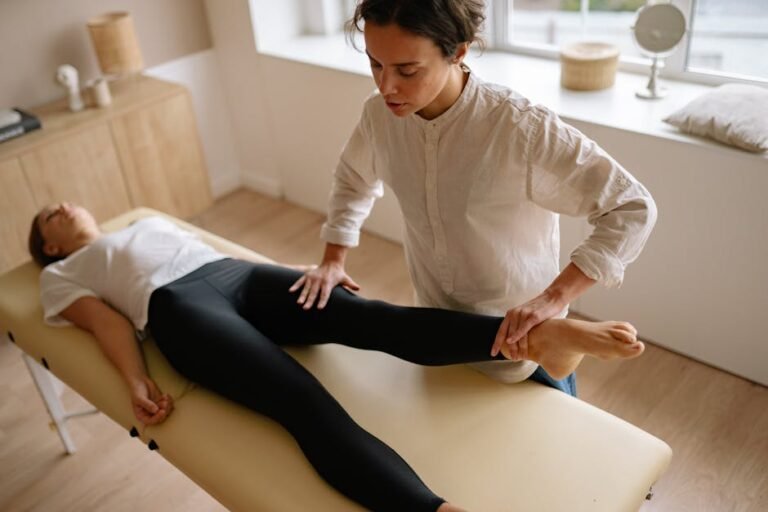
- Consider professional guidance. If you’re dealing with persistent back pain, stiffness, or uncertainty about how to exercise safely, a physiotherapist, osteopath, or chiropractor can assess your specific neuromuscular patterns and provide personalised guidance. There’s no substitute for expert eyes on your individual situation.
These habits don’t require a dramatic overhaul of your lifestyle. They’re small, sustainable choices that add up to meaningful protection for your spine over months and years.
Why This All Matters for Your Long-Term Back Health
Understanding the relationship between your muscles, nervous system, and spinal structures shifts the way you think about back health. It moves the conversation away from “my back is fragile” and toward “my back is a dynamic, intelligent system that I can actively support.” That’s an empowering reframe, and it’s backed by solid science.
When any one of the three pillars — passive structures, active muscles, or neural control — is compromised, the whole system is affected. A sedentary lifestyle can weaken the muscular system and dull the responsiveness of the neural system, leaving the passive structures to absorb more stress than they’re designed to handle. Over time, this imbalance contributes to the kind of wear and pain that many people simply accept as inevitable. But it isn’t inevitable. Research consistently shows that targeted movement, body awareness, and appropriate exercise can meaningfully improve neuromuscular control — at any age.
The spine is designed to be used, challenged, and moved. It thrives on variety, on being asked to stabilise, flex, rotate, and carry. The goal isn’t to protect your spine by doing less — it’s to support your neuromuscular system so that your spine can confidently do more. Every time you move mindfully, check in with your posture, or simply get up and walk around, you’re reinforcing the intelligent partnership between your muscles, your nervous system, and your spine.
The Bottom Line: Your spine’s health depends on far more than just its bones and discs — it’s the dynamic teamwork between your passive spinal structures, your active muscles, and your nervous system’s intelligent control that keeps everything stable, strong, and adaptable. Neuromuscular control is the hidden hero of spinal health, and the good news is that you can actively support it through regular movement, body awareness, gentle core engagement, and varied physical activity. You don’t need to become a fitness fanatic — you just need to stay curious about how your body works and make small, consistent choices that honour the remarkable system carrying you through every day of your life.
This is not medical advice. Consult your healthcare provider before starting any new health routine or using any product mentioned here.