Spinal Muscles and Back Pain: How Your Body’s Hidden Muscle Teams Keep You Moving
This post contains affiliate links. As an Amazon Associate, I earn from qualifying purchases at no extra cost to you.
Free resources — no credit card required for trial
🎧 Listen to health & wellness audiobooks free for 30 days
Start 30-Day Free Trial →
🛒 Recommended Products
As an Amazon Associate we earn from qualifying purchases at no extra cost to you.
TruContour Lumbar Pillow for Sleeping — Adjustable Height Lower Back Support
$39.99
Branfit Shoulder and Back Brace Posture Corrector — Breathable Posture Trainer for Upper B
$24.99
Posture Corrector for Women and Men — Comfortable Effective Brace for Shoulder and Back Pa
$22.99
Bodywellness Posture Corrector for Men and Women — Adjustable Back Straightener with Clavi
$19.99
ComfiLife Lumbar Support Pillow for Sleeping — Memory Foam Triangle Wedge Pillow
$34.99
📚 Read unlimited health books free for 30 days
Try Kindle Unlimited Free →
You’ve felt it before — that nagging twinge in your lower back after hunching over a laptop all day, the stiffness that sets in after an afternoon of gardening, or the sudden sharp protest your back makes when you lift something just a little too quickly. When back pain strikes, most of us immediately think about slipped discs, pinched nerves, or worn-out vertebrae. But here’s something that might surprise you: the real unsung heroes — and often the real culprits — behind your spinal health are your spinal muscles. These remarkable, interconnected teams of muscles are working around the clock to keep you upright, moving, and pain-free. Understanding how they work, and what happens when the system breaks down, could be the key to finally making sense of your back pain — and doing something meaningful about it.
Your Spine Is More Extraordinary Than You Think
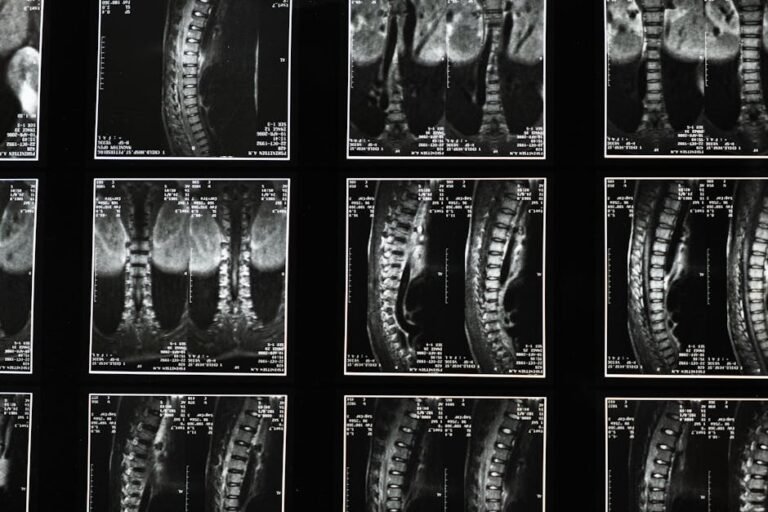
Before we talk about muscles, let’s take a moment to appreciate just how incredible your spine actually is. It isn’t simply a stack of bones holding you upright — it’s a living, dynamic column that performs a breathtaking range of functions every single day. Your spine needs to be strong enough to resist the relentless downward pull of gravity, providing a rock-solid foundation for your entire upper body. At the same time, it needs to be flexible enough to let you breathe, dance, twist to reverse your car, and swing a golf club. All while protecting the intricate network of nerves that carries vital messages between your brain and the rest of your body.
That extraordinary combination of strength, flexibility, and protective function doesn’t happen by accident. It’s the result of precise alignment and, most importantly, a highly sophisticated muscular architecture. When we talk about back pain and spinal dysfunction, the conversation almost always needs to come back to these muscles — because they are the active, living force that holds the whole system together. And when one part of that system starts to struggle, the ripple effects can be felt throughout your entire body.
To truly understand your spine — and to take better care of it — you need to meet the three distinct but deeply connected categories of spinal muscles that make it all possible.
Meet Your Three Spinal Muscle Teams
Think of your spine’s muscular system as a highly specialised crew, each group with its own specific role, all working in harmony. When one part of the crew isn’t doing its job, the others have to work harder — and that’s when trouble starts. Here’s an introduction to each team.
The Intraspinal Muscles: Your Spine’s Inner GPS. These are the smallest muscles in the spinal system, nestled intimately close to each individual vertebra. Don’t let their size fool you — they are absolutely essential. Think of them as your spine’s personal surveillance system and fine-motor controllers. They are constantly monitoring the subtle relationships between your vertebrae, feeding your brain real-time information about exactly where your spine is positioned in space. Their job is to make tiny, precise adjustments to keep each spinal segment perfectly aligned. They’re not responsible for big, powerful movements — they’re all about subtle, continuous stability and something called proprioception, which is your body’s internal sense of its own position. If you’ve ever tried to balance on one foot and felt your ankle making constant tiny corrections, you’ll understand what these muscles are doing for your individual spinal segments, moment to moment, all day long.
The Paraspinal Muscles: The Powerhouses. Moving a layer outwards, we find the paraspinal muscles — the real workhorses of your spine. These run alongside your vertebral column and form the primary architectural support structure for everything you do. When you bend forward to pick something up, twist to reach behind you, or extend your back after a long sit, these are the muscles generating the power to make it happen. But their role goes beyond movement. The paraspinal muscles are equally important as regional stabilisers, keeping your spine strong and intact under varying loads — whether you’re carrying heavy shopping, holding a toddler on your hip, or leaning over a workbench. Without these robust muscles doing their job, your spine would be far more vulnerable to everyday injuries.
The Extraspinal Muscles: The Global Influencers. Finally, we have a group of muscles that aren’t directly attached to your spine but have a profound impact on its health. These include your abdominal muscles, glutes, hamstrings, hip muscles, and even your shoulder muscles. They act as the connectors between your spine and the rest of your body’s movements. Your core muscles, for example, act like a natural corset, providing essential support and stability to your lower back. Strong, healthy glutes and hamstrings ensure your pelvis sits in proper alignment, which directly influences the curvature and comfort of your lower spine. When these more distant muscles are weak or imbalanced, your closer spinal muscles are forced to pick up the slack — and that’s a recipe for strain and pain.
Compensatory Adaptations: When Your Body Tries to Help but Makes Things Worse
Here’s where things get really interesting — and really important if you’re trying to understand your own back pain. These three muscle groups are profoundly interdependent. They don’t operate in isolation; they are in constant communication, constantly adjusting to support one another. But that interdependence has a downside: when one group is not doing its job effectively — due to injury, chronic weakness, poor posture, or prolonged inactivity — the other groups automatically try to compensate. This is what health professionals refer to as compensatory adaptations in spinal dysfunction.
Picture a chain where one link has weakened. The links on either side immediately have to bear more load, becoming strained and overworked over time. The same thing happens in your spine. If your small, deep intraspinal muscles aren’t providing precise segmental stability — perhaps because you’ve been sedentary or suffered a minor injury — your larger paraspinal muscles may start overworking to brace your spine. The result? Chronic stiffness, muscle tension, and that familiar ache that just won’t go away. Or consider weak core muscles: if your abdominals and glutes aren’t pulling their weight, your paraspinal muscles may take on a stabilising role they were never designed to perform long-term, leading to fatigue, overuse, and pain.
These compensatory patterns can provide short-term relief — your body is remarkably clever and will find a way to keep you moving — but over weeks, months, and years, they create muscle imbalances, contribute to overuse injuries, and perpetuate chronic pain cycles. This is precisely why treating back pain is rarely as simple as just resting or rubbing the sore spot. Real, lasting relief often requires understanding and rehabilitating the entire integrated system, making sure each muscle team is doing its proper job.
What You Can Do: Practical Tips for Supporting Your Spinal Muscles
The good news is that understanding this system gives you real power to take action. You don’t need to become an anatomist or spend hours in the gym. Small, consistent habits can make a huge difference to the health of your spinal muscles and your overall back comfort. Here are some practical, evidence-informed steps you can start today:
- Prioritise good posture throughout your day. Whether you’re sitting at a desk, cooking dinner, or driving, aim to maintain a neutral spine. A helpful mental image: imagine a gentle string pulling you upward from the crown of your head, keeping your ears, shoulders, and hips in a vertical line. This simple habit supports your extraspinal muscles in distributing load evenly and reduces unnecessary strain on your paraspinal muscles.
- Strengthen your core — but think beyond crunches. Your core is far more than your abs. It includes your deep abdominal muscles, pelvic floor, and glutes. Exercises like planks, bird-dog movements, and pelvic tilts are far more effective for spinal support than traditional sit-ups, because they engage the stabilising muscles your spine actually relies on.
- Embrace gentle, regular movement. Prolonged stillness is one of the worst things for spinal muscles. Activities like walking, swimming, yoga, and Pilates keep your spine flexible, encourage blood flow to your muscle tissues, and — crucially — engage and provide feedback to your intraspinal muscles, keeping that inner GPS finely tuned.
- Learn and use safe lifting technique. Always bend at your knees and hips rather than your waist when picking things up. Keep your back straight, engage your core, and let your powerful leg and glute muscles (your extraspinal team) do the heavy work. This protects your paraspinal muscles from taking on loads they can’t safely handle.
- Listen to your body’s signals. Aches, stiffness, and pain are your body’s way of flagging that something is out of balance. Don’t push through sharp or worsening pain. Rest when needed, and don’t hesitate to seek professional guidance from a physiotherapist, osteopath, or doctor if pain persists or gets worse.
- Stay well hydrated and nourished. While it might seem indirect, overall hydration and good nutrition contribute to the suppleness and resilience of your muscle tissue and connective tissues. A well-nourished body recovers more effectively and is better equipped to maintain that all-important muscular balance around your spine.
None of these tips require expensive equipment or a gym membership. Many of them are simply about being a little more intentional in the way you move through your day — and that awareness alone can make a meaningful difference.
Why Back Pain Often Needs a Whole-Body Approach
One of the most common frustrations people experience with back pain is that it keeps coming back, even after rest or treatment. Now that you understand the interconnected nature of your spinal muscle teams and the concept of compensatory adaptations, this pattern probably makes more sense. If you only ever treat the symptom — say, massaging the tight paraspinal muscle that’s in spasm — without addressing the root cause (perhaps a weak core or poorly functioning intraspinal muscles), the compensation will simply continue. The pain may settle temporarily, but the underlying imbalance remains, waiting for the next trigger.
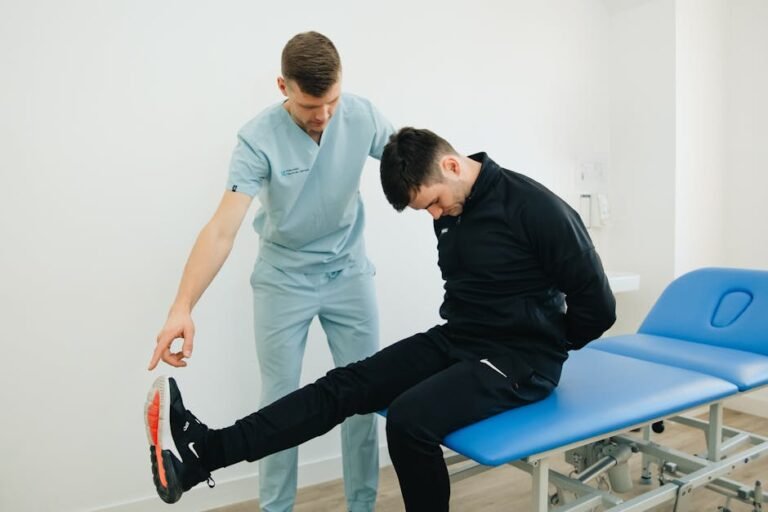
This is why a holistic, whole-body approach to spinal health is so much more effective in the long run. Exercises that target your deep stabilising muscles, lifestyle habits that support good posture and regular movement, and an awareness of how your entire kinetic chain — from your feet to your shoulders — influences your spinal health are all part of a comprehensive strategy. If you’re dealing with persistent or recurring back pain, working with a qualified physiotherapist or movement specialist who can assess your specific muscular imbalances is one of the most valuable investments you can make in your health.
It’s also worth noting that spinal muscle health isn’t just about avoiding pain — it’s about quality of life. A strong, well-balanced spinal muscle system means you can pick up your children, pursue the hobbies you love, travel comfortably, and move through your daily life with confidence and ease. These muscles are working for you every single moment of every day. The more you understand and support them, the better they’ll support you.
Building a Healthier Back: Small Steps, Big Difference
If all of this feels a little overwhelming, take a breath and start small. You don’t need to overhaul your entire lifestyle overnight. The most sustainable changes come from building one good habit at a time. Maybe this week you focus on getting up from your desk every hour for a short walk. Next week, you add a five-minute morning routine of gentle spinal mobility exercises. The week after, you start being more intentional about your lifting technique. Small, consistent actions compound over time into genuinely significant improvements in your spinal muscle health and your overall wellbeing.
Remember, your spine has been serving you faithfully your entire life. It has an extraordinary capacity for adaptation and resilience — and so do the muscles that support it. With a little knowledge, attention, and care, you can work with your body rather than against it, breaking the cycle of compensatory strain and chronic pain, and building a stronger, more comfortable back for the long term.
The Bottom Line: Your spinal muscles are far more than just the bits that ache after a tough day — they are a sophisticated, three-tiered team of intraspinal, paraspinal, and extraspinal muscles that work together constantly to keep your spine stable, mobile, and protected. When one group struggles, the others compensate, and over time those compensatory adaptations can lead to the chronic back pain so many of us know too well. The encouraging news is that by understanding how this system works and taking proactive steps — strengthening your core, moving regularly, maintaining good posture, and listening to your body — you can support your entire spinal muscle team, break the cycle of pain, and build a healthier, happier back for years to come.
This is not medical advice. Consult your healthcare provider before starting any new health routine or using any product mentioned here.