How to Safely Use a Balance Board: A Senior’s Guide to Better Balance and Fall Prevention
This post contains affiliate links. As an Amazon Associate, I earn from qualifying purchases at no extra cost to you.
Free resources — no credit card required for trial
🎧 Listen to health & wellness audiobooks free for 30 days
Start 30-Day Free Trial →
🛒 Recommended Products
As an Amazon Associate we earn from qualifying purchases at no extra cost to you.
TheraBand First Step to Active Health Kit — Senior Exercise Program for Balance and Fall P
$19.99
EZ Off Jar Opener for Seniors — Under Cabinet Jar Opener for Weak Hands and Arthritis
$9.99
Omron 5 Series Upper Arm Blood Pressure Monitor — 2-User 100-Reading Memory Wide-Range Cuf
$44.99
OMRON 7 Series Wireless Wrist Blood Pressure Monitor — Clinically Validated with Connect A
$69.99
Vitality 4 Life Senior Resistance Band with Instruction Guide — Specifically for Elderly F
$16.99
📚 Read unlimited health books free for 30 days
Try Kindle Unlimited Free →
Good balance is one of those things we rarely think about — until it starts to change. If you’ve ever felt a little unsteady getting up from a chair, navigating a curb, or carrying a bag of groceries, you’re not alone. Balance naturally shifts as we get older, and that shift can quietly raise the risk of falls. The good news? Your balance is something you can actively work on, and a balance board is one of the most practical, effective tools for doing exactly that. In this guide, we’ll walk you through how to safely use a balance board — step by step — so you can build steadiness, confidence, and independence right at home.
Why Balance Matters More as We Age
Balance is what allows you to do the things you love — walking to the park, playing with grandchildren, dancing at a family gathering, or simply moving around your home without worry. It’s a skill that involves your muscles, joints, eyes, and inner ear all working together in a split second. As we age, that coordination can become less sharp, and the risk of a fall increases. Falls are one of the leading causes of injury among older adults, but they’re not inevitable.
The encouraging truth is that the body responds to training at any age. When you practice balance — even in small, gentle ways — your muscles and nervous system adapt. You get stronger ankles, sharper reaction times, and a better sense of where your body is in space (something called proprioception). A balance board is a wonderfully simple tool that challenges all of these systems at once, making it a smart addition to any senior self-care routine.
Building better balance also has a mental benefit that often gets overlooked: it reduces the fear of falling. That fear can hold people back from staying active, which in turn makes balance worse over time. Working on your balance, at your own pace, gives you back a sense of control and confidence in your body.
What Is a Balance Board and How Do You Choose One?
A balance board is a flat platform that sits on a curved bottom or rollers. When you stand on it and shift your weight, the board rocks or wobbles slightly — and your ankles, knees, hips, and core muscles all kick into gear to keep you upright. That gentle, continuous challenge is what makes balance boards so effective for building stability.
There are several styles available. Some are longer and wider, offering more surface area and stability. Others are smaller and more challenging. If you’re new to balance work, look for a board with a wide, stable surface, a non-slip top grip, and a gentle range of tilt. Avoid boards that have an extremely deep wobble to start — you want a tool that challenges you without overwhelming you. Always pair your board with a non-slip mat underneath it, and wear shoes with good traction or flat-soled athletic shoes when you use it.
Safety First: What to Do Before You Step On
Before you try a balance board for the first time, there are some important safety steps to take. This isn’t about being overly cautious — it’s about setting yourself up for success from day one.
Talk with your doctor first if you have osteoporosis, recent fractures, knee or hip problems, joint replacements, or a history of falls. Your healthcare provider can let you know whether balance board exercises are appropriate for your current health, and a physical therapist can even tailor a programme specifically for you. This step is especially important if you’ve had a recent injury — give your body time to heal before adding new challenges.
Set up your space thoughtfully. Place the balance board on a non-slip mat or low-pile carpet. Make sure there’s a sturdy chair, countertop, or wall within easy reach — close enough to grab if you feel unsteady. Clear away any nearby furniture, loose rugs, or clutter. Wear close-fitting clothing that won’t catch on the board, and choose shoes with firm, flat soles for the best grip. And always warm up first: just two to three minutes of gentle marching in place, ankle circles, and light leg stretches is enough to wake up your muscles and prepare your joints.
How to Safely Use a Balance Board: A Step-by-Step Progression
One of the most important things to understand about balance training is that progression matters. Rushing ahead to harder movements before your body is ready increases the risk of falls and injury. The following six-level progression is designed to build your confidence and strength gradually, starting from the very basics.
Level 1 — Supported Stand: Step onto the board with both feet hip-width apart, keeping your hands on the wall or chair back. Fix your gaze on a still point ahead. Hold for 10–15 seconds and breathe slowly. Repeat three times. This alone is a fantastic starting point.
Level 2 — Gentle Side-to-Side Weight Shifts: In the same supported position, slowly shift your weight a little to the right, then back to centre, then to the left. Keep both feet on the board the whole time. Do 8–12 gentle shifts in each direction.
Level 3 — Forward and Backward Rocks: With both feet on the board and support nearby, gently rock your weight toward your toes, then back toward your heels. Keep your knees soft and your spine tall. Do 8–12 rocks. Stop immediately if you feel any sharp pain.
Level 4 — Side-to-Side Rocking with Posture Focus: Shift your weight slowly from foot to foot, allowing the board to tilt side to side. Keep your hips level and your shoulders relaxed. Use your support whenever the wobble feels strong.
Level 5 — Gentle Marching on the Board: Still holding your support, lift one knee just slightly, then the other, as if slowly marching in place. Keep movements small and controlled. Aim for 30–60 seconds, rest, and build up to two or three sets.
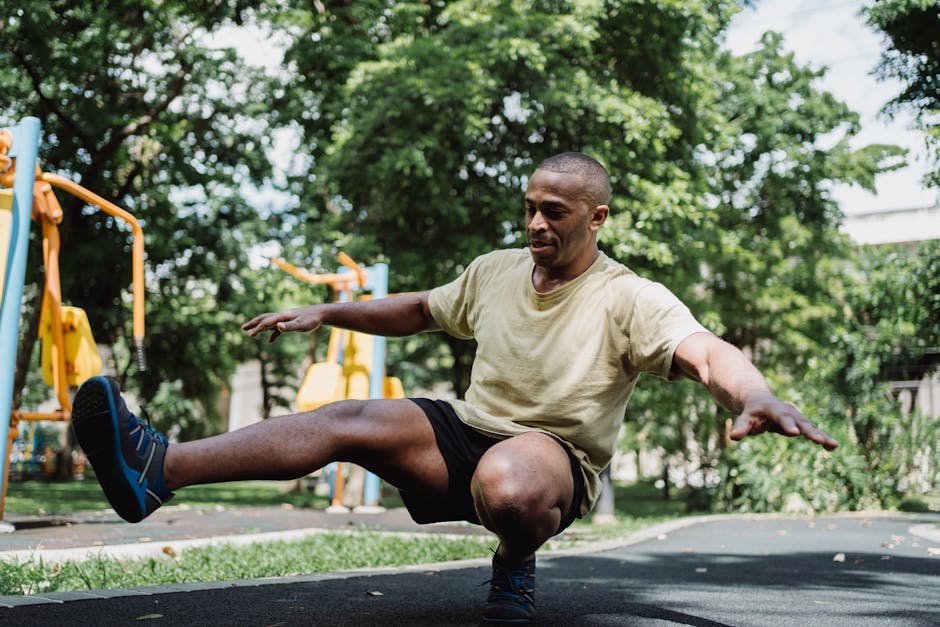
Level 6 — Single-Leg Stance with Support: Place one foot on the board while keeping the other on the ground. Holding the wall or chair, gradually lift the ground foot a little, holding for 5–10 seconds. Switch sides. Build up slowly over several sessions — this is an advanced move, so take your time getting here.
What You Can Do: Practical Tips for Safe, Effective Practice
- Always keep a sturdy support — chair back, countertop, or wall — within arm’s reach, especially during your first few weeks of practice.
- Start with just 5–10 minutes per session, two to three times a week. Short, regular sessions build better results than long, occasional ones.
- Place a non-slip mat under your balance board every single time — this simple step prevents the board from sliding on smooth floors.
- Warm up before every session with gentle marching, ankle circles, and light leg stretches to prepare your muscles and joints.
- Fix your gaze on a still point ahead of you — a spot on the wall works perfectly — to help your brain stabilise your balance.
- If you feel dizzy, unsteady, or faint at any point, step off the board carefully and sit down to rest. Never push through dizziness.
- Stretch your calves, ankles, and hips after practice to ease any muscle tightness and reduce soreness the next day.
- Keep a phone nearby or have someone in the house while you practise, especially when you’re first getting started.
- If getting on and off the board feels tricky, use a low step stool and have a helper nearby for your first few sessions.
- Pair balance board work with gentle leg-strengthening exercises and flexibility work for the most well-rounded benefits.
The Real-Life Benefits of Regular Balance Board Practice
When you commit to regular, gentle balance board practice, the physical benefits add up over time in ways you’ll actually notice in daily life. Your ankle and leg muscles get stronger, your reaction time improves, your posture becomes more upright, and your body gets better at automatically adjusting to sudden shifts in weight — like stepping off a kerb or catching yourself if you stumble. These changes directly support fall prevention and make everyday activities feel easier and more secure.
A simple sample week to get you started might look like this: on Day 1, practise two sets of Levels 1 and 2 for about 10–15 minutes. On Day 3, move to two sets of Levels 3 and 4 for 12–15 minutes. On Day 5, revisit Levels 2 and 5 for 12–15 minutes. On the weekend, do a gentle 5–10 minute session of marching on the board, or take a rest day if your body needs it. Consistency matters far more than intensity — even two short sessions a week make a meaningful difference over time.
Don’t underestimate the mental and emotional benefits either. Many older adults experience a fear of falling that gradually shrinks their world — they avoid going out, stop trying new activities, and feel less confident day to day. Working on your balance, even slowly and gently, rebuilds that confidence from the inside out. The focus and mindfulness required during balance practice can also be genuinely calming and enjoyable — a quiet, purposeful part of your day that’s entirely for you.
The Bottom Line: Learning how to safely use a balance board doesn’t require perfection — it just requires patience, the right setup, and a willingness to start small. With a supportive surface, a sturdy chair nearby, and the step-by-step progression outlined here, balance board practice can become a safe, rewarding part of your weekly routine. Each tiny improvement you make — a little steadier, a little more confident, a little more in control — is a genuine victory. Your balance, your strength, and your independence are all worth investing in, and it’s never too late to start.
This is not medical advice. Consult your healthcare provider before starting any new health routine or using any product mentioned here.